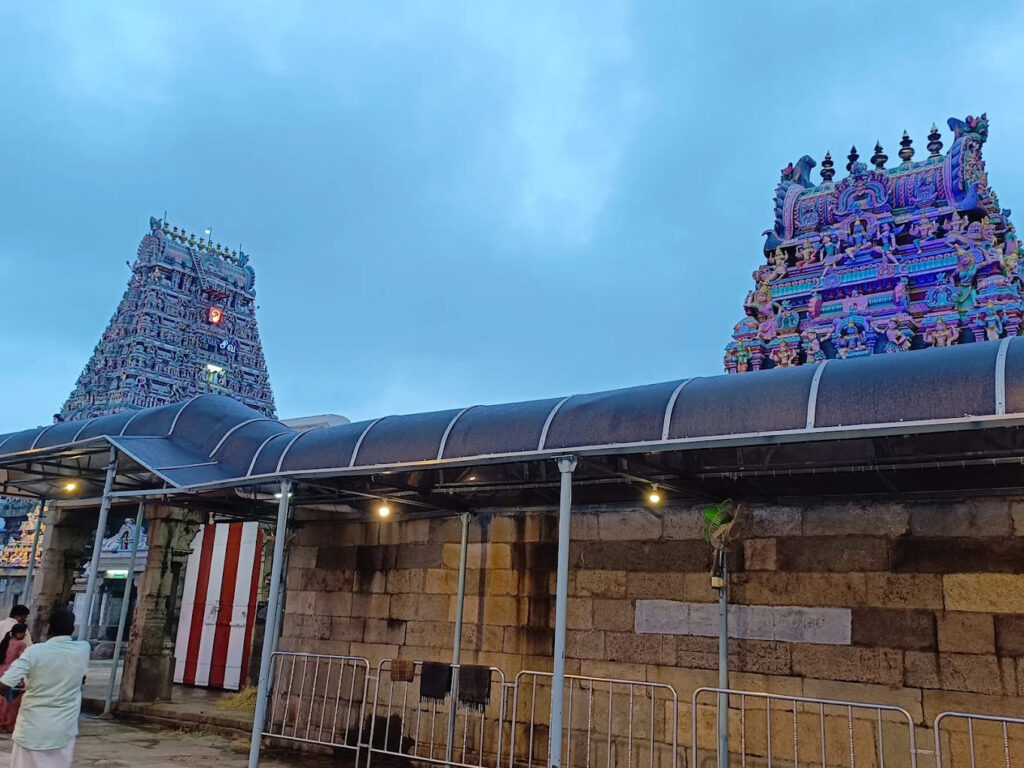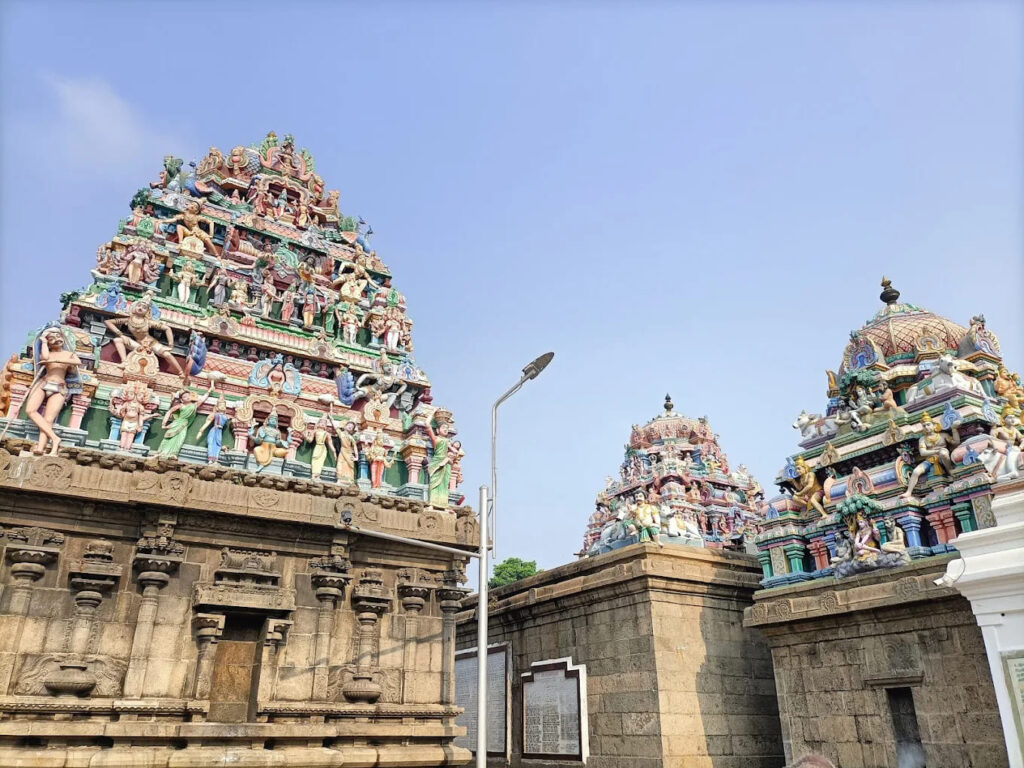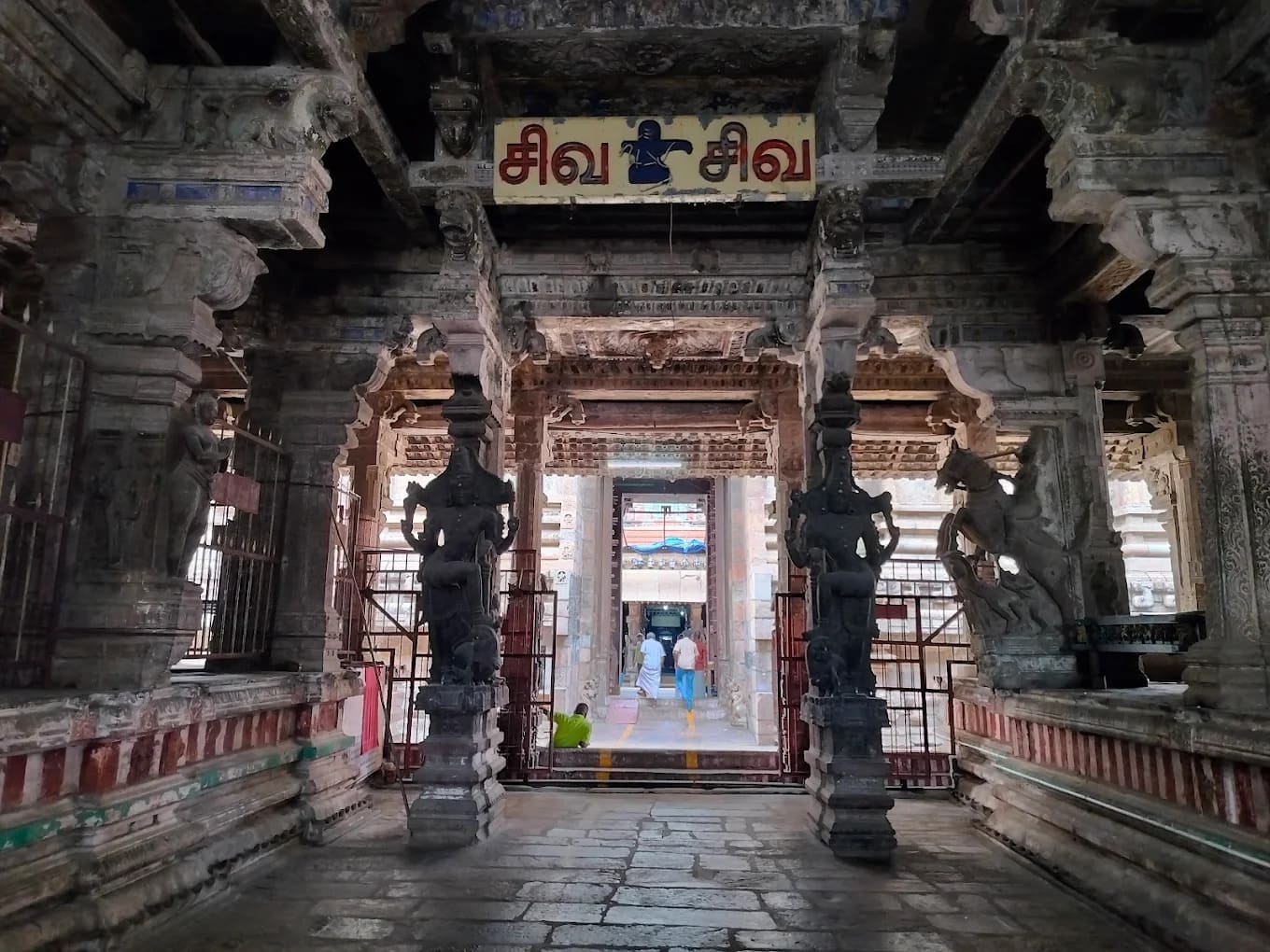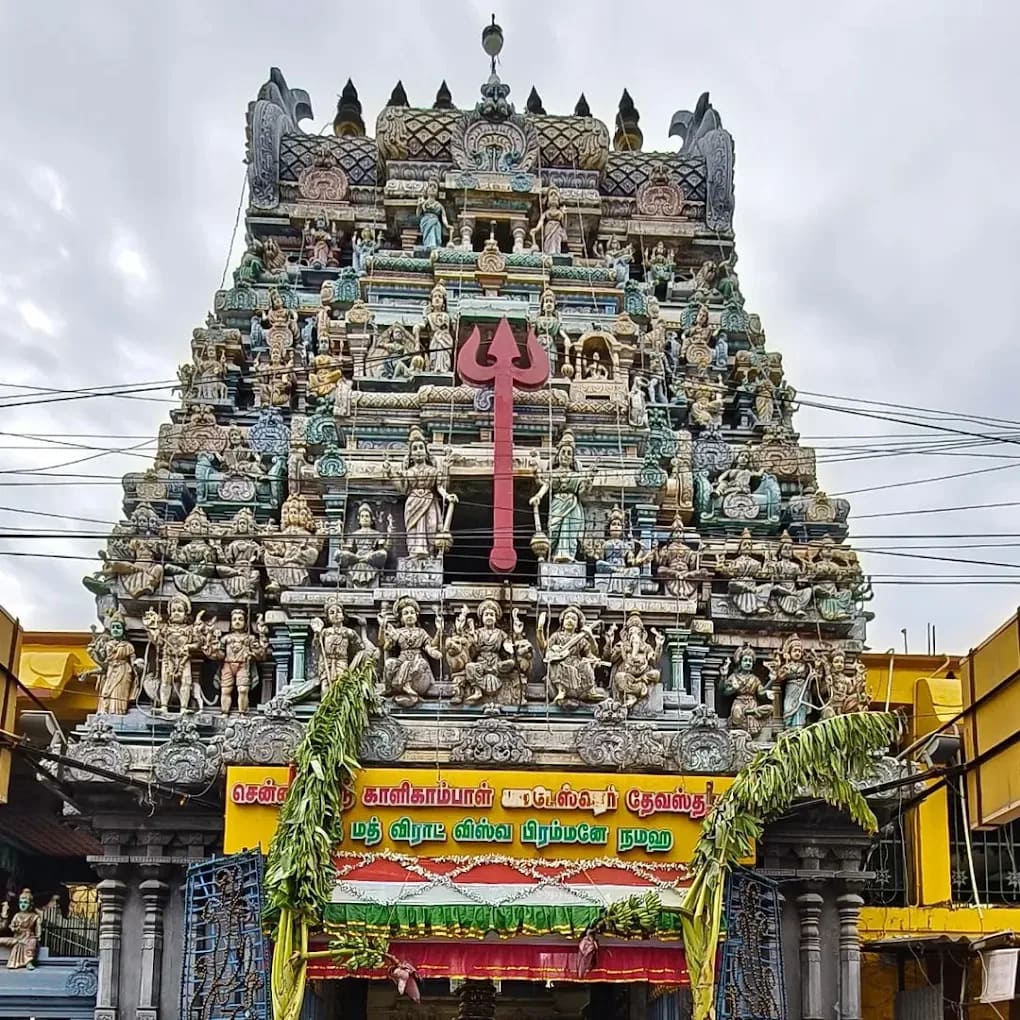
Nestled in the vibrant locality of Mylapore in Chennai, the Kapaleeswarar Temple stands as a remarkable monument of South Indian spirituality and cultural richness. This iconic Shiva temple, where Lord Shiva is venerated as Kapaleeswarar and Goddess Parvati as Karpagambal, is steeped in ancient lore and divine mystique.
The origin of Mylapore itself is rooted in a fascinating legend. It is said that Goddess Uma once expressed her desire to understand the essence of the five-letter mantra “Na Ma Shi Va Ya” and the importance of holy ash. As Lord Shiva imparted this knowledge, Uma was momentarily distracted by a dancing peahen. Offended by her lapse in attention, Shiva transformed her into a peahen and sent her to Earth to atone through penance. The Goddess, in the form of a peahen, worshipped the Shivalinga under a Punnai tree at this very site. Moved by her deep devotion, Lord Shiva restored her original form. Thus, the area came to be known as Mylapore – derived from “Mayil,” meaning peahen in Tamil.
Another powerful tale from this site speaks of Lord Muruga, the son of Shiva and Parvati, who prayed at this temple before embarking on his battle with the demon Surapadman. Here, he received the divine weapon Shaktivel from his mother, which led him to victory.
The name “Kapaleeswarar” also carries a compelling origin. According to legend, when Lord Brahma, the creator, became arrogant over his five heads, Lord Shiva removed one of them to teach him humility. Holding Brahma’s skull in his hand, he earned the name “Kapaleeswarar” with Kapala meaning skull.
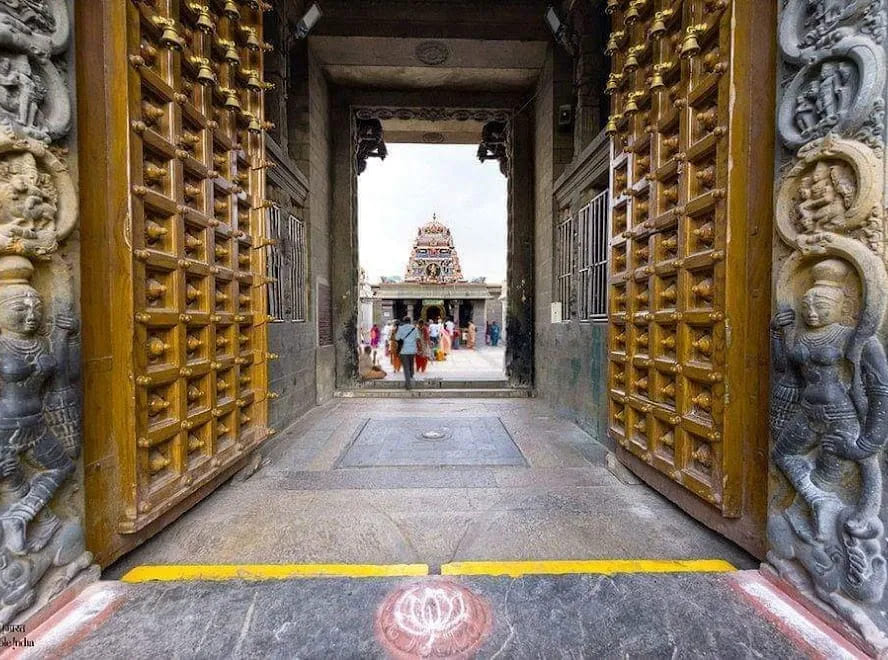
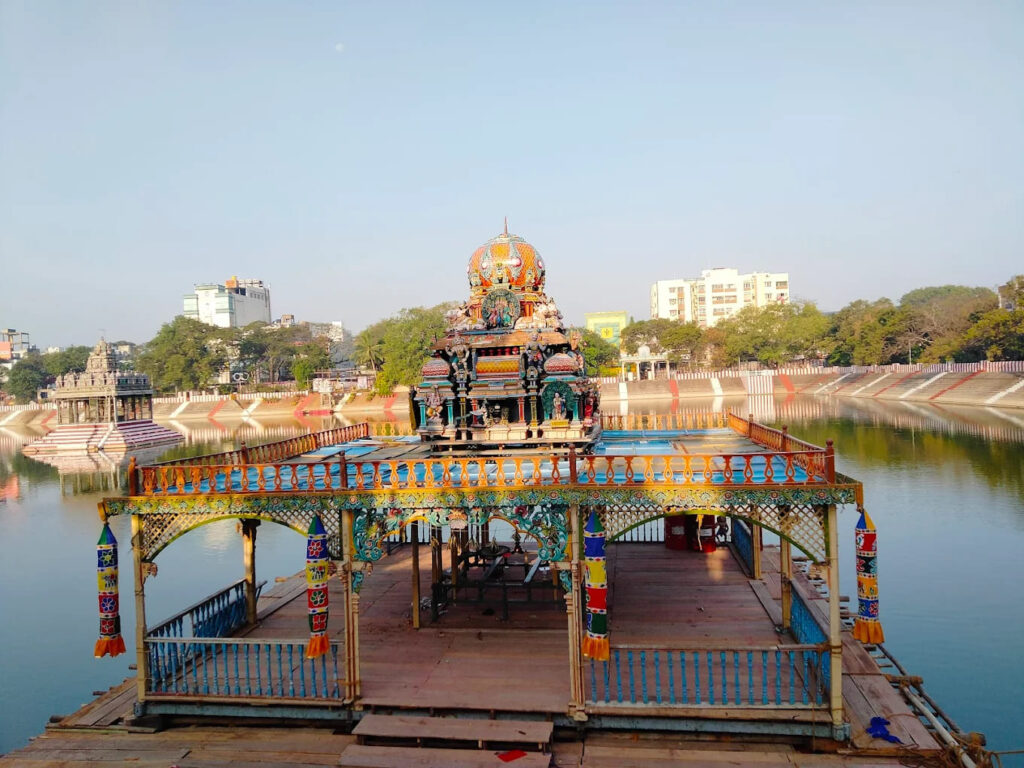
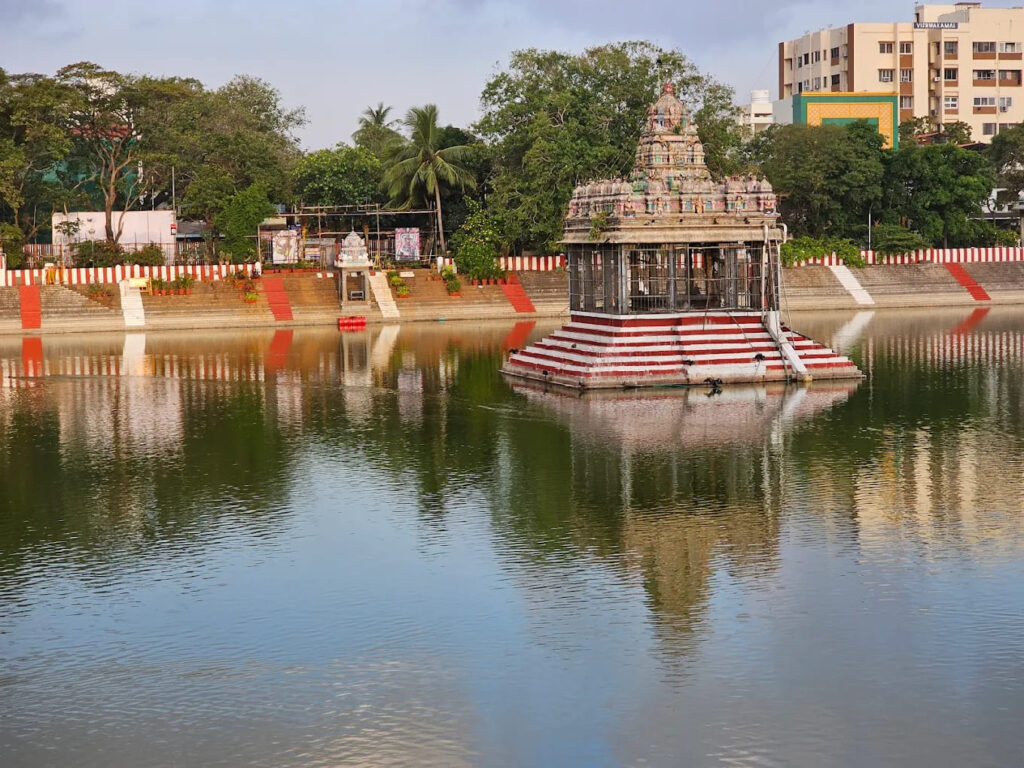
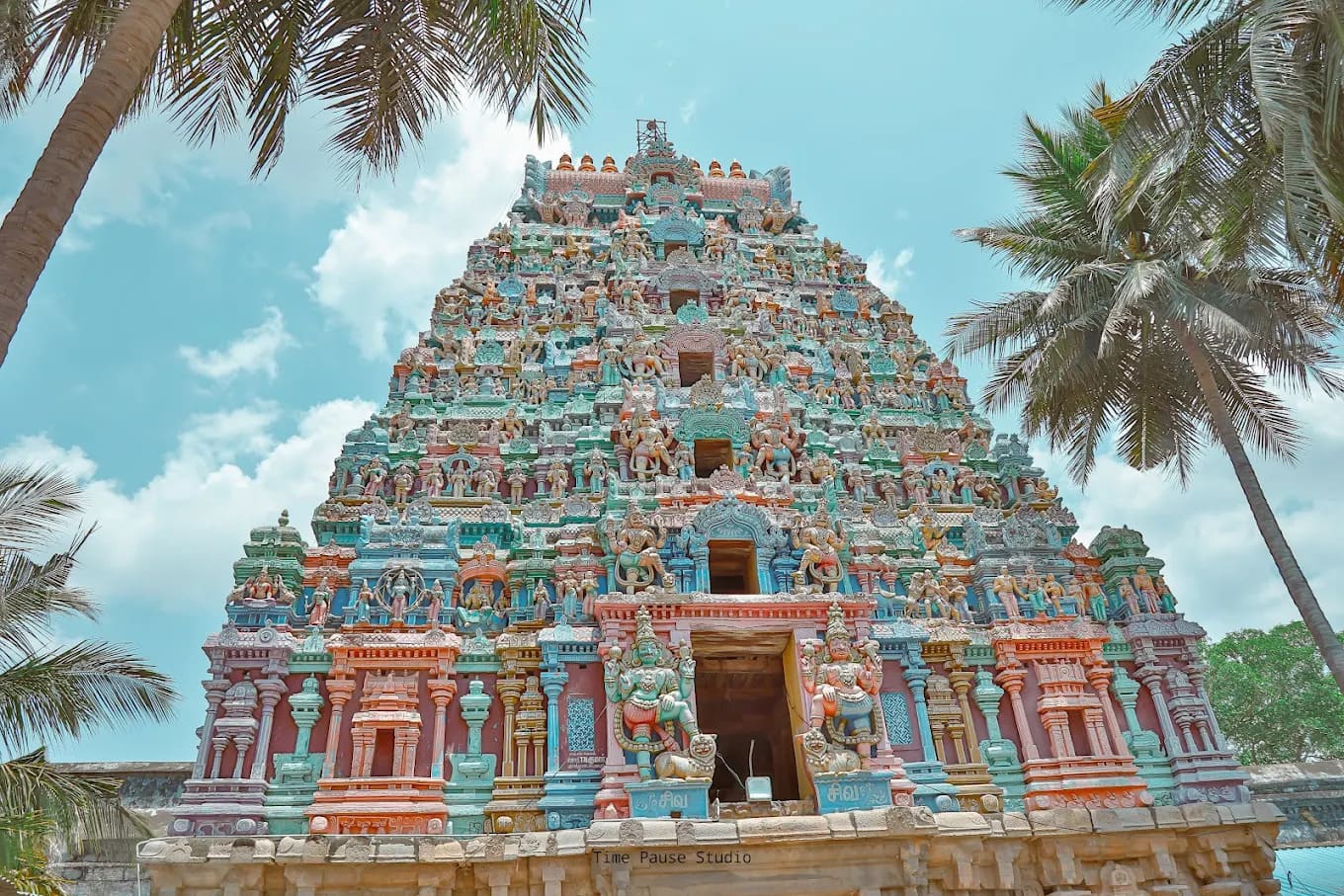
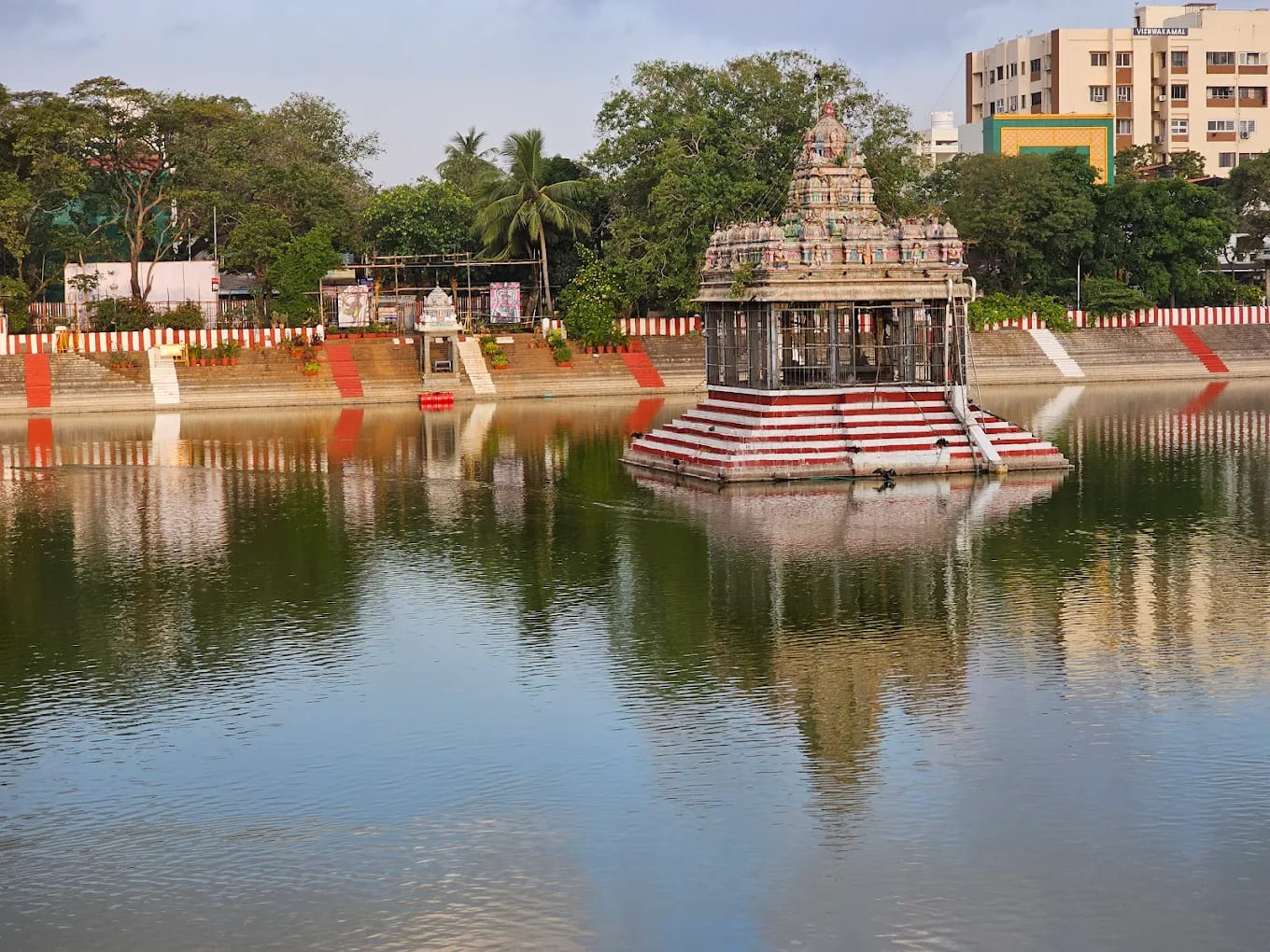
Although the original temple structure is believed to have been destroyed—possibly by the Portuguese—the current temple, over 300 years old, reflects exquisite Dravidian architecture. Its grand seven-tiered gopurams rise high at both the eastern and western entrances, with the eastern tower soaring to 40 meters. A large temple tank situated at the western entrance adds to the charm and serenity of the surroundings.
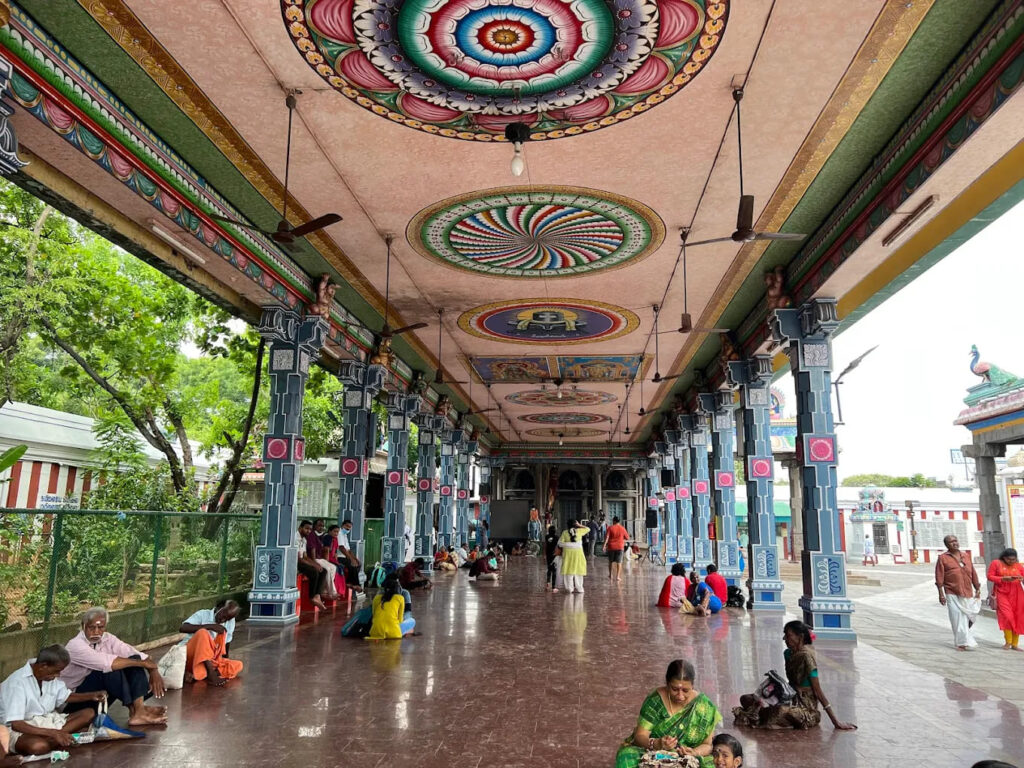
Inside the temple, the shrines of Kapaleeswarar and Karpagambal stand in majestic solitude. Numerous other shrines adorn the complex, dedicated to deities like Lord Vinayaka, Muruga, Dakshinamurthy and Durgai. A unique sculpture of Goddess Uma in her peahen form is also present, symbolizing the story behind Mylapore’s name. The corridors also honor the 63 Saivite saints (Nayanmars), including depictions of the saint-poet Gnanasambandhar and the devotee Poompaavai.
The temple comes alive during its grand festivals, especially Brahmotsavam, held in the Tamil month of Panguni (March–April). Over nine days, thousands gather to witness ceremonies filled with color, devotion and traditional music. The highlight is the Arubathimoovar procession, where idols of the 63 Nayanmars are paraded alongside the divine couple. The festival concludes with the celestial wedding of Lord Kapaleeswarar and Goddess Karpagambal. Other notable observances include Maha Shivratri, Pradosham and days of the new and full moon, drawing crowds seeking peace, blessings and divine connection.
Mylapore Kapaleeswarar Temple is not just a place of worship—it is a timeless emblem of history, architecture, devotion and the vibrant spirit of Tamil culture.
Gallery of Kapaleeswarar Temple: