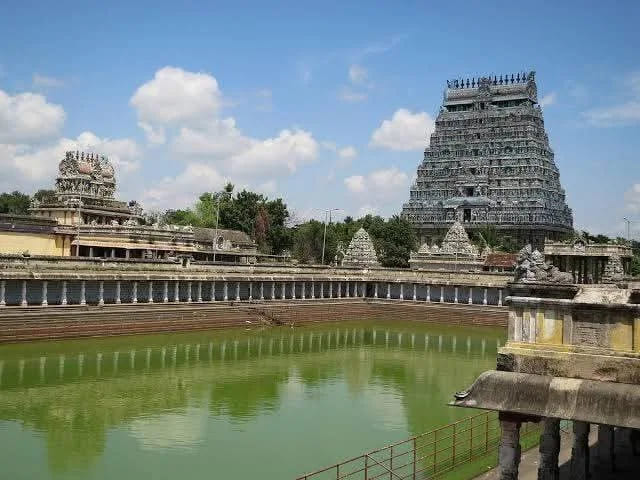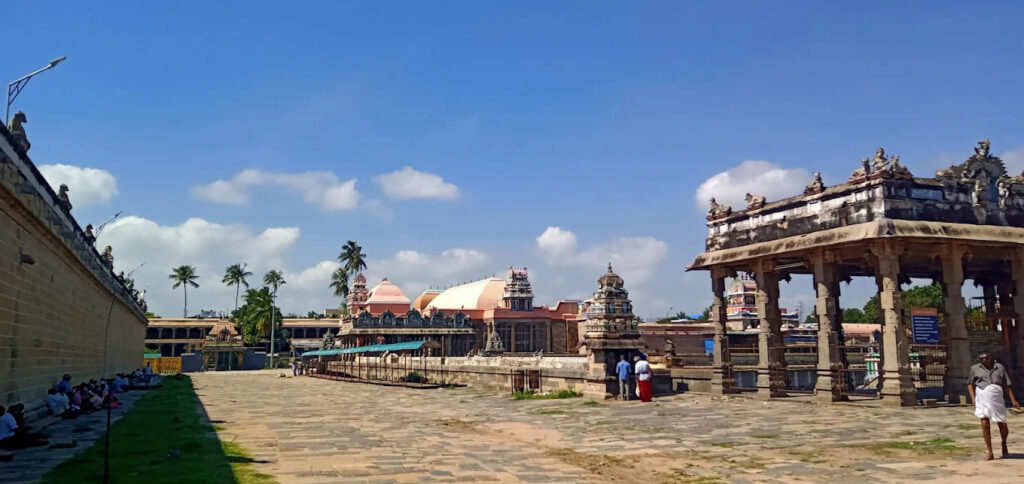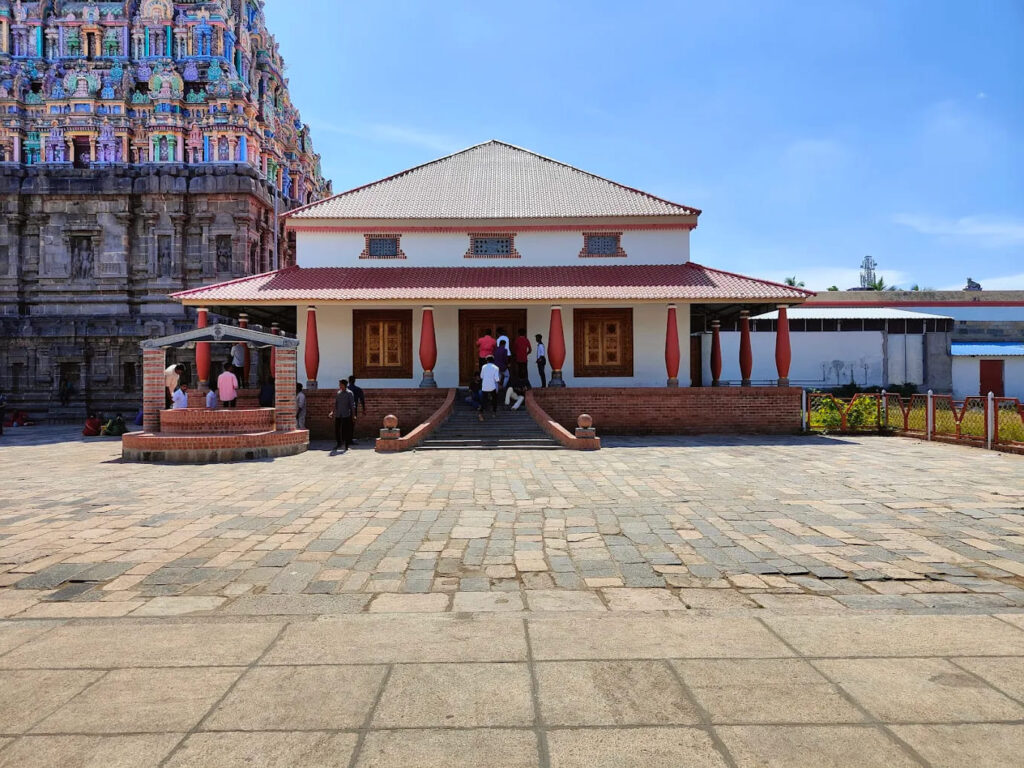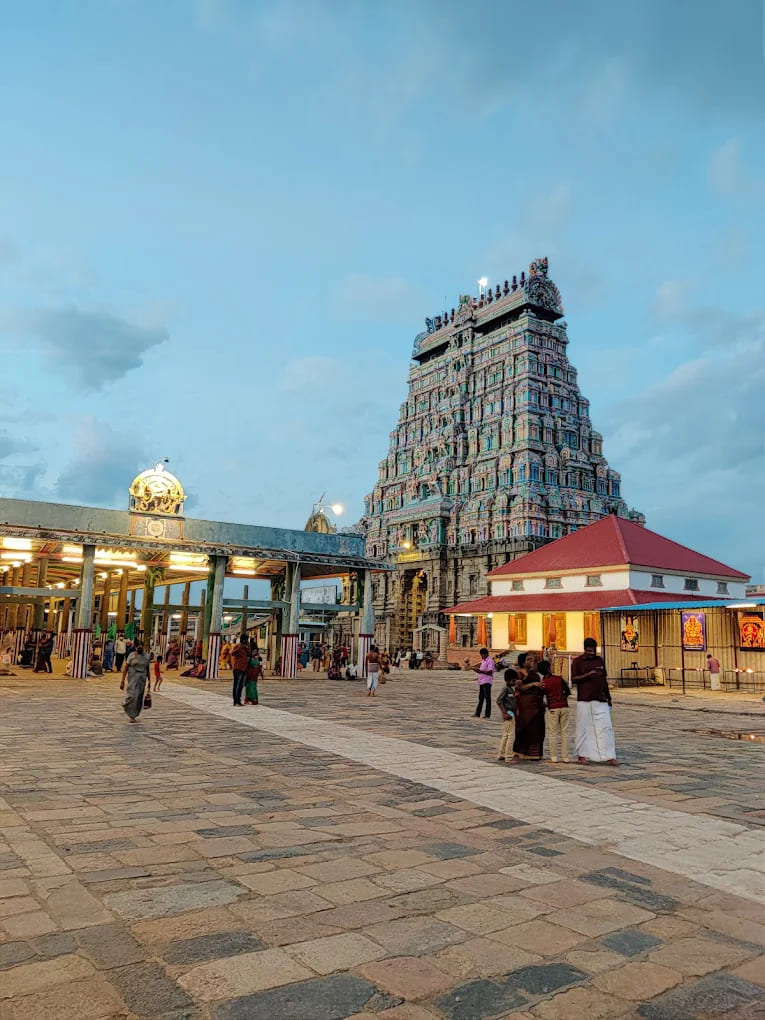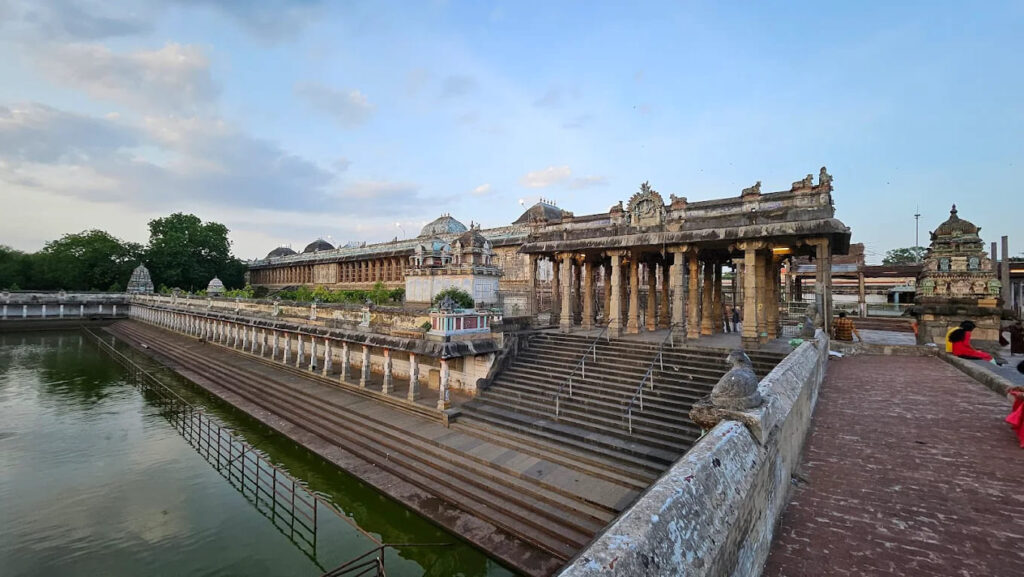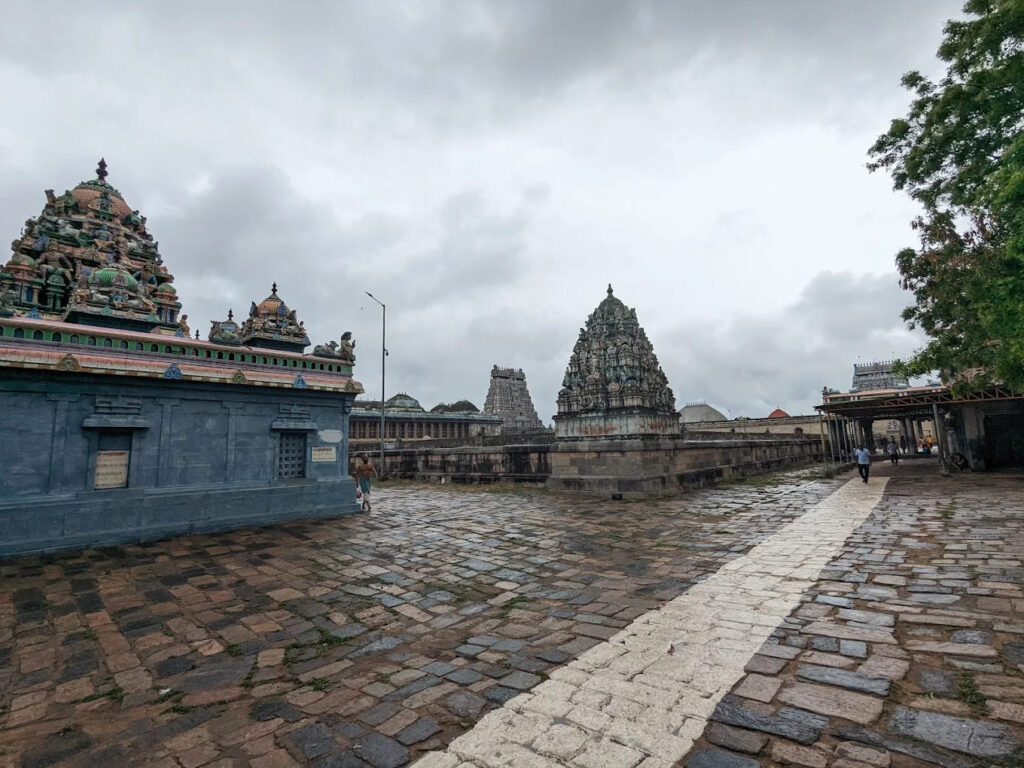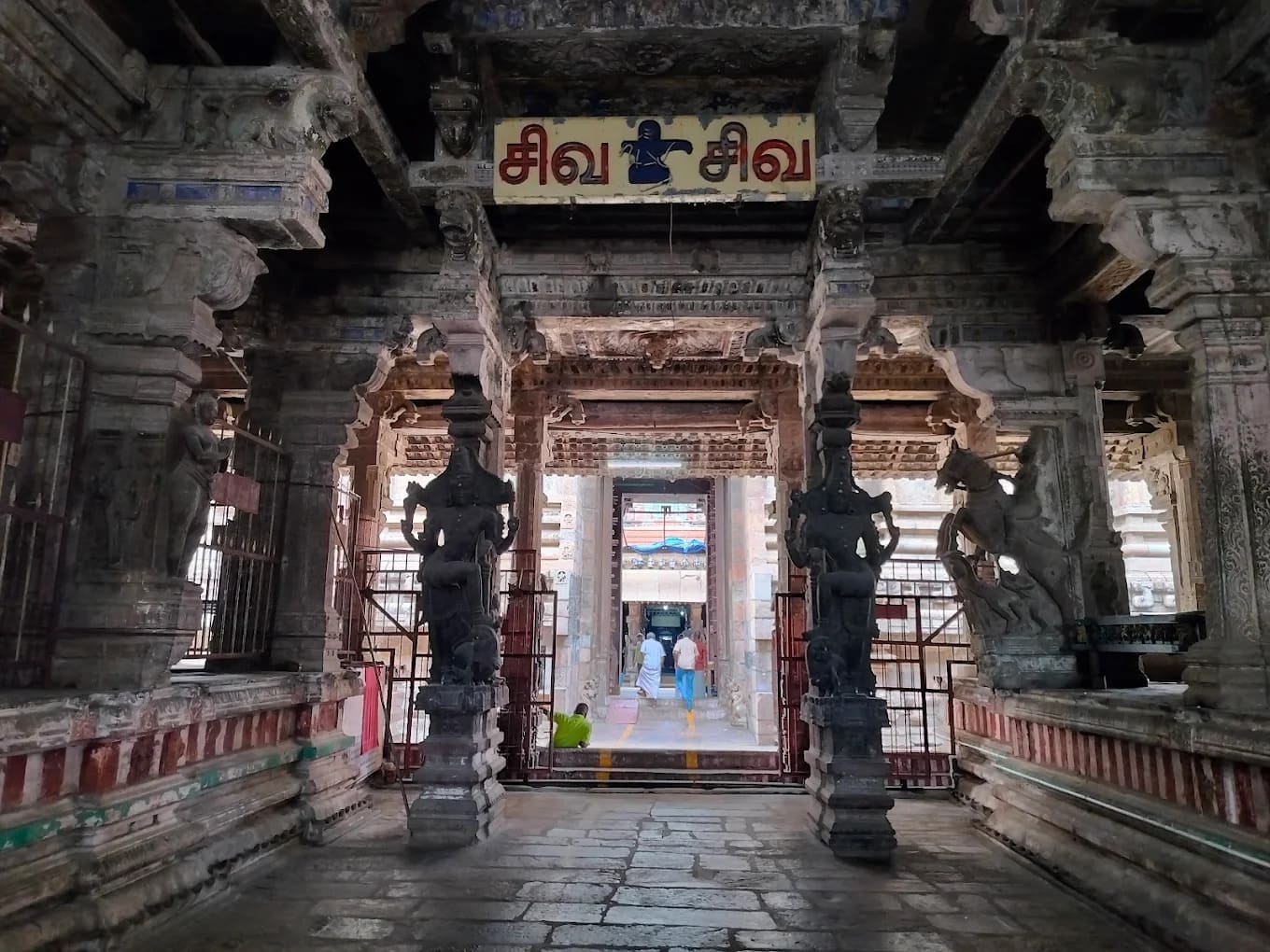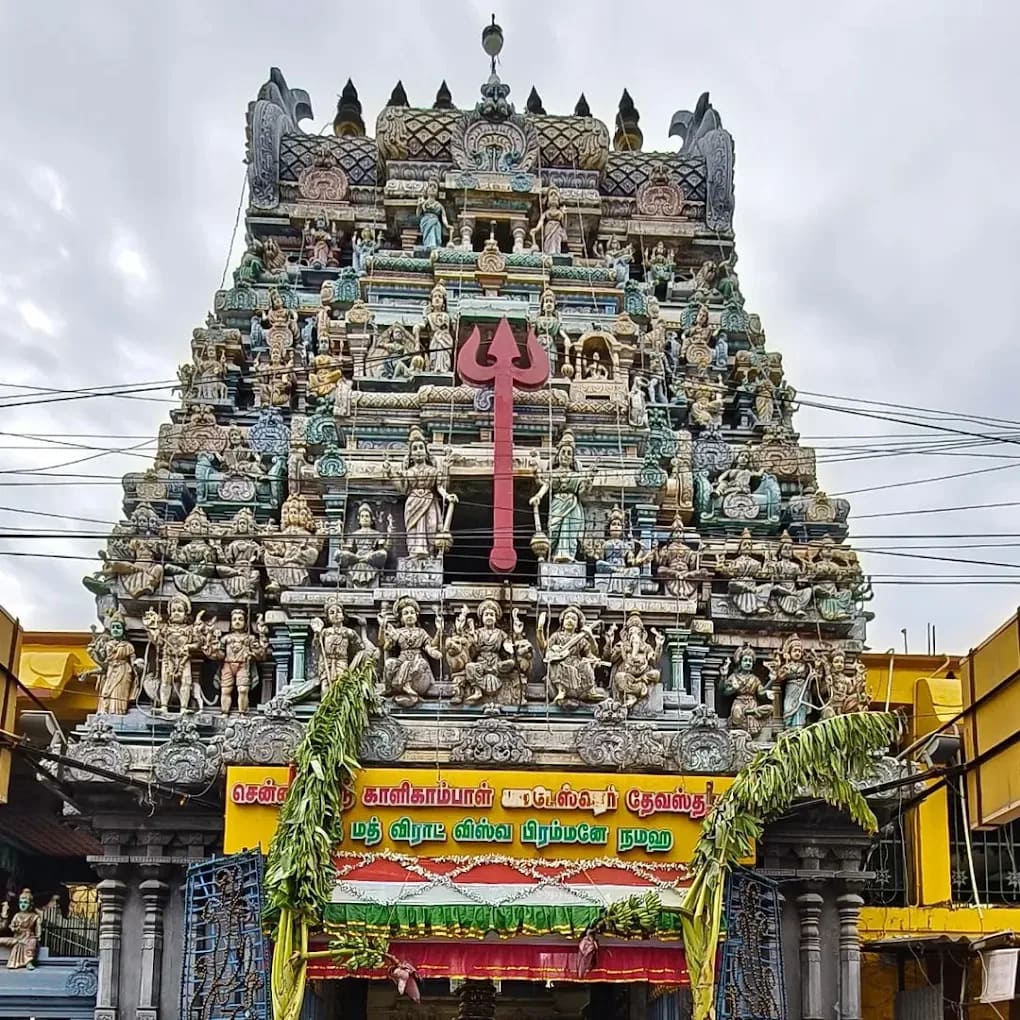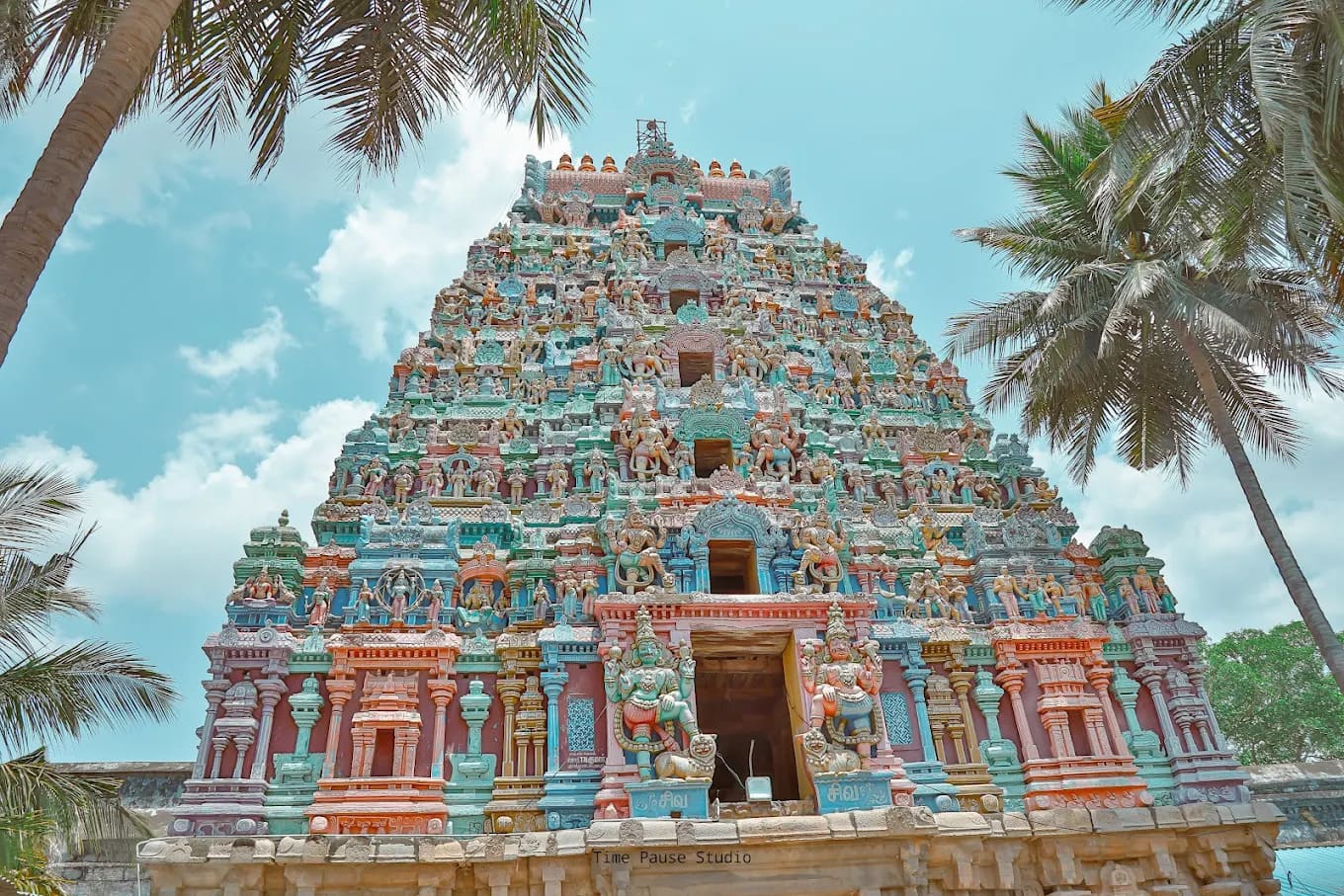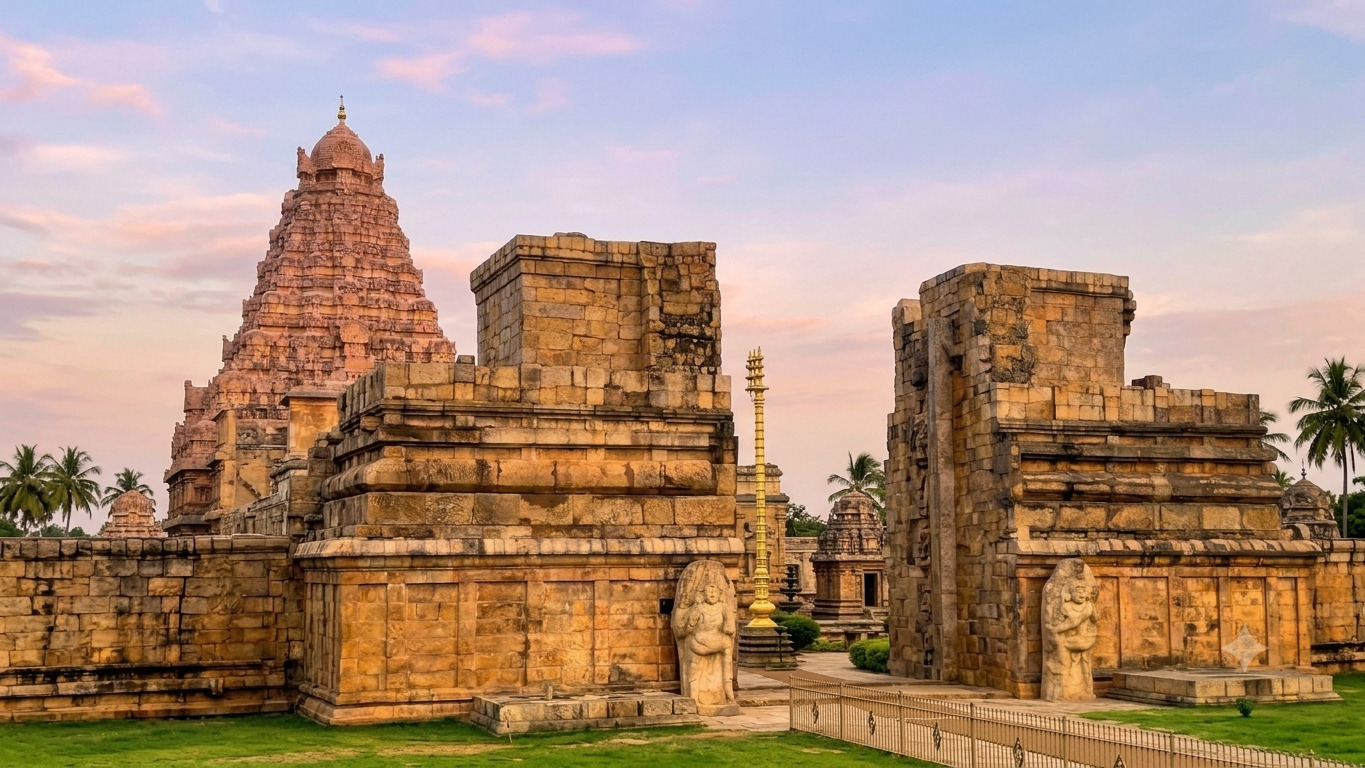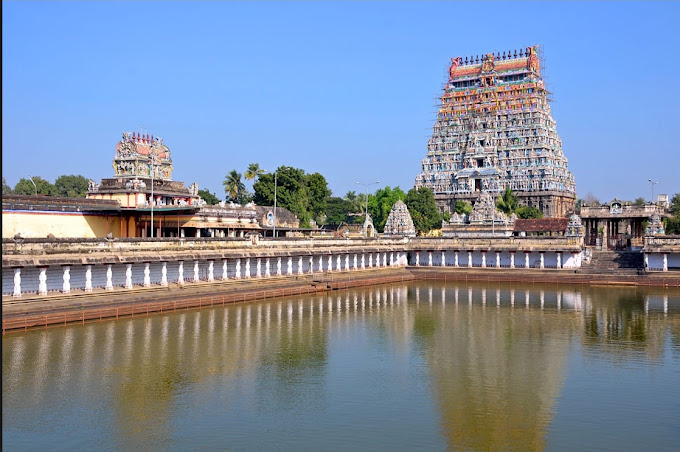
The Thillai Nataraja Temple, also known as the Chidambaram Nataraja Temple is a sacred hindu shrine dedicated to Lord Shiva in his divine form as Nataraja, the cosmic dancer. Located in Chidambaram, Tamil Nadu, this temple has deep spiritual and historical roots. The town was originally known as Thillai, and the name “Chidambaram” literally translates to the “Stage of Consciousness.”
This ancient temple beautifully blends art, dance and spirituality. It is the only Shiva temple common to both the Pancha Sabhas and Pancha Bhoota Sthalas. The temple walls are adorned with carvings of 108 karanas, dance postures described in Bharata Muni’s Natya Shastra, forming the very foundation of Bharatanatyam, the Indian classical dance form.
Temple Architecture: A Divine Blueprint of the Human Body
The temple complex is a striking combination of Chola and Pandyan architecture, with the Sanctum Sanctorum bearing similarities to Kerala-style structures. It was originally built during the 10th century, when Chidambaram served as the capital of the Chola dynasty, who regarded Lord Nataraja as their family deity.
Spread across 40 acres, the complex features nine gopurams, sacred water tanks like the Shivaganga, and halls such as the 1000-pillared mandapam. The main sanctum is crowned with a golden roof in Vesara style, and the temple includes shrines not only for Shiva but also for Devi, Vishnu, Ganesha, Subrahmanya, Surya and others – representing the harmony between different sects of Hinduism.
Symbolism & Spiritual Significance
The temple is rich in symbolic elements connecting the microcosm (human) and the macrocosm (universe):
- Located at the center of the Earth’s magnetic equator
- Represents the Sky element (akash) among the Pancha Bhootas
- Built with 9 gateways, signifying the 9 openings in the human body
- Roof is adorned with 21,600 golden tiles, symbolizing the 21,600 breaths taken daily by humans
- Held together by 72,000 golden nails, reflecting the 72,000 naadis (energy channels) in the body
- The “Ponnambalam” (Golden Hall) is tilted slightly left, representing the human heart
- The five steps to the sanctum “Si, Va, Ya, Na, Ma” – denote the Panchakshara mantra
- 28 pillars represent the 28 Agamas and 64 beams signify the 64 arts
The Kalashas atop the roof stand for 9 types of Shakti (energy), while various halls and mantapas reflect scriptural knowledge, mythology and cosmic truths.
Legends, Literature and Bhakti Movement
Though not mentioned in Sangam literature (1st–5th centuries), the temple is celebrated in 7th-century Tamil devotional hymns by Thirugnana Sambandar, Thirunavukkarasar (Appar) and Sundarar. Their poems, part of the Tevaram – immortalize the temple and Lord Nataraja. Sundarar even begins his sacred work Thiruthondar Thogai with praise for the priests of Thillai.
Manikkavasagar, the 10th-century Saivite poet, composed the Tiruvasakam and Thirukovaiyar, largely at Chidambaram. His verses express deep devotion, and he is believed to have attained spiritual bliss here. The Chidambaram Mahatmiyam, composed in the 12th century, details the temple’s spiritual and historical evolution.
Festivals & Celebrations
Two grand festivals that light up Chidambaram are:
- Aani Thirumanjanam – Celebrating the divine anointment of Lord Nataraja
- Margazhi Thiruvadirai – Marking the cosmic dance of Nataraja in the month of Margazhi
Scientific and Astronomical Marvel
Modern scientists have confirmed that Lord Nataraja’s big toe marks the magnetic center of the Earth. Interestingly, the ancient Tamil Siddhar Thirumoolar noted this thousands of years ago in his Thirumandiram, blending science and spirituality in a way far ahead of his time.
Gallery of Thillai Nataraja Temple: