Introduction
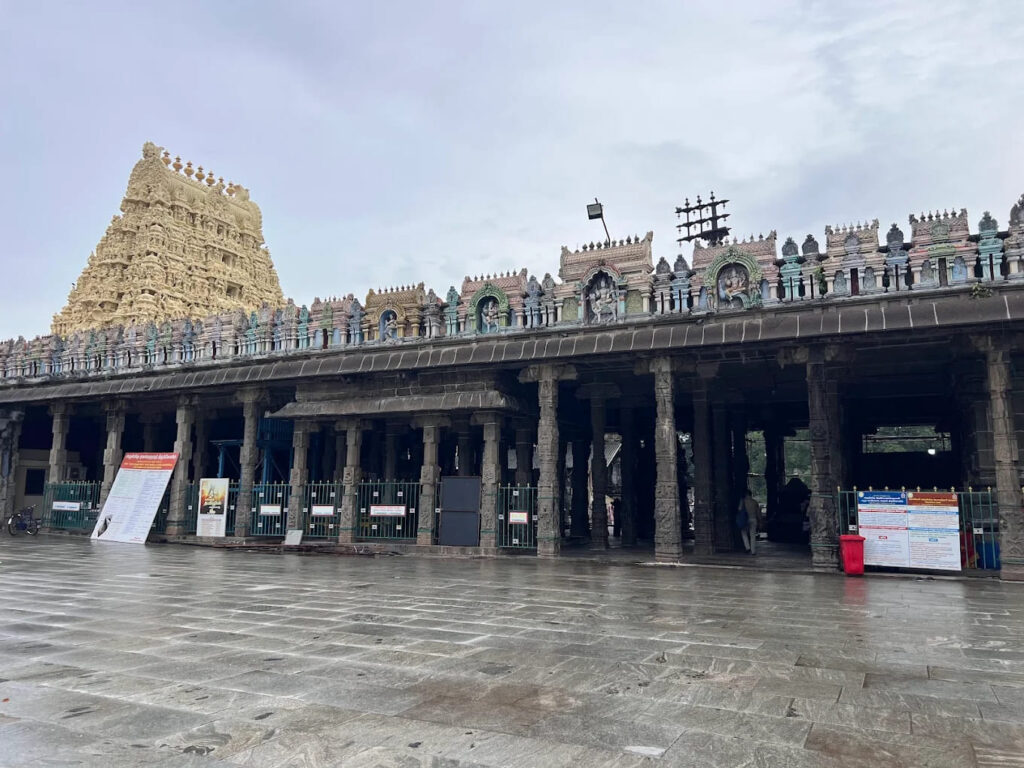
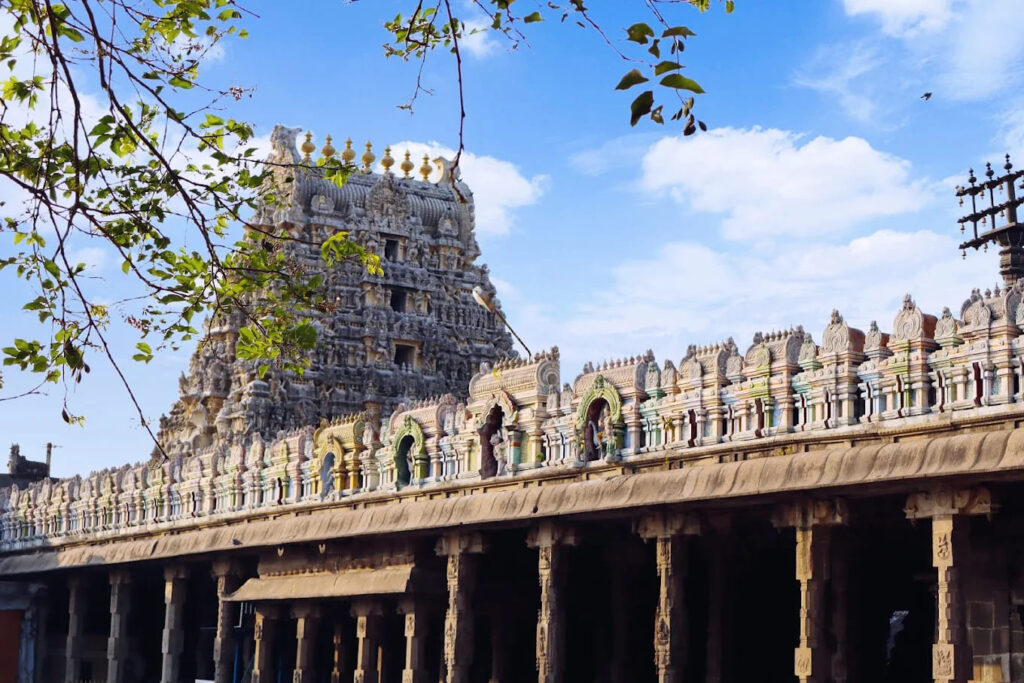
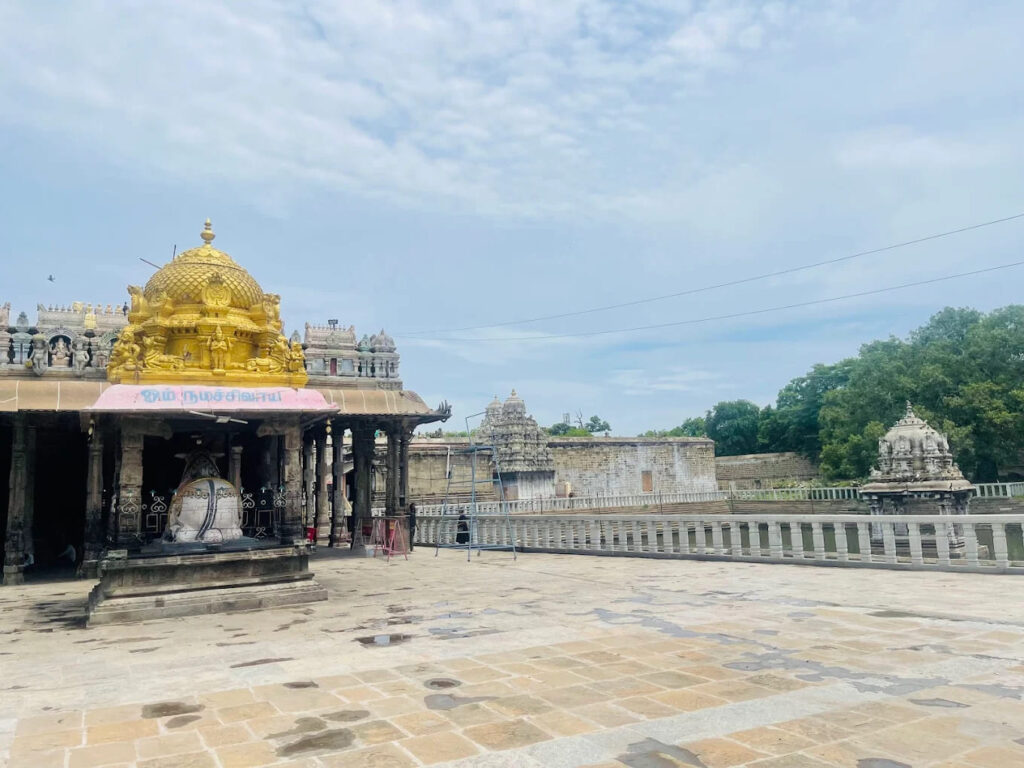
Ekambareswarar Temple, located in Kanchipuram is one of the most sacred Hindu temples dedicated to Lord Shiva. It is one of the Pancha Bhoota Stalas, representing the element Earth (Prithvi). Shiva is worshipped here as Ekambareswarar / Ekambaranathar / Rajlingeswaram in the form of a Prithvi Lingam. His consort, Parvati is worshipped as Elavarkuzhali.
Religious Significance
The temple is highly revered in Saivism. It is classified as a Paadal Petra Sthalam since it is glorified in the Tevaram hymns of 7th-century Nayanmars such as Appar, Sundara and Sambandar.
Architecture and Layout
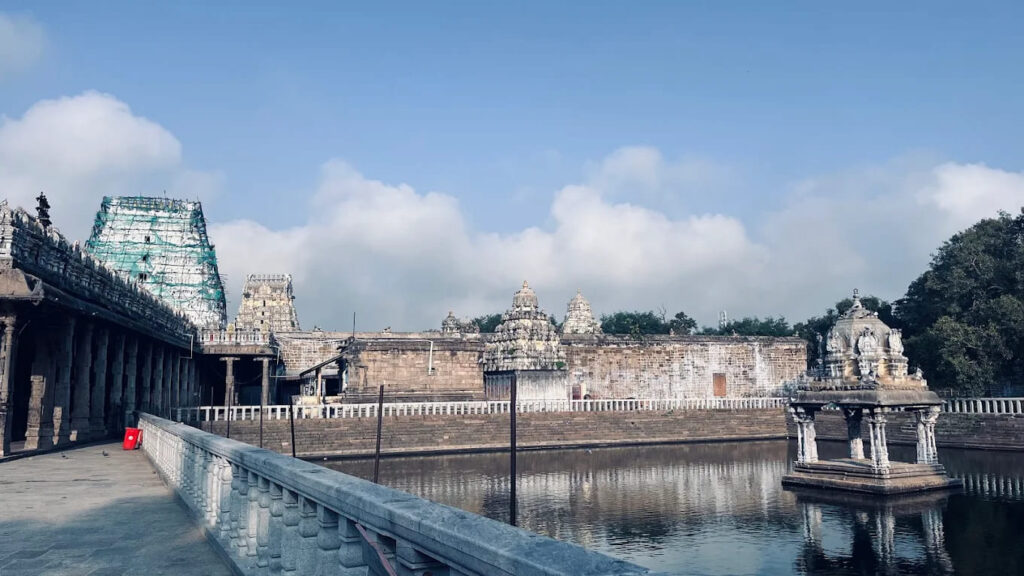
- The temple complex spans over 10 hectares (25 acres), making it one of the largest temples in India
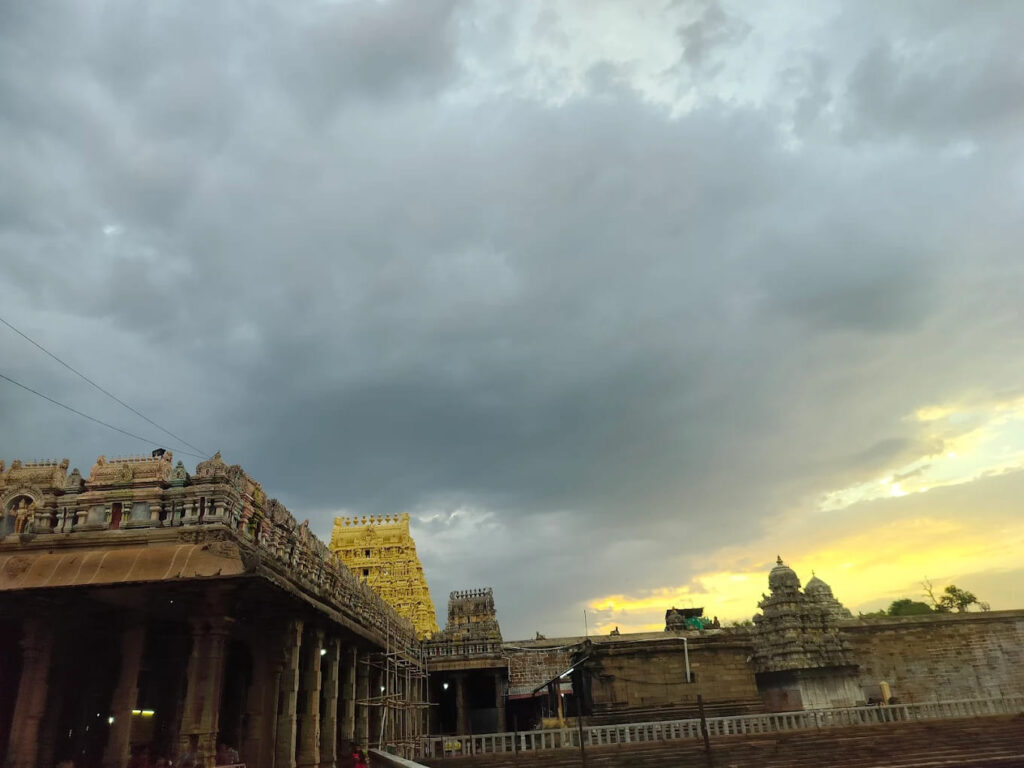
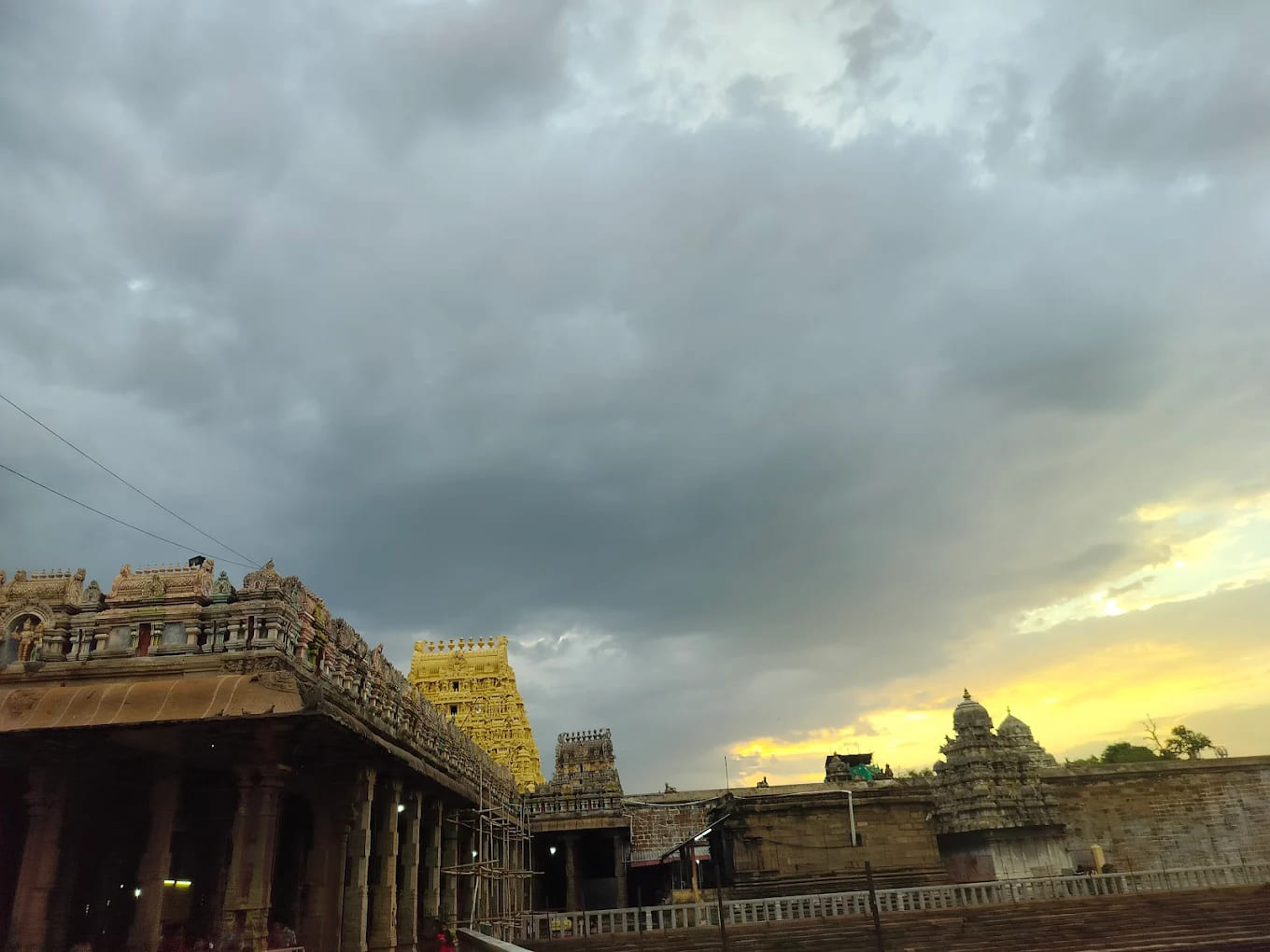
- It has four gopurams (gateway towers), with the southern tower standing 58 m (192 ft) tall – one of the tallest in India
- The temple includes numerous shrines, with the Nilathingal Thundam Perumal Shrine (Divyadesam) dedicated to Vishnu being prominent
- The Thousand Pillar Hall (Aayiram Kaal Mandapam), built by the Vijayanagar rulers, is another highlight
Legends and Myths
Parvati’s Penance
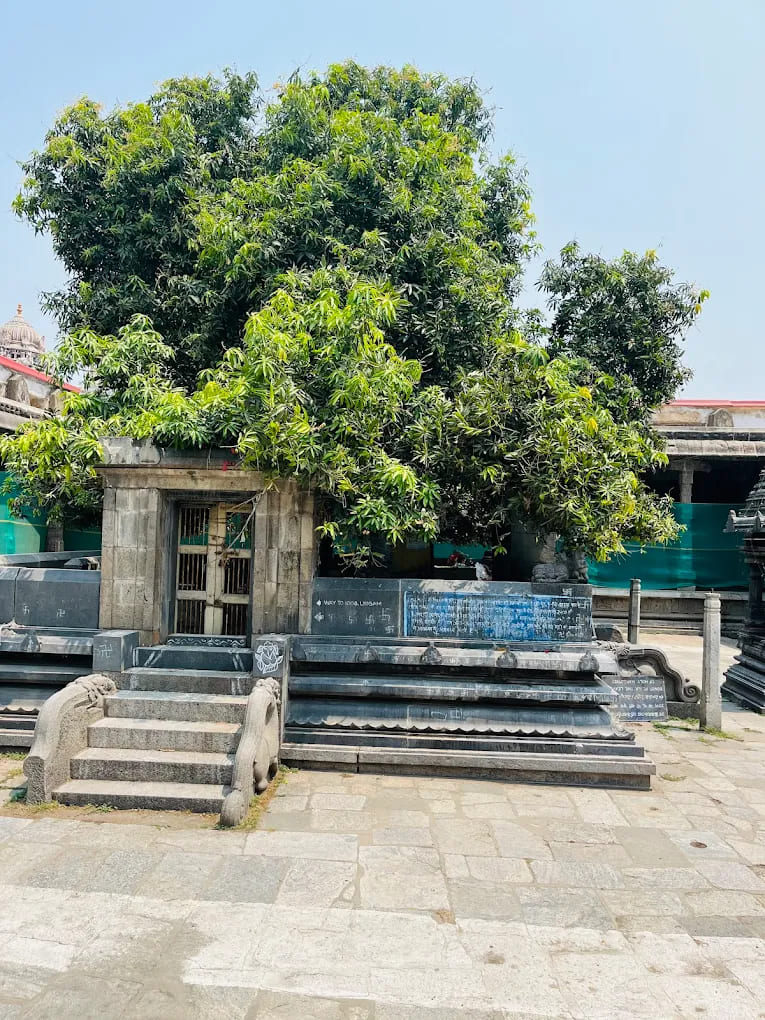
According to legend, Parvati performed penance under a mango tree near the Vegavati river. To test her devotion, Shiva sent fire and flood, but she overcame the trials with the help of Vishnu and her own prayers. She finally worshipped a Lingam made of sand, and Shiva appeared as Ekambareswarar, marrying her.
Tazhuva Kuzhainthaar
Another version says that when the Vegavati river threatened to wash away the sand Lingam, Parvati embraced it. Moved by her devotion, Shiva manifested and is remembered as Tazhuva Kuzhainthaar (One who melted in her embrace).
Tirukuripputhonda Nayanar
The washerman saint Tirukuripputhonda Nayanar is associated with this temple. Shiva, testing his devotion, appeared as an old man. The saint’s sacrifice moved Shiva, who blessed him.
Historical Background
- The temple has existed since at least 600 CE. It is mentioned in Sangam literature (300 BCE) such as Manimekalai and Perumpāṇāṟṟuppaṭai
- The Pallavas initially built it, and the Cholas (9th century) expanded it
- Adi Shankara (10th century) remodeled Kanchipuram, including Ekambareswarar, Kamakshi Amman and Varadaraja Perumal Temples
- Vijayanagar kings (15th–16th century) and Krishnadevaraya contributed extensively, including the 11-storey Raja Gopuram
- Pachaiyappa Mudaliar and Nattukottai Chettiars later funded renovations
Temple Features
- Raja Gopuram: 59 m (194 ft) tall, one of South India’s tallest
- Mandapams: Vahana Mandapam, Navaratri Mandapam and Kalyana Mandapam
- Sacred Mango Tree: Believed to be 3,500 years old, bearing four varieties of mangoes from its branches
- Shrines:
- Ekambareswarar (Shiva)
- Nilathingal Thundam Perumal (Vishnu – Divya Desam)
- Nataraja
- Unique Features:
- A Sahasra Lingam with 1,008 lingams carved on it
- 63 Nayanmar statues
- A plaque showing Shiva and Parvathi as Tazhuva Kuzhainthaar Swami and Elavarkuzhali Amman
Temple Rituals
- Six daily rituals from 5:30 a.m. to 10:00 p.m
- Rituals include abhishekam (bath), alankaram (decoration), naivedyam (food offering) and deepa aradhanai (lamp waving)
- Since the Lingam is made of sand, abhishekam is done only to the pedestal
- Priests belong to the Shaivaite Brahmin community
Festivals
The temple celebrates many festivals, the most important being:
- Panguni Uthiram Brahmotsavam (March–April, 13 days) – most famous festival with grand processions
- Kalyanotsavam (Divine Marriage Festival) – enactment of Shiva and Parvathi’s wedding
- Other rituals include Pradosham, Somavaram, Shukravaram, Amavasai, Pournami and etc.
Saints and Literary Mentions
- Revered in Tevaram hymns by Appar, Sundarar, Sambandar and Manickavasagar
- Mentioned in works of Muthuswami Dikshitar (Carnatic composer) and folk poet Kanchi Kotayappa Nayak
- Classified as a Paadal Petra Sthalam (one of 276 sacred temples)
Pancha Bhoota Stalam Connection
Ekambareswarar Temple represents Earth (Prithvi) among the five elements:
- Prithvi Lingam – Ekambareswarar Temple, Kanchipuram (Earth)
- Appu Lingam – Jambukeswarar Temple, Thiruvanaikaval (Water)
- Agni Lingam – Annamalaiyar Temple, Tiruvannamalai (Fire)
- Vayu Lingam – Srikalahasti Temple, Andhra Pradesh (Air)
- Akasha Lingam – Nataraja Temple, Chidambaram (Sky)
Gallery of Ekambareswarar Temple