Introduction
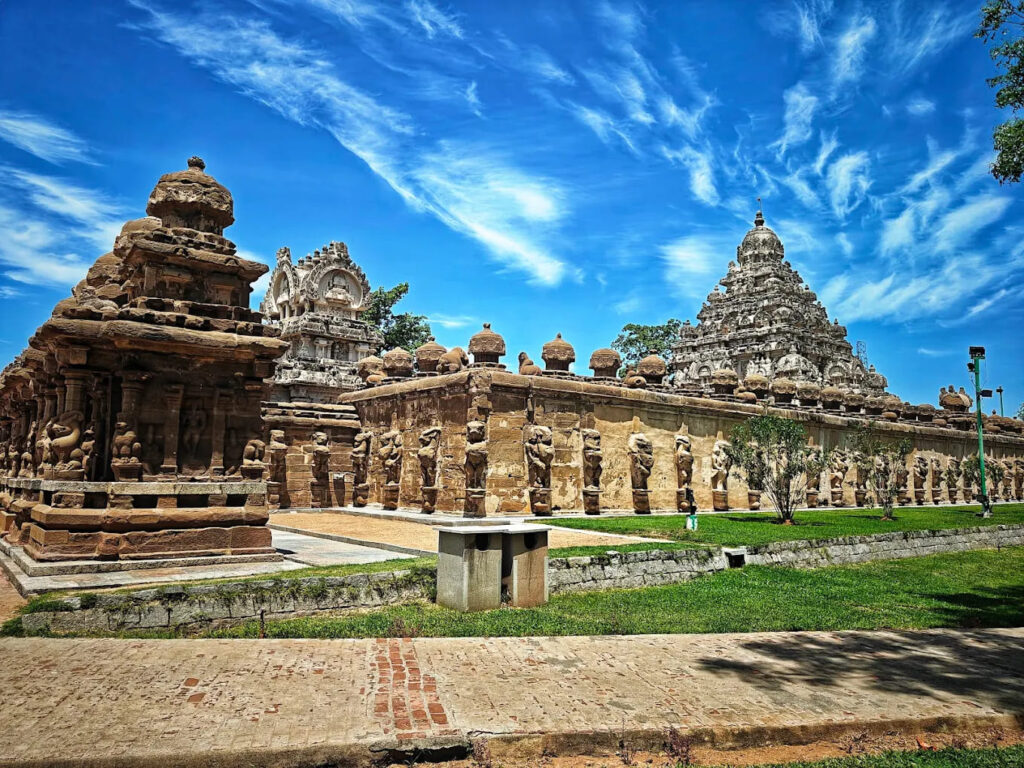
The Kailasanathar Temple, located in Kanchipuram, Tamil Nadu, is an eighth-century Shaivite temple constructed under the patronage of the Pallava King Narasimhavarman II, also known as Rajasimha. Built between 700 and 728 CE along the banks of the Vegavathi River, it is the oldest known temple in Kanchipuram and a prime example of Dravida temple architecture. It is one of the earliest large-scale structural sandstone temples in South India.
Architectural Significance
The temple introduced two hallmark features of Pallava structural temples:
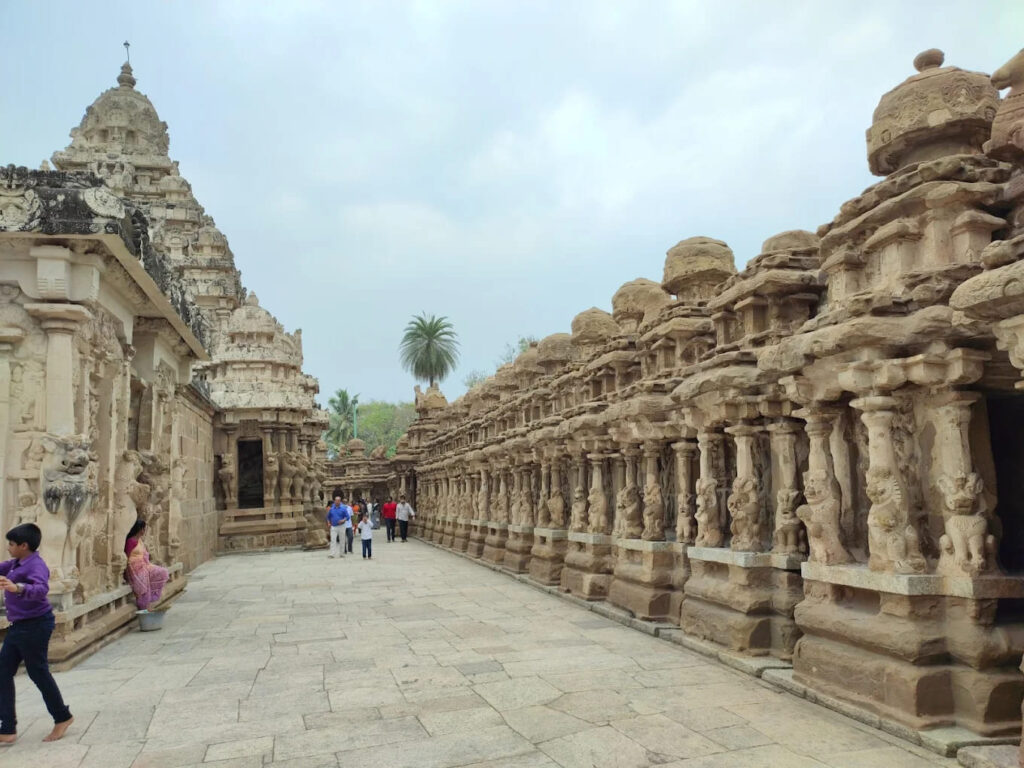
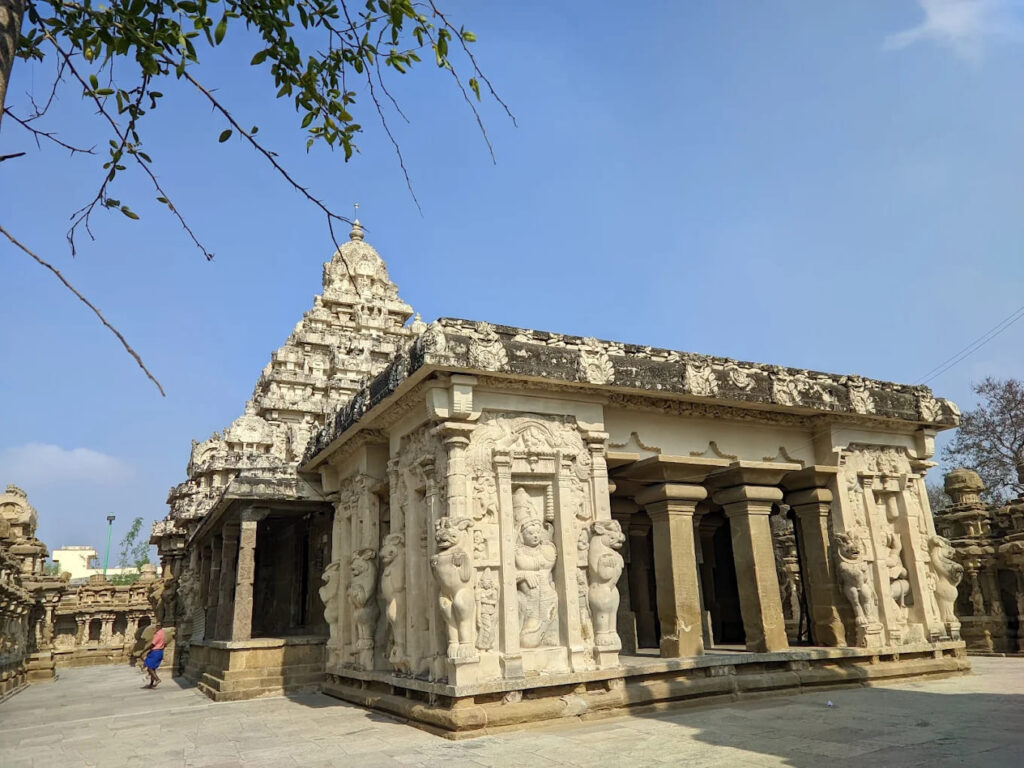
- Pillars and pilasters with stylised lion or horned-lion bases (simhapada or vyalapada)
- A granite plinth to prevent water seepage and stabilise the structure
Although its general plan inherited features from early Pallava rock-cut temples, the use of sandstone allowed more elaborate sculptural ornamentation. The temple was originally called Rajasimha Pallaveshvara, but gained the popular name Kailasanathar from an inscription describing its lofty vimana as reaching the realm of Shiva (Kailasa).
Layout and Structure
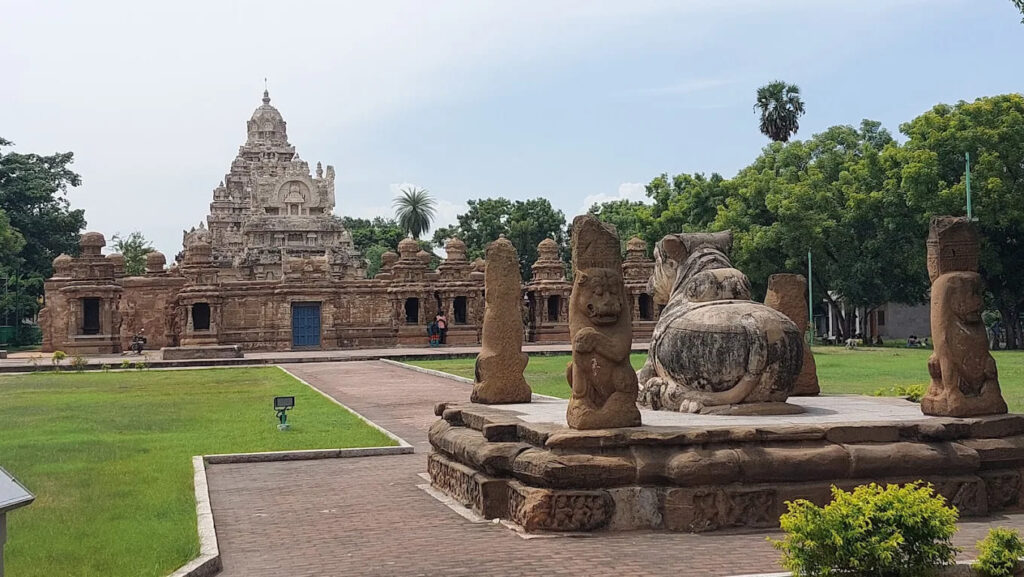
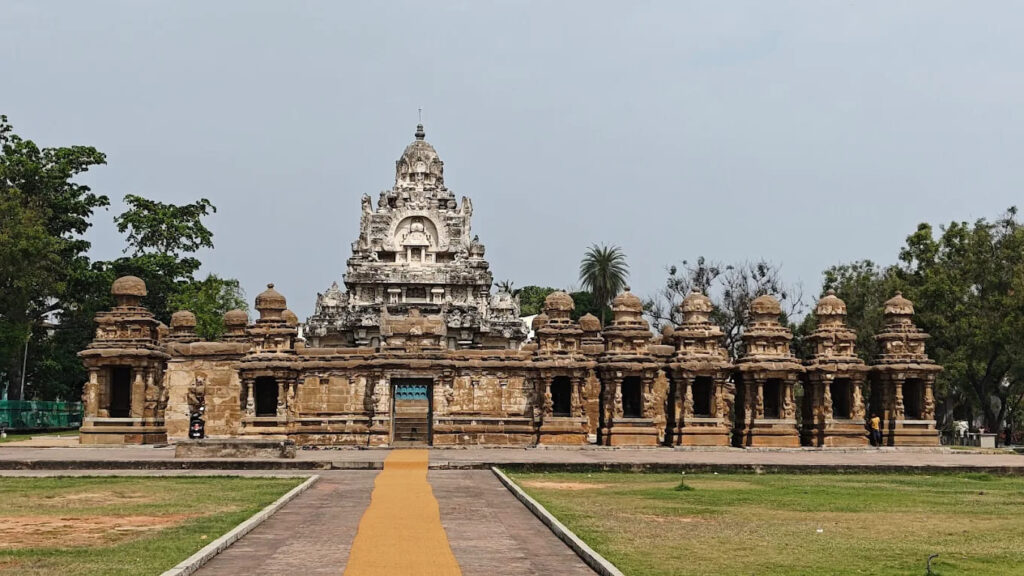
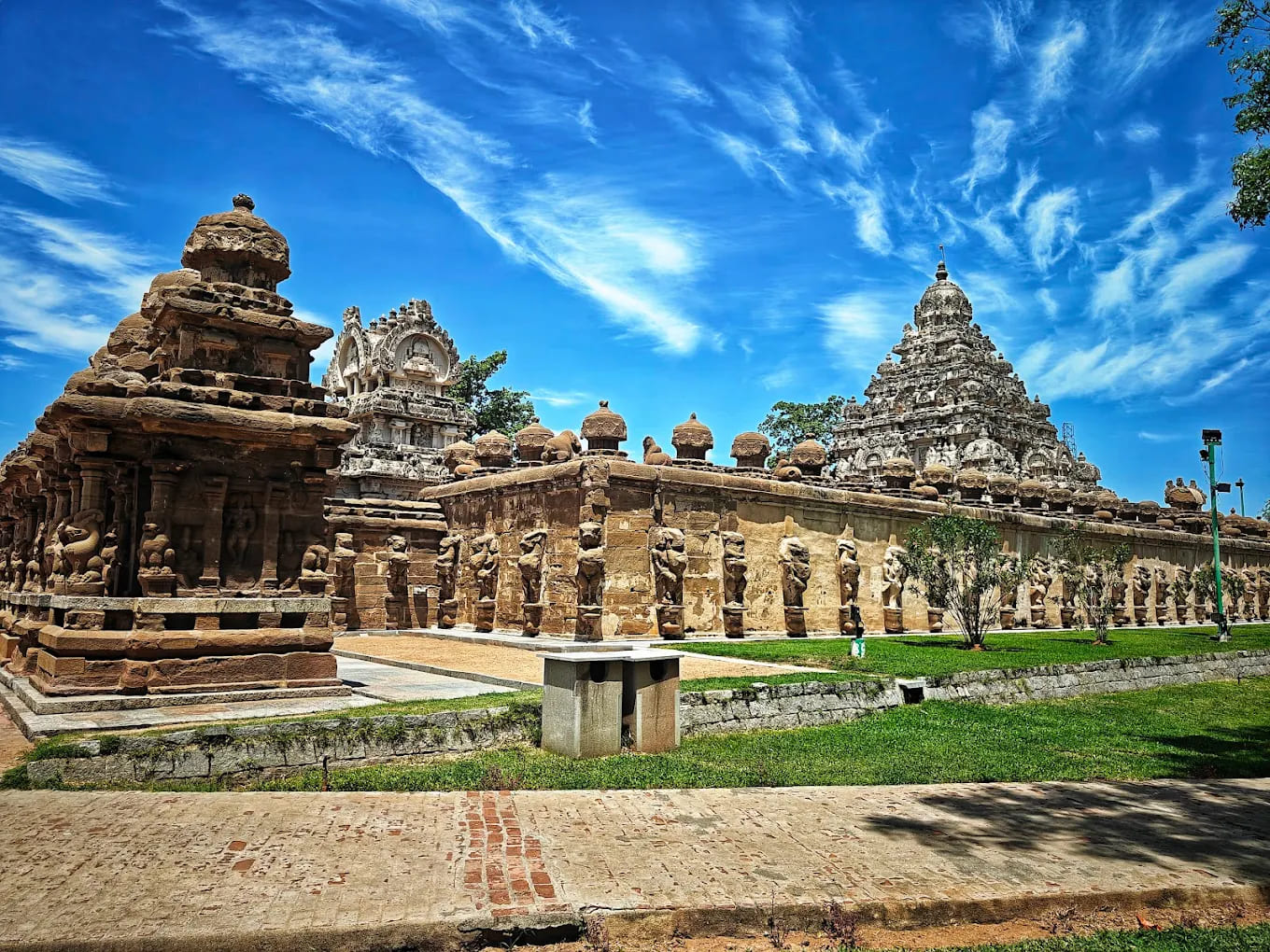
The temple is oriented east–west. The original complex included a garbhagriha (sanctum) and a detached mahamandapa, later connected by an ardhamandapa. A continuous series of fifty-eight sub-shrines (devakulikas) line the inner side of the prakara (perimeter wall).
Later additions included:
- A low gopuram (gateway tower) with a secondary shrine
- A forecourt in front of the gopuram
- A northern gopuram (now closed)
The devakulikas aligned with the sanctum have prominent alpa-vimana roofs, mirroring the main four-storeyed vimana. Eight devakulikas, believed to have been commissioned by Rajasimha’s queens, flank the eastern entrance. A Nandi statue faces the temple from the courtyard near the stepped tank and carved well.
Main Shrine and Sculptures
Inside the garbhagriha stands the main deity, a 2.5-metre high, sixteen-faceted, polished black stone lingam. Behind it is a Somaskanda relief. The exterior vimana features seven sub-shrines and richly sculpted Shaiva iconography. Notable depictions include:
- Dakshinamurthi
- Bhikshatanamurthi
- Tripurantakamurti
- Kalasamharamurti
- Gangadharamurti
- Urdhvathandavamurti
The mahamandapa houses sculptures of goddess forms representing Shakti, complementing the Purusha energy of the lingam.
Secondary Shrine – Mahendravarmeshvaragriha
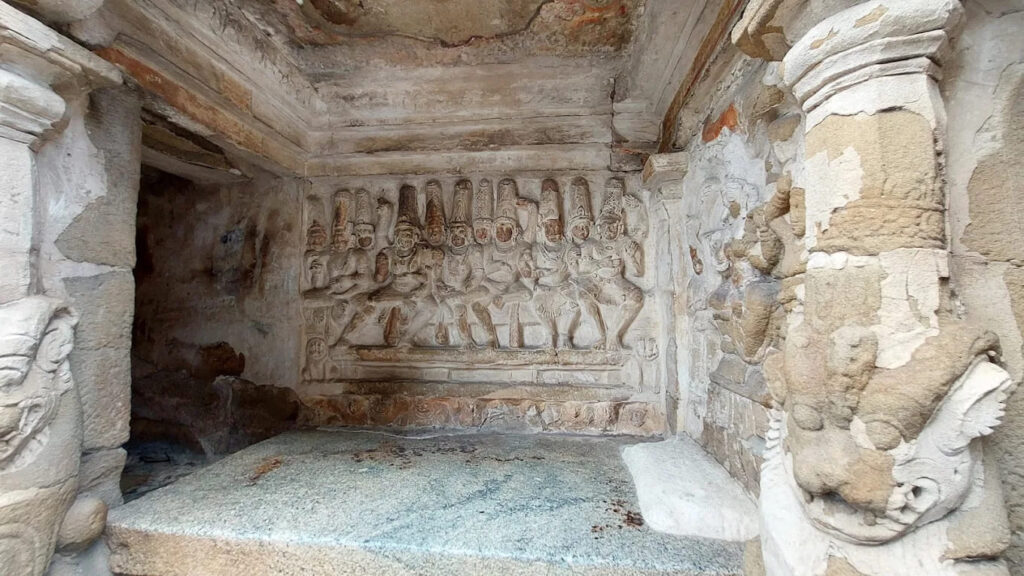
Added by Mahendravarman III during his father’s lifetime, this shrine lies between the two courts. It houses a multi-faceted dharmalingam with a relief of Shiva-Parvati accompanied by Brahma, Vishnu and celestial attendants. Sculptures of Shiva’s aspects appear on the southern (Dakshinamurthi), western (Uma-Maheshvara) and northern (Bhairavamurthi) sides.
Sub-Shrines and Thematic Iconography
The devakulikas contain images of Shiva, Vishnu, Shakti, Kartikeya, Ganesha, Surya and Yogeshvara. A recurring Somaskanda motif appears in many shrines. Placement follows a thematic scheme:
- South wall – destructive aspects of Shiva
- North wall – benign aspects
The outer shrines resemble the rathas of Mahabalipuram and were once painted, as revealed when plaster peeled off.
Inscriptions and Historical Records
The temple’s plinths bear over 250 honorific titles (birudas) of Rajasimha, inscribed four times in different script styles. Titles like Kalasamudra (“ocean of arts”) and Ekavira (“foremost hero”) celebrate his accomplishments.
An inscription also records the visit of Western Chalukya King Vikramaditya II, who admired the temple and left its treasures untouched.
Artistic Legacy
The Kailasanathar Temple marks a shift from the monumental works of Mahabalipuram, embracing elaborate decoration (alamkara) and sculptural detail. This style influenced later Pallava temples and set a precedent for South Indian temple architecture.
Specialty of the Temple
Key highlights include:
- Mythological lions facing multiple directions
- A depiction of Shiva playing a unique style of the veena
- A narrow circumambulatory passage around the sanctum
History and Preservation
Built around 705 CE, the temple has been preserved by the Archaeological Survey of India. Historians regard it as a trendsetter in South Indian temple design due to its unique sculptures, facades and grand towers.
Location
The Kailasanathar Temple is located on the western side of Kanchipuram city, approximately 75 km from Chennai, attracting pilgrims, historians and tourists throughout the year.
Gallery of Kailasanathar Temple: