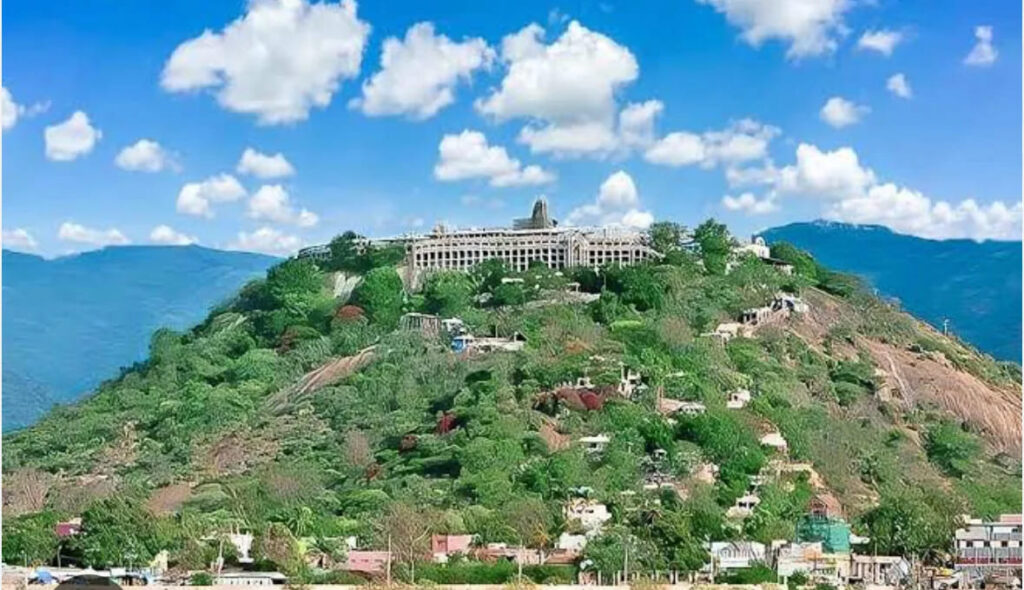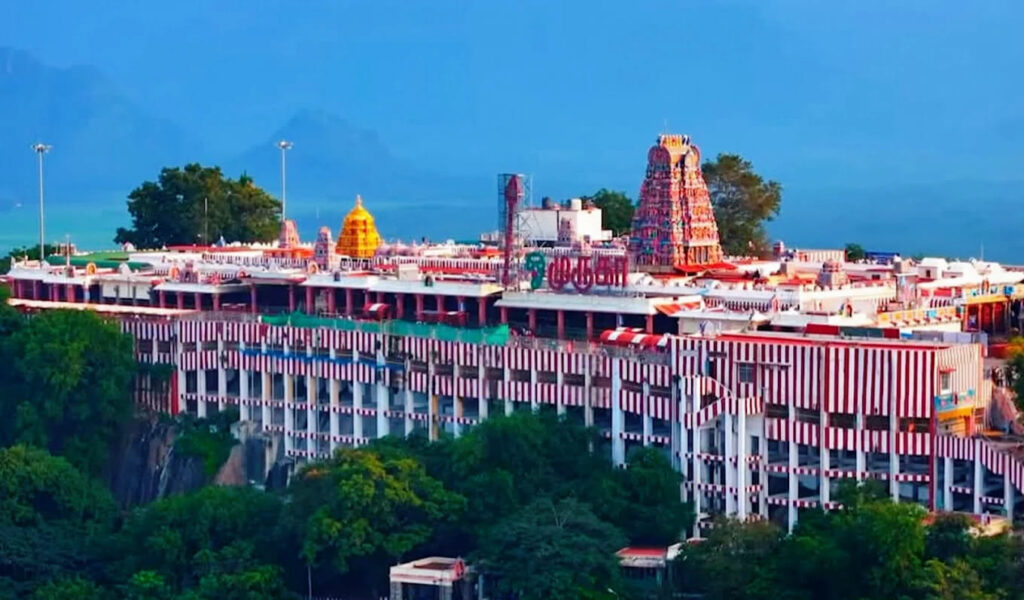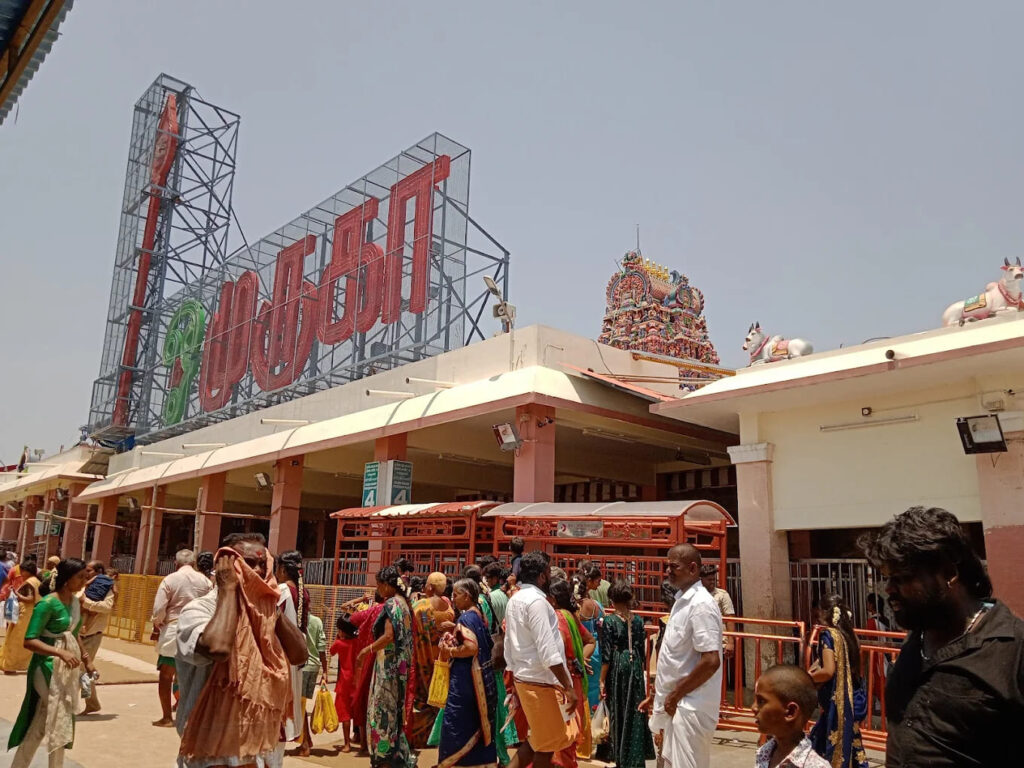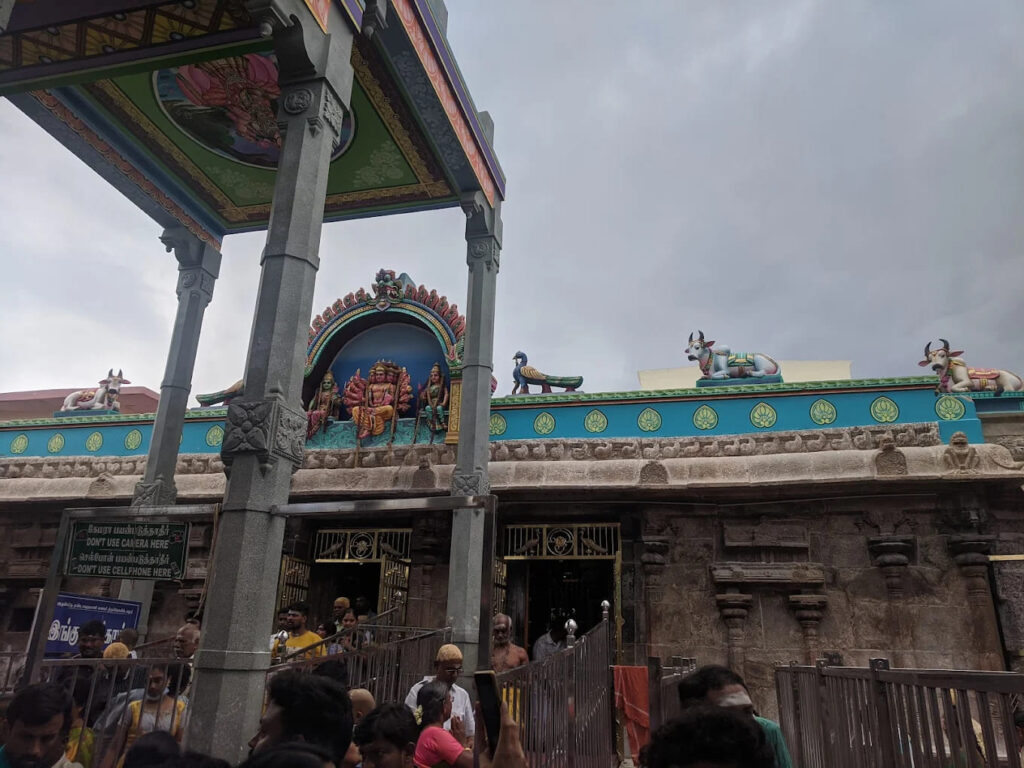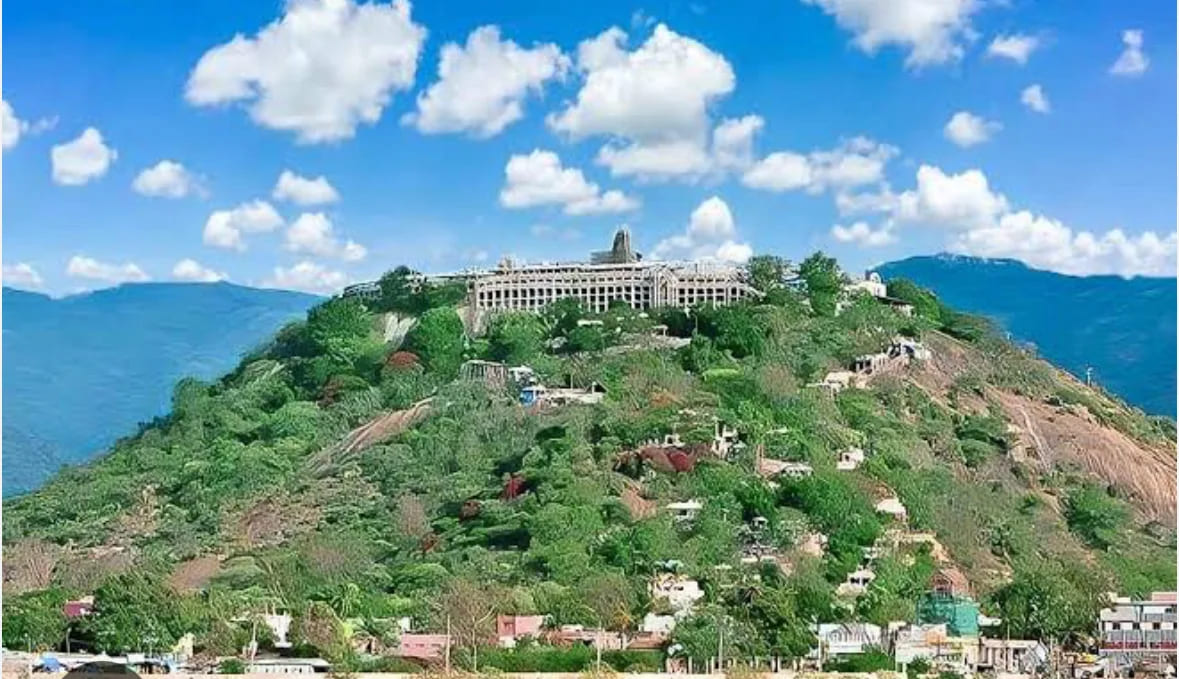
The Dhandayuthapani Swamy Temple, nestled atop the verdant Palani Hills in Dindigul district, Tamil Nadu, stands as a revered beacon of Murugan worship and is one of the illustrious Six Abodes of Lord Murugan (Āṟupadai Veedu). According to Hindu legend, this hillock was once carried by the asura Idumban from Kailasha on the command of sage Agastya. When Murugan halted its journey and made the hill his abode, it became known as Palani, symbolizing his retreat from the material world in protest over the gnana-palam (fruit of wisdom) episode.
The myth narrates that when sage Narada gifted a sacred fruit of knowledge to Lord Shiva, he decided to award it to whichever of his sons Murugan or Ganesha circled the world three times. While Murugan took off on his peacock to physically encircle the earth, Ganesha circumambulated his parents, signifying that they embodied the universe. When Ganesha was declared the winner, Murugan feeling wronged, renounced worldly ties and took refuge on the Palani hill, embracing the life of a hermit.
The idol of Murugan housed in the garbhagriha (sanctum) is believed to have been created by the legendary Siddhar Bogar using an extraordinary amalgamation of nine medicinal herbs known as Navapashanam. According to temple lore, Bogar still resides in deep meditation within a hidden cave connected to the temple through a secret passage. A shrine dedicated to him is found within the temple’s southwestern corridor.
Architecturally, the temple showcases early Dravidian style, with later additions by the Pandyas and Cheras, dating back as early as the 2nd century CE. The majestic gold-plated Vimanam atop the sanctum, adorned with intricate carvings of deities, adds divine splendor to the temple. Ancient Tamil inscriptions line the temple walls, and the complex includes shrines to Shiva, Parvati, Ganapati and Bogar himself.
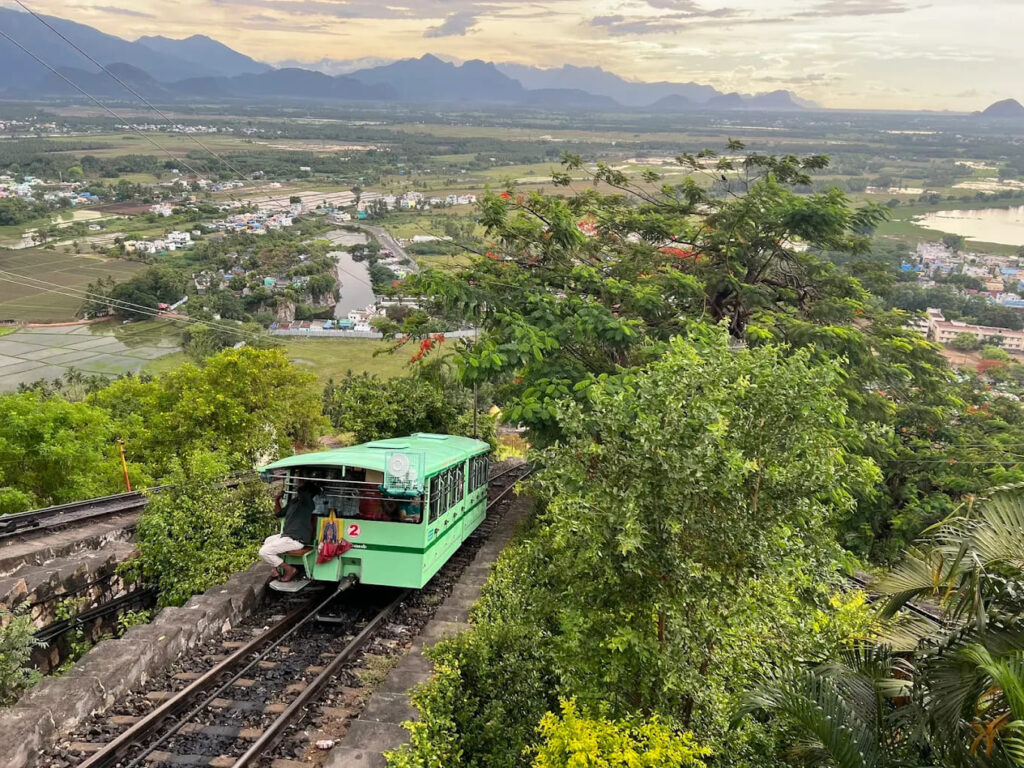
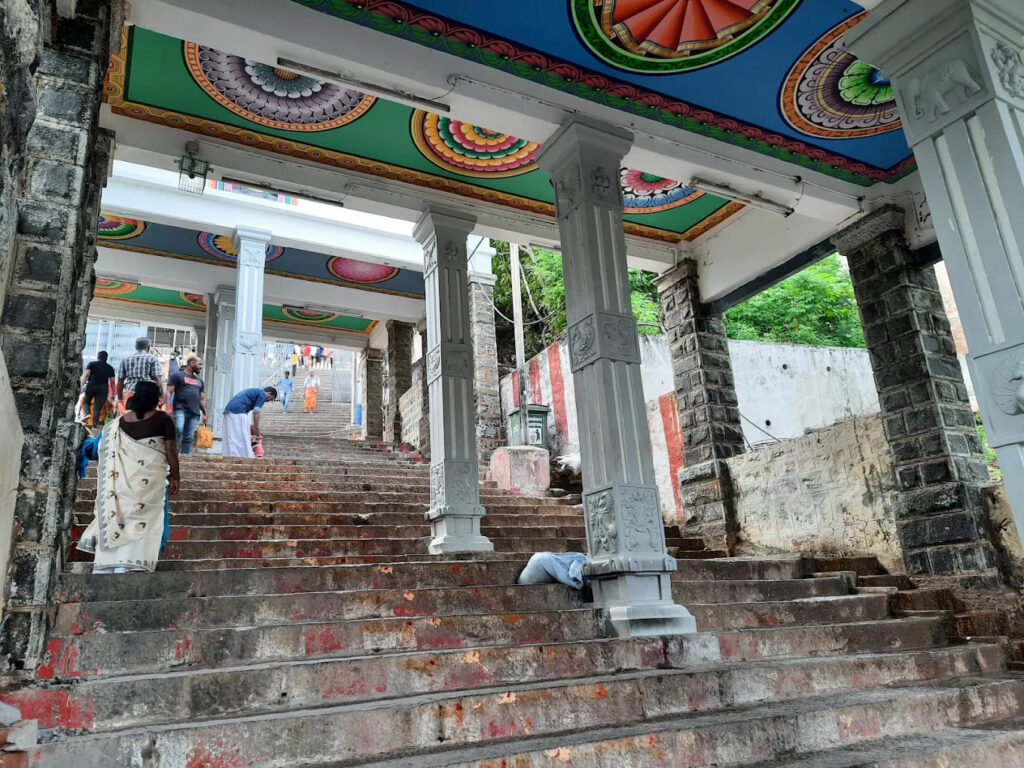
Access to the hilltop temple is provided through several means: climbing 693 sacred steps, walking the sliding path, or by modern transport options such as the winch railway and rope car. At the base lies the Thiruavinankudi Kulandhai Velappar Temple, considered the place of Murugan’s divine birth, near the sacred Saravana Poigai tank. Devotees often visit this shrine before proceeding uphill.
One of the most prominent rituals here is tonsuring, an act of symbolic renunciation and purity. Devotees shave their heads, imitating Murugan’s ascetic form, and apply sandalwood paste to their scalps just as the temple priest anoints the idol each night. The overnight sandal paste is distributed as prasadam, believed to have healing properties. The temple is also a site for newborn rituals such as tonsure and ear piercing.
The temple is also synonymous with the iconic Palani Panchamritam, a sacred prasadam made of five ingredients, now recognized with Geographical Indication (GI) status.
Among the many festivals celebrated, Thaipusam stands out as the grandest, marked by throngs of devotees carrying kavadi – a symbolic burden of gratitude or penance. Kavadi bearers, often on a strict 48 days vow of austerity, walk barefoot, chant Murugan’s name, and carry elaborately decorated structures on their shoulders. Other key festivals include Panguni Uthiram, Vaikasi Visakam and Sura Samhaaram.
Legend also tells of a time when all sages and gods assembled at Mount Kailash, causing an imbalance in the earth’s weight. To restore equilibrium, Shiva instructed Agastya to travel south. Agastya enlisted Idumban to carry Sivagiri and Sakthigiri, but when Idumban tried to retrieve the hill he rested on, he encountered a divine youth Murugan who defeated him. Thus, the hill became Murugan’s eternal abode and the tradition of kavadi is believed to have originated from Idumban’s burden.
Today, the Palani Murugan Temple remains a powerful symbol of spiritual discipline, divine grace and Tamil cultural heritage. Its legends, architecture and sacred rituals continue to draw millions of devotees seeking wisdom, healing and spiritual transformation. Every sculpture, every stone and every sacred chant within its walls echoes the eternal connection between the divine and the earthly, making Palani one of the most iconic spiritual landmarks of India.
Gallery of Palani Dhandayuthapani Swamy Temple