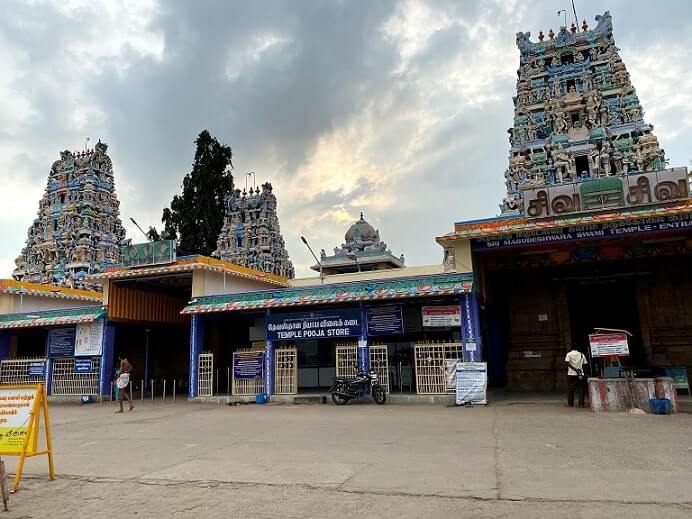
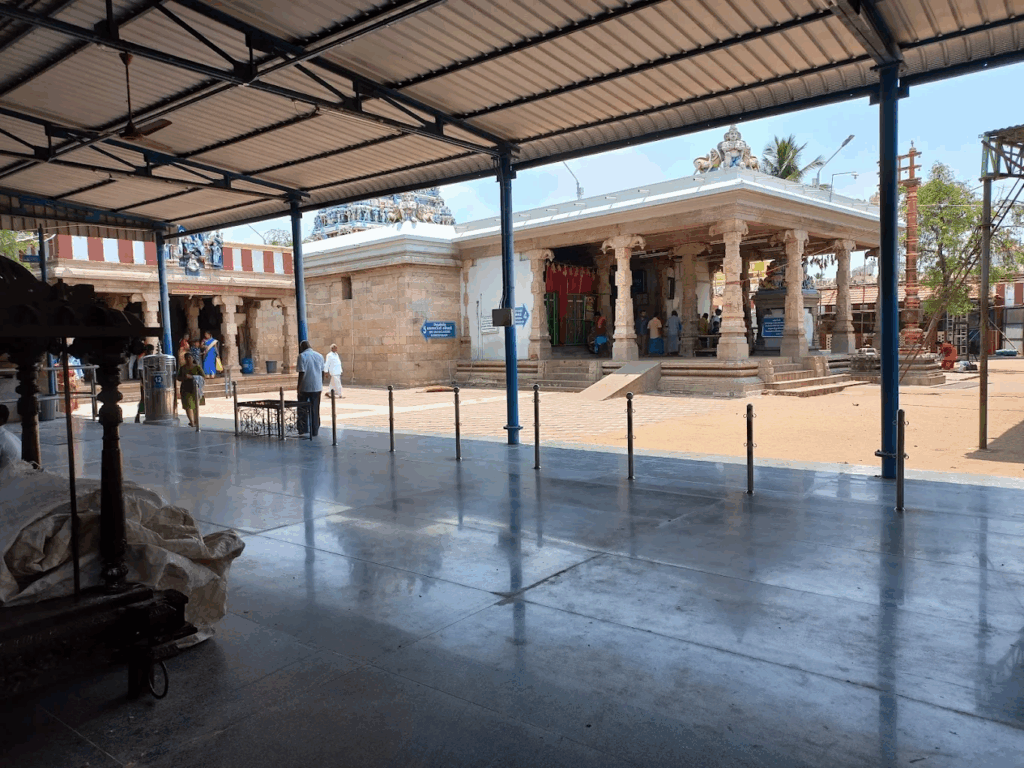
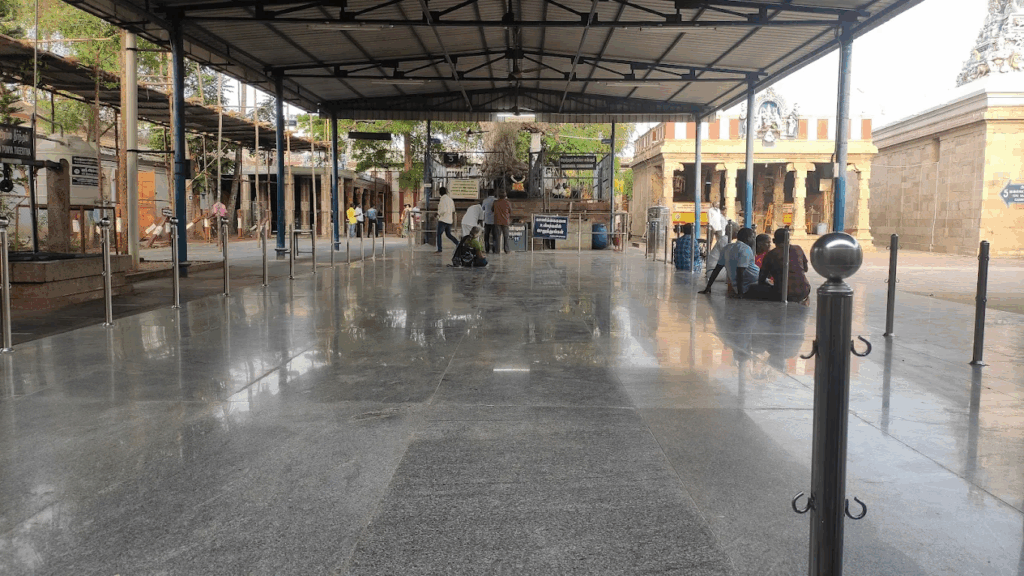
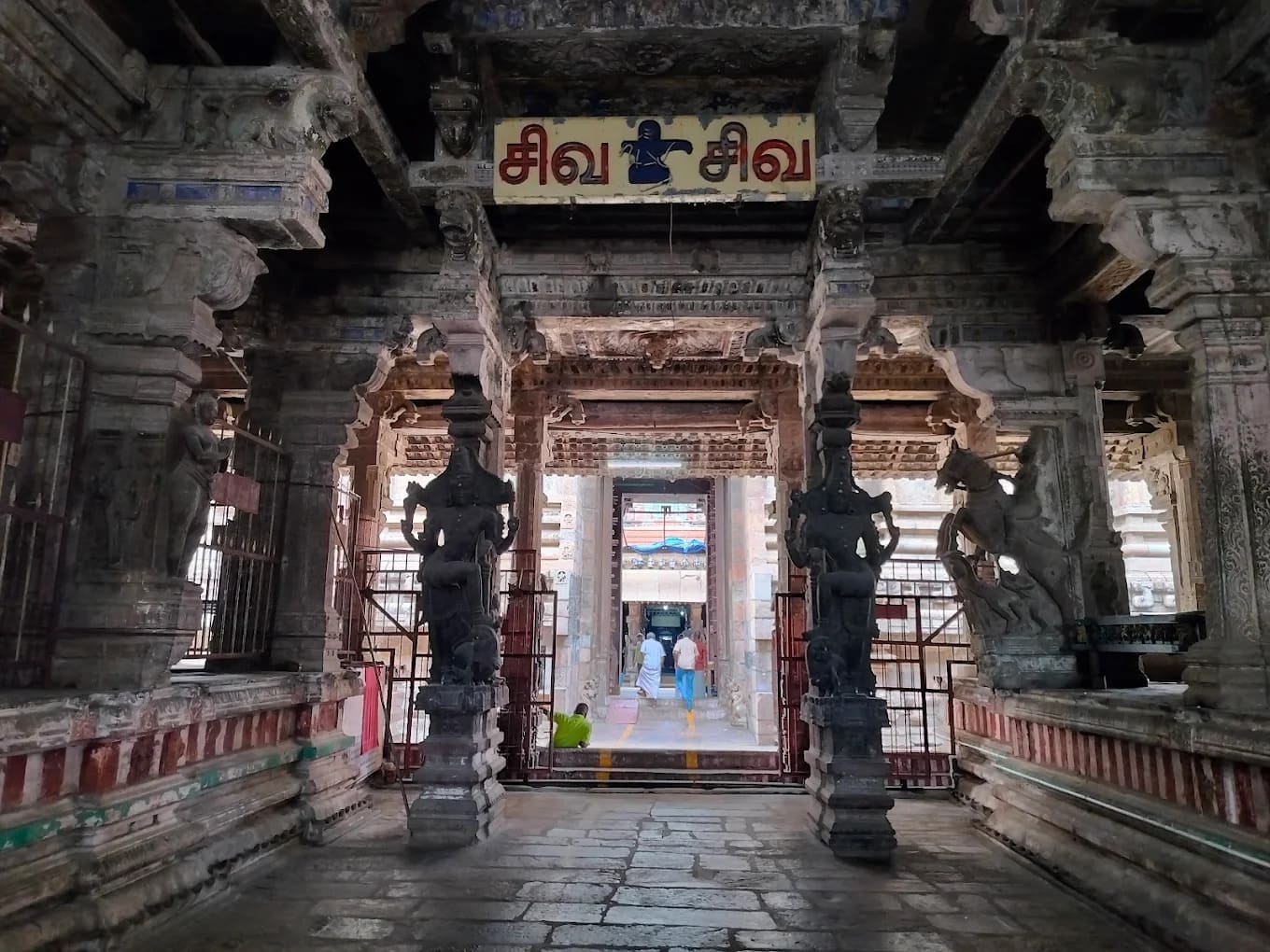
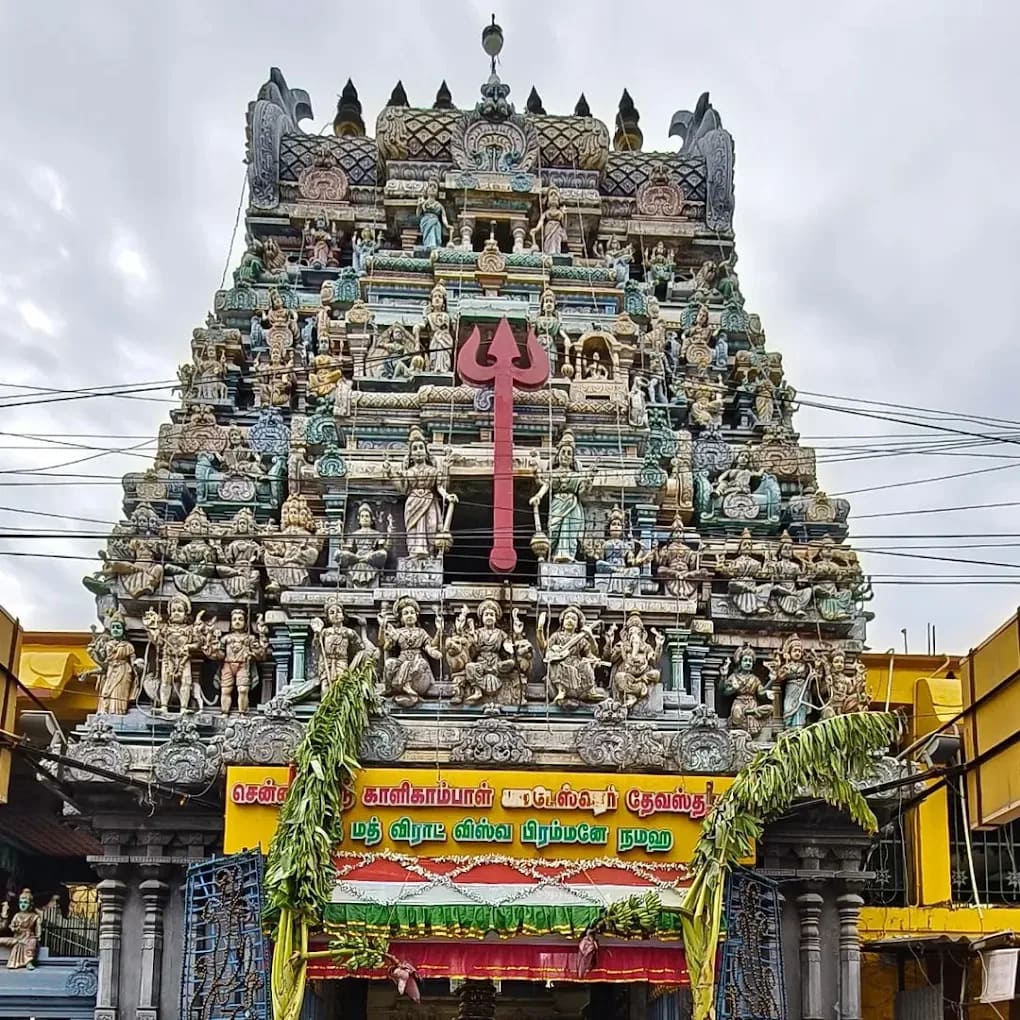
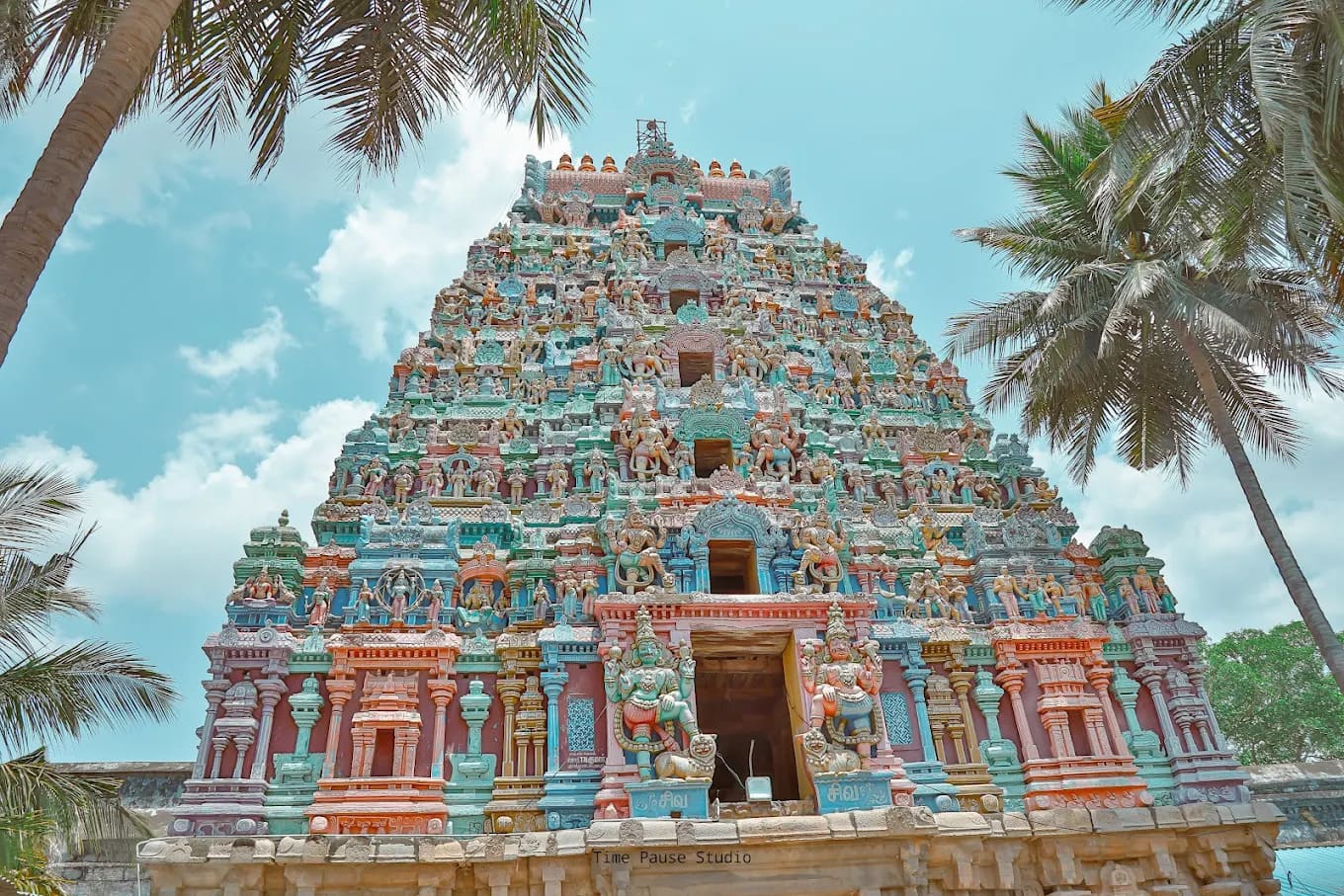
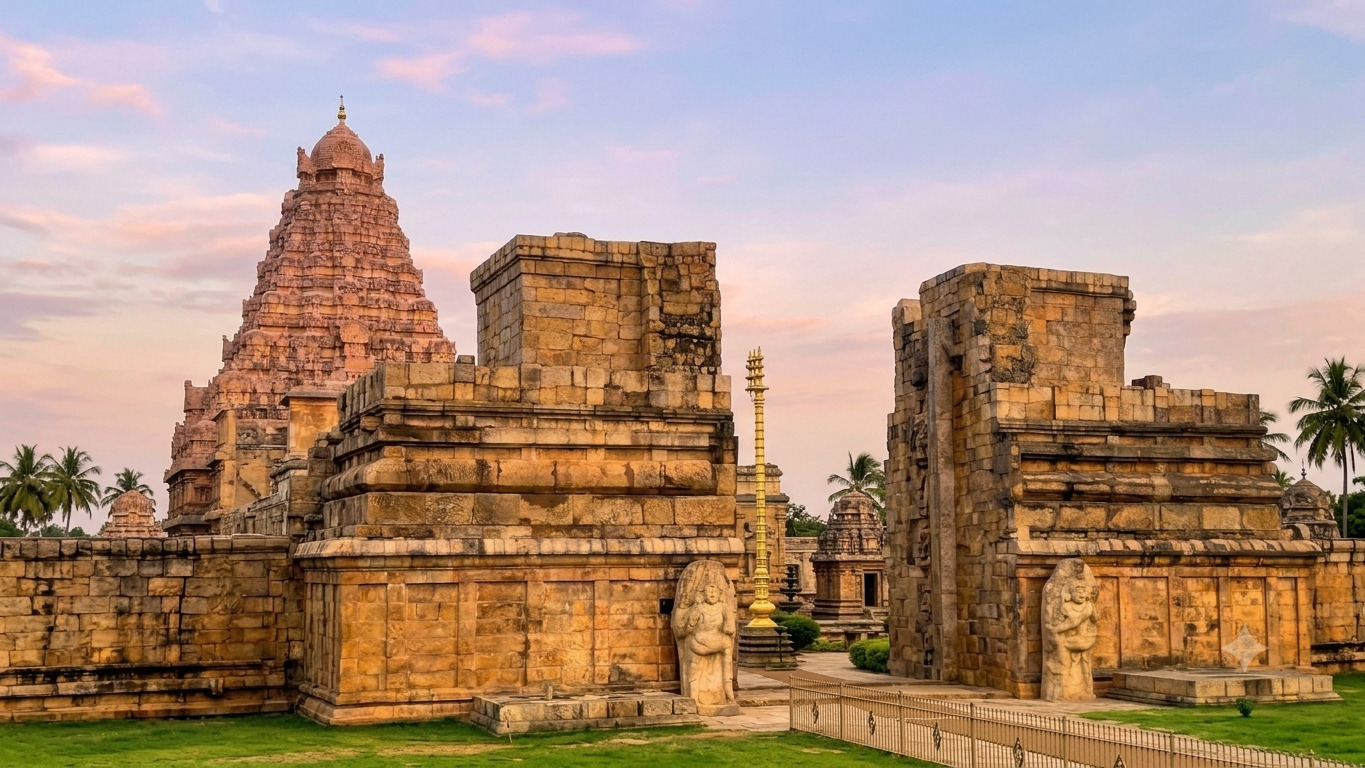
The Magudeswarar Temple in Kodumudi, located about 40 km from Erode in Tamil Nadu, is a magnificent and historic Hindu temple dedicated to Lord Shiva. Revered as the sixth temple in the Kongu region praised in the Thevaram hymns, this temple is beautifully situated on the sacred banks of the River Kaveri. The temple holds deep spiritual significance, with the sage Agastya closely associated with its legend. A rock in the middle of the river, opposite the temple, is believed to be the spot where a crow tipped the sage’s cup—adding a mystical charm to the lore.
Architectural Grandeur and Divine Assembly
This sprawling temple complex is uniquely known as Trimurthy Kovil, housing shrines dedicated to the holy trinity—Lord Shiva (Magudeswarar/Kodumudinathar), Lord Vishnu (Veeranarayana Perumal), and Lord Brahma. The temple features three majestic eastern entrances, each leading to different divine shrines. To the north lies the shrine of Shiva, and to the south, the sanctum of Goddess Parvathi, worshipped as Panmozhi Nayaki or Soundarambika. The central shrine to Lord Vishnu signifies the unity of divine energies.
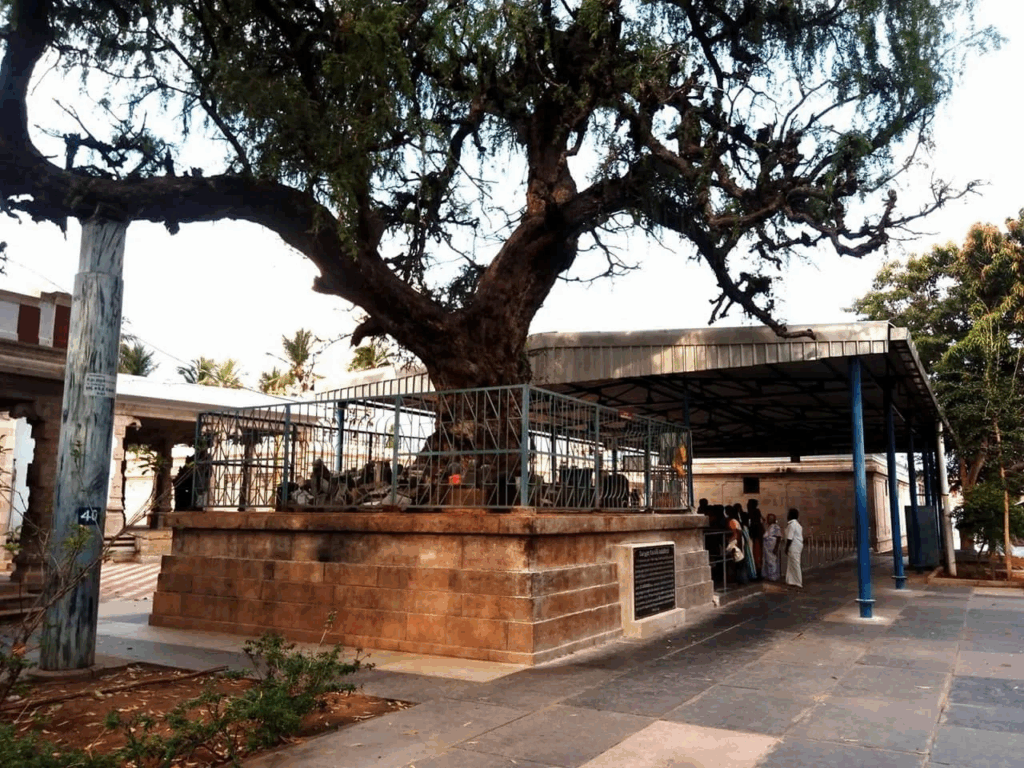
The Kunchitapaada Natarajar idol, notable for standing with both feet on the ground—unlike the usual raised foot pose—is a rare depiction. The temple’s Stala Vriksham is the sacred Vanni tree, and its holy Theertham is the ever-flowing River Kaveri.
Main Shrines within the Temple Complex
The temple contains seven prominent shrines:
- Magudeswarar (Shiva)
- Sundaranayaki (Parvati)
- Veeranarayana Perumal (Vishnu)
- Thirumangai Nachiyar Thayar
- Anjaneya Swami
- Shaneeswar
- Sooryan & Chandran
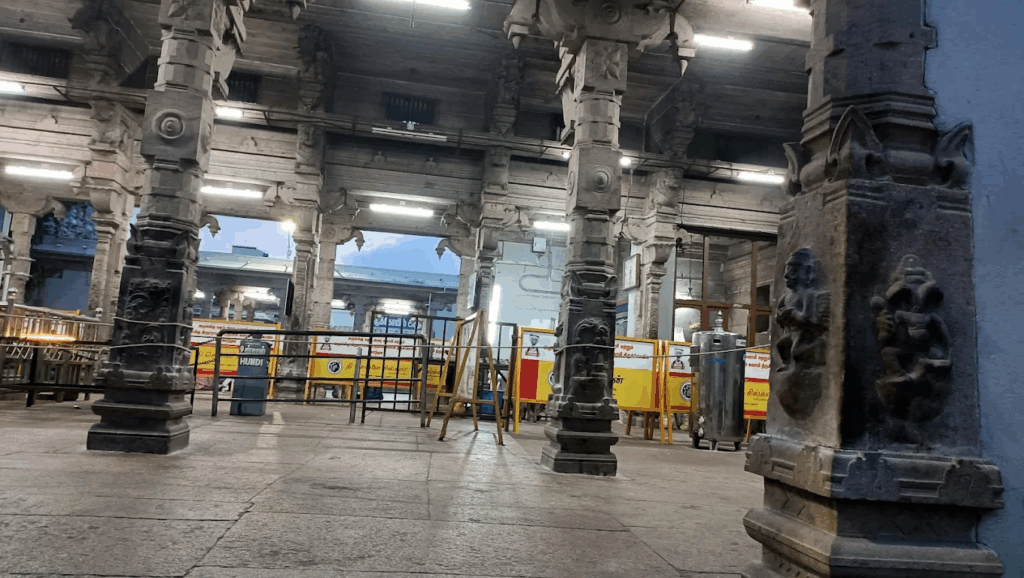
All these sanctums are intricately sculpted in stone, each with its own legend and significance.
Sacred Legends and Historical Roots
One of the temple’s legendary tales involves Sage Agastya, who tried to stop the disappearing idol of Shiva. The deity still bears the sage’s fingerprints, carved into myth and stone. The temple is also known as Tiruppandikodumudi, owing to the patronage of the Pandya kings like Sundarapandiyan Kesari, who left behind inscriptions and donations of land and jewels.
A fascinating myth connects this site to a cosmic contest between Adiseshan and Vayu, during which a diamond from Adisesha’s head is said to have landed here, blessing the temple with divine energy. The local Vinayakar is affectionately called Kaviri Kanda Vinayakar, the one who saw the origin of the river Kaveri flowing from the kamandalam of Sage Agastya.
Literary and Spiritual Legacy
Recognized as one of the 275 Paadal Petra Sthalams, this temple has inspired Tamil Shaivite saints Sambandar, Appar, and Sundarar, with Sundarar composing his famous Namachivaya Pathigam here. Countless literary works also glorify the spiritual and cultural significance of this ancient temple.
Vibrant Festivals and Celestial Events
The temple hosts vibrant festivals throughout the year. The grand Bhrammotsavam is celebrated in the Tamil month of Chittirai, while Aadipperukku is marked by the beautiful ritual of floating lamps on the river. A unique celestial spectacle occurs during Panguni and Aavani, when the rays of the sun directly illuminate the sanctum of Lord Shiva and Goddess Ambal for four consecutive days. Other major festivals include Aippasi Pournami, Thaippoosam, and the divine Arudra Darisanam.
Gallery: