Historical Background
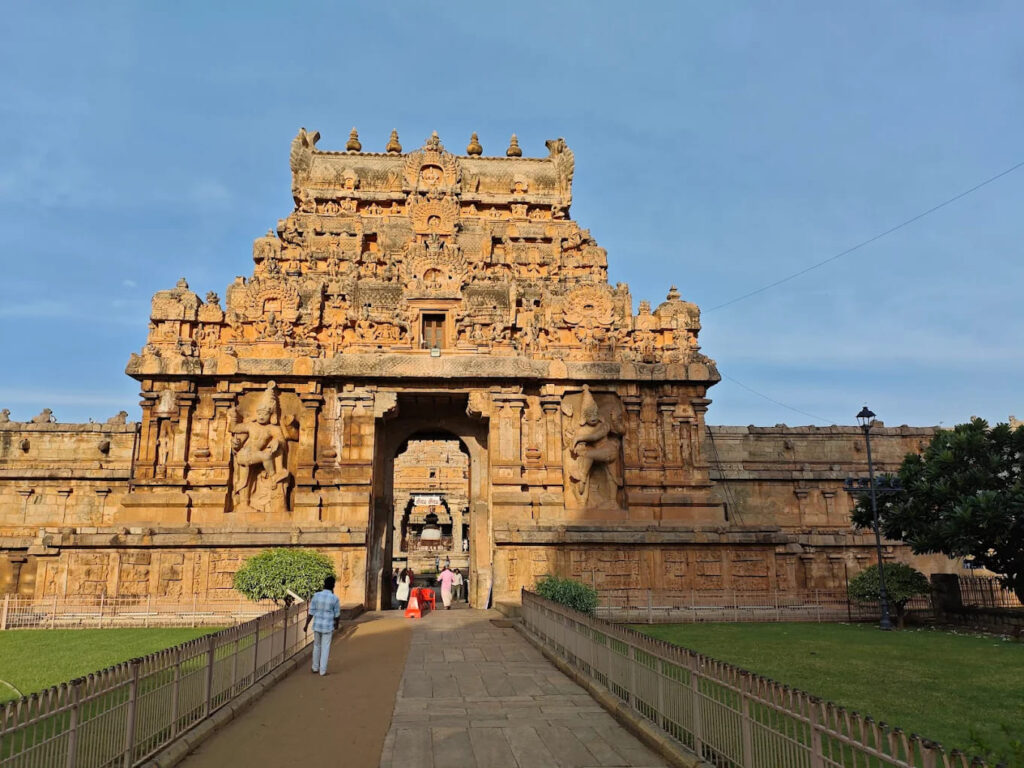
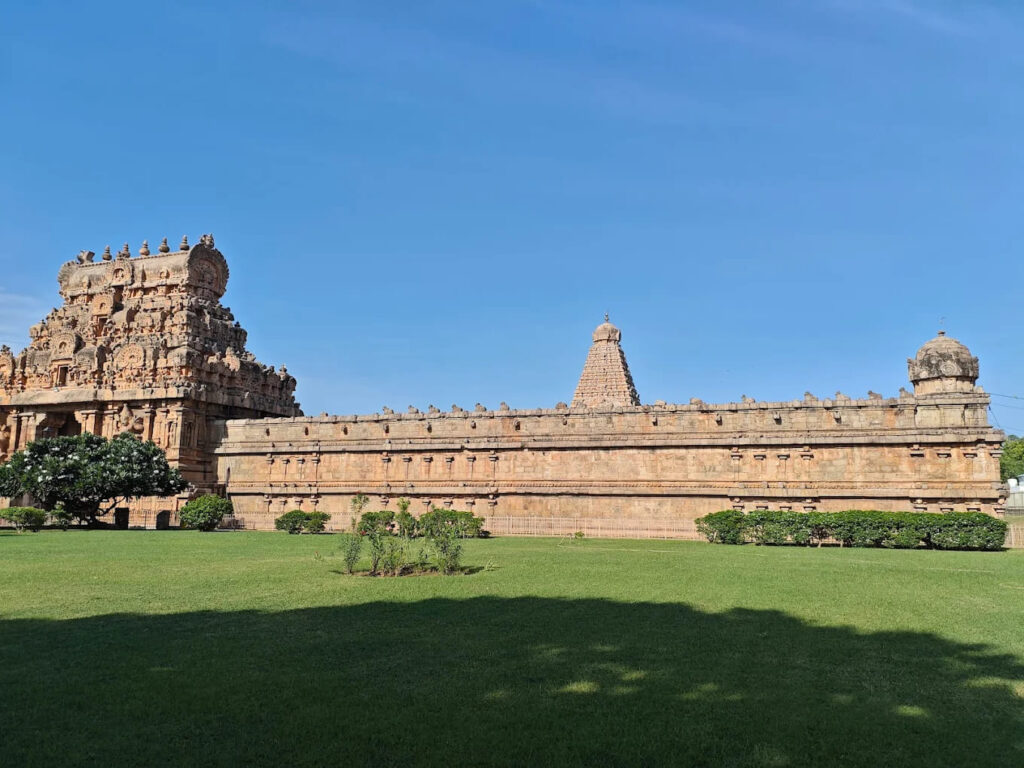
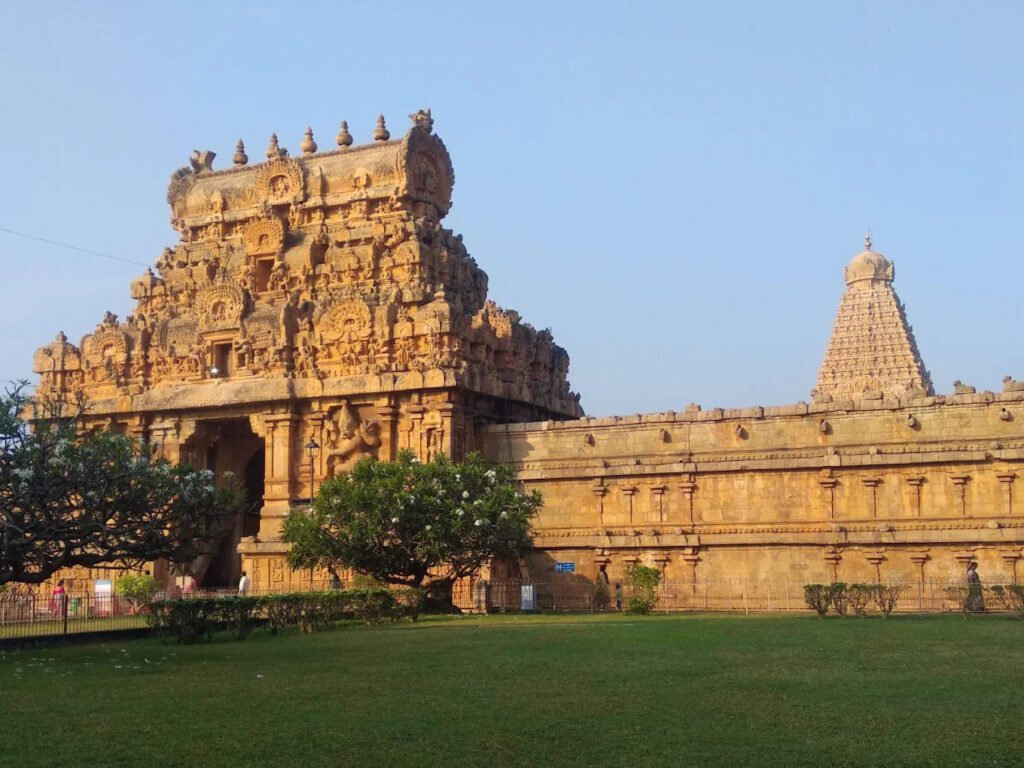
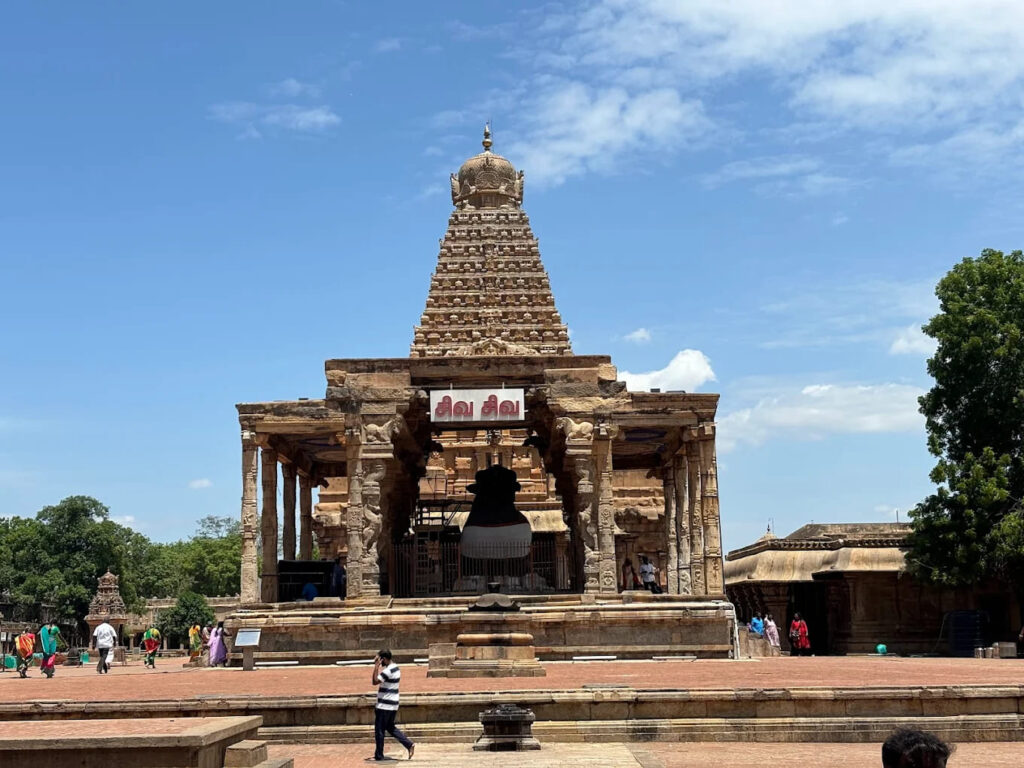
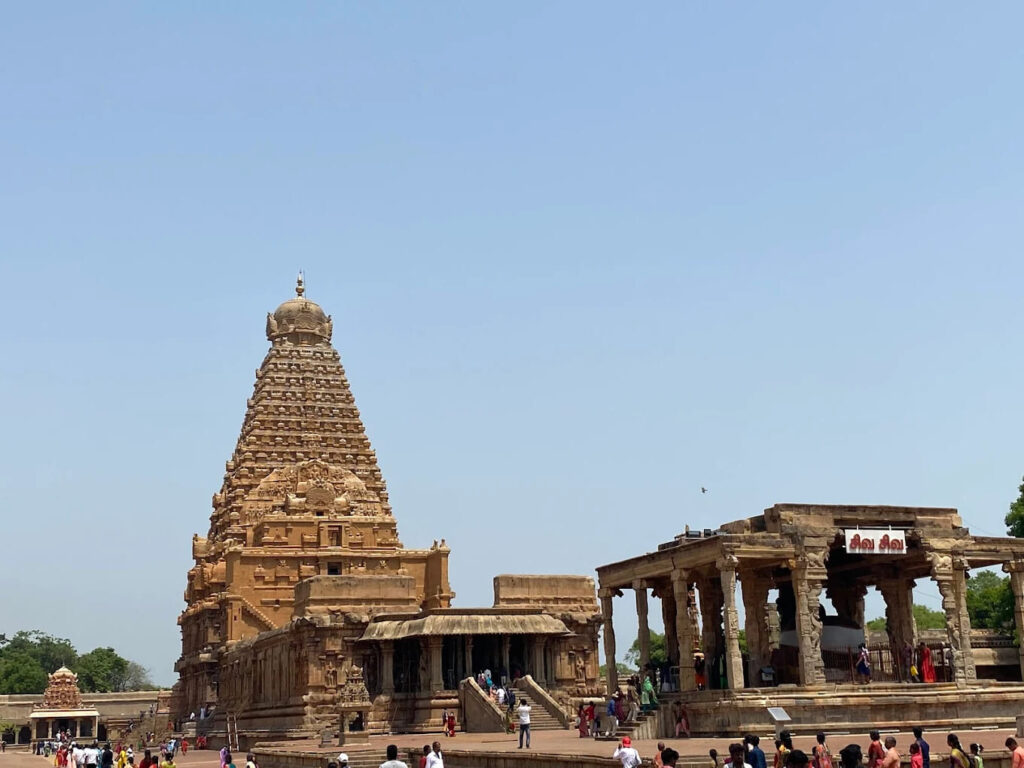
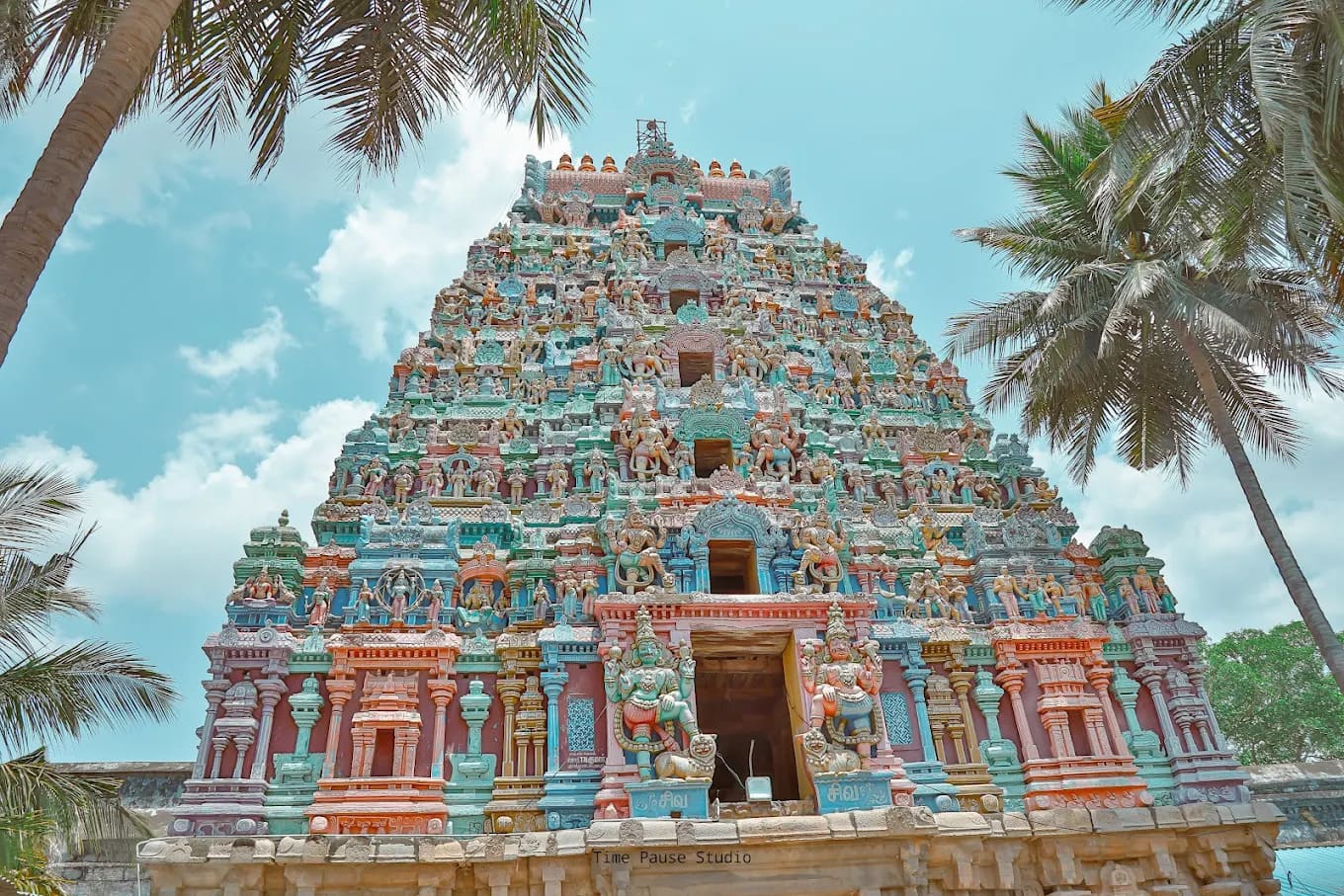
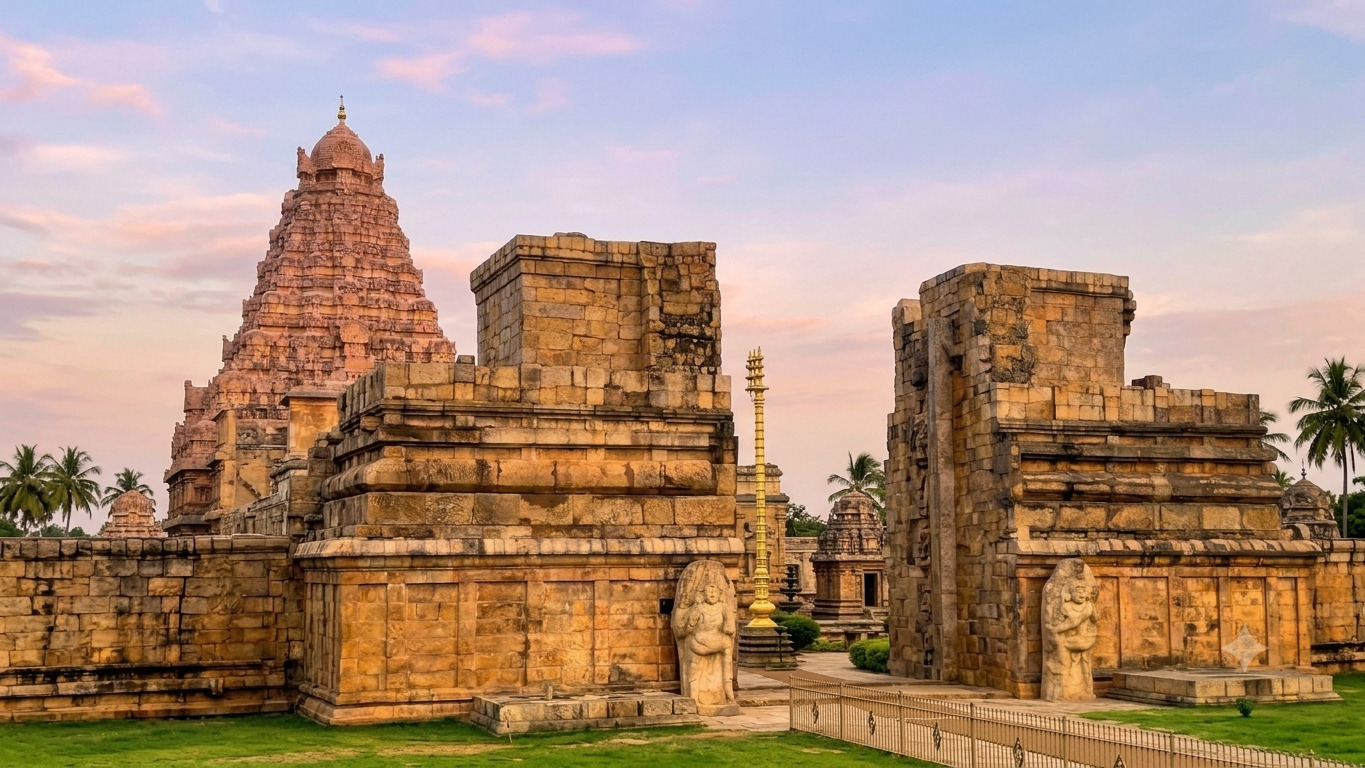
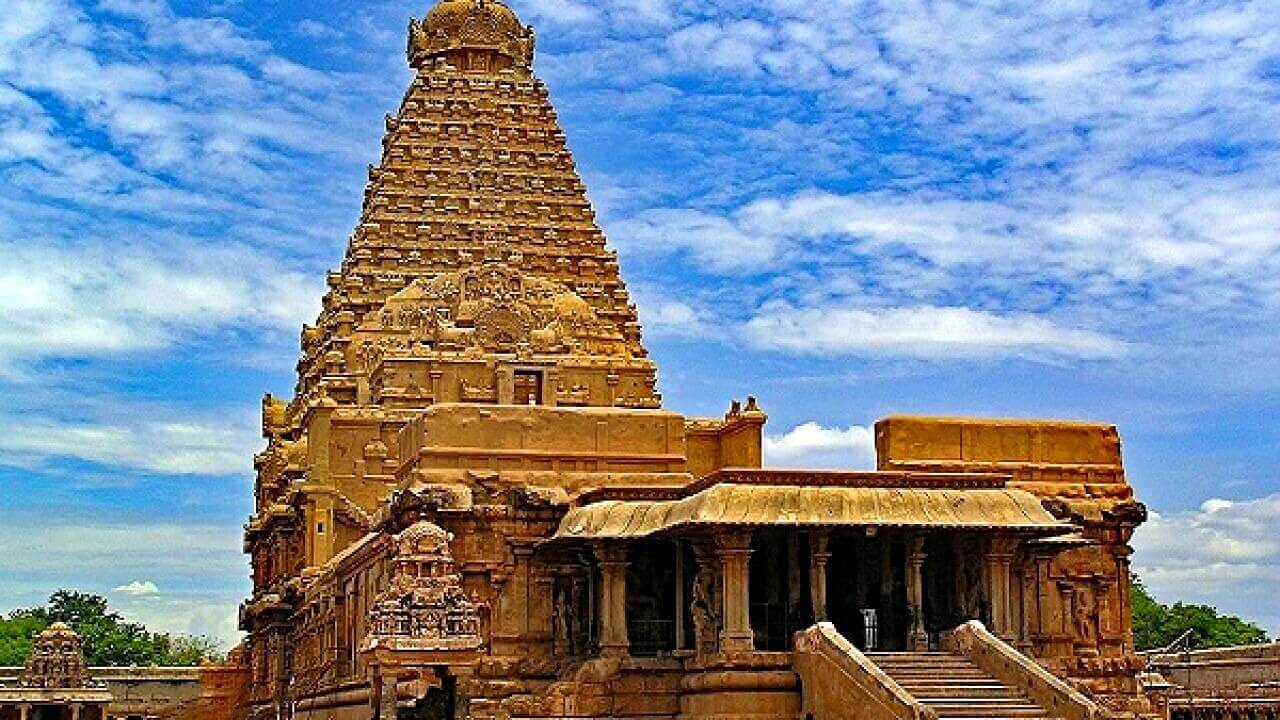
Brihadeshwara Temple, also known as Thanjai Periya Kovil, Rajarajeswaram and Dakshina Meru, was built between 1003 and 1010 CE by Rajaraja Chola I. Located on the southern bank of the Kaveri River, this Dravidian-style temple is dedicated to Lord Shiva. It is one of the largest Hindu temples and a UNESCO World Heritage Site, celebrated as part of the Great Living Chola Temples.
An Engineering Mystery Beyond Time
Despite today’s advanced scientific tools, researchers still struggle to explain how such a colossal structure was built over 1000 years ago, without modern machinery. The temple stands as proof of extraordinary engineering, leaving experts astonished and curious even today.
Granite – The Timeless Stone
While many assume granite came into wide use only in the 20th century, this temple was constructed almost entirely of granite a thousand years ago. The massive stones used in the temple’s construction remain a mystery – where they were quarried and how they were transported across flat Thanjavur plains is still debated.
Unique Construction System
The temple’s architecture follows a light bonding system. Stones were interlocked with precise gaps, similar to the rope-bed weaving method still seen in rural households.
This design not only added strength but also absorbed natural vibrations, making the structure earthquake-resistant.
The Grandeur of Scale
- Shivalinga height: 12 feet
- Pedestal height: 18 feet (symbolic of 18 Tamil consonants)
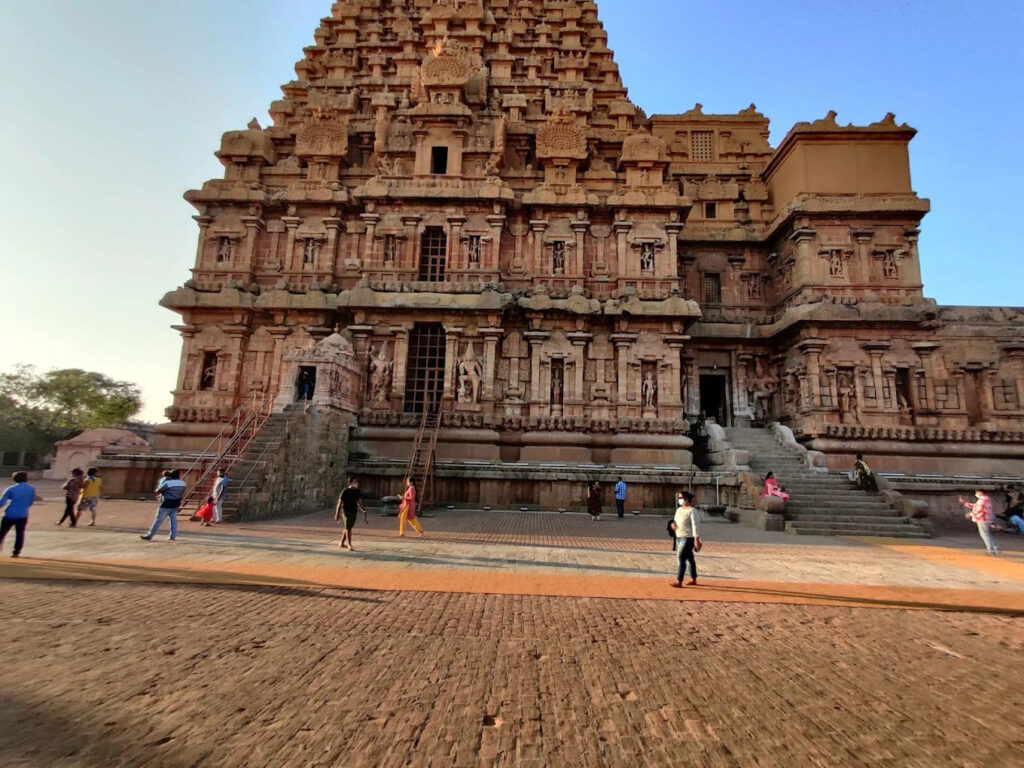
- Tower (Vimana) height: 216 feet (symbolic of 216 Tamil vowels)
- Distance between Nandi and Shivalinga: 247 feet (symbolic of 247 Tamil characters)
This reveals a deep connection between Tamil language and temple design, integrating devotion, culture and knowledge into stone.
The Majestic Nandi
The Nandi statue, carved from a single block of stone brought from Perambalur, is one of the largest in India:
- Height: 12 feet
- Length: 20 feet
Its artistic beauty remains unparalleled, symbolizing strength and devotion.
Chola Artistic Excellence
The temple walls are adorned with intricate carvings and paintings, crafted with the same care as fine gold jewelry.
Inside the sanctum walls, Chola murals portray divine stories with extraordinary precision.
Architectural Wonders
- The Vimana (tower) is not a mere tower but a “plane”, carrying the spiritual energy of the temple
- The shadow of the tower never falls on the ground at noon – a remarkable scientific alignment
- The crown stone (Kumbam) at the top weighs nearly 80 tons and is carved from a single stone – a feat unmatched even today
- Inside the upper chamber, there are 108 Bharatanatyam dance carvings, symbolizing the link between art and spirituality
Earthquake-Resistant Design
Architect Perunthachan Tennan Meimman explained that the foundation was built on a bed of coarse river sand, allowing the structure to flex during earth movements.
This unique design has protected the temple from earthquakes for over a millennium.
Symbolism of Sand and Stones
The temple weighs nearly one lakh tons, with its foundation holding a million cubic feet of coarse sand.
Interestingly, the sand beneath the temple is not local but likely brought from the Western Ghats, highlighting the vast efforts behind construction.
The Marvel of Elevation
It is believed that an artificial slope as tall as the temple was created, and massive stones were rolled up using elephants.
This engineering brilliance still astonishes architects and historians alike.
Water Management & Sustainability
The temple has two rainwater drainage systems (north and south), making it one of the earliest rainwater harvesting structures in history.
This foresight ensured that rainwater did not damage the temple foundations.
Comparison with World Wonders
Historians note striking similarities between the Brihadeshwara Temple and the Egyptian pyramids in terms of stone stacking, geometry and energy alignment.
Both structures were designed to withstand natural forces, channel cosmic energy and stand as testaments to human genius.
Legacy of Mayan and Tamil Civilization
Mayan, revered as the father of Tamil architecture, astronomy and sculpture, influenced this temple’s design.
The Brihadeshwara Temple stands not only as a spiritual center but also as a scientific, artistic and cultural masterpiece, showcasing the brilliance of the Tamil civilization.
Thanjai Periya Kovil – The Eternal Pride of Tamil Heritage
For over a thousand years, the temple has stood unshaken, declaring to the world the genius of Chola architects and the power of Tamil culture. It is not just a temple, but a living wonder of science, spirituality and art.
Gallery of Periya Kovil