Introduction
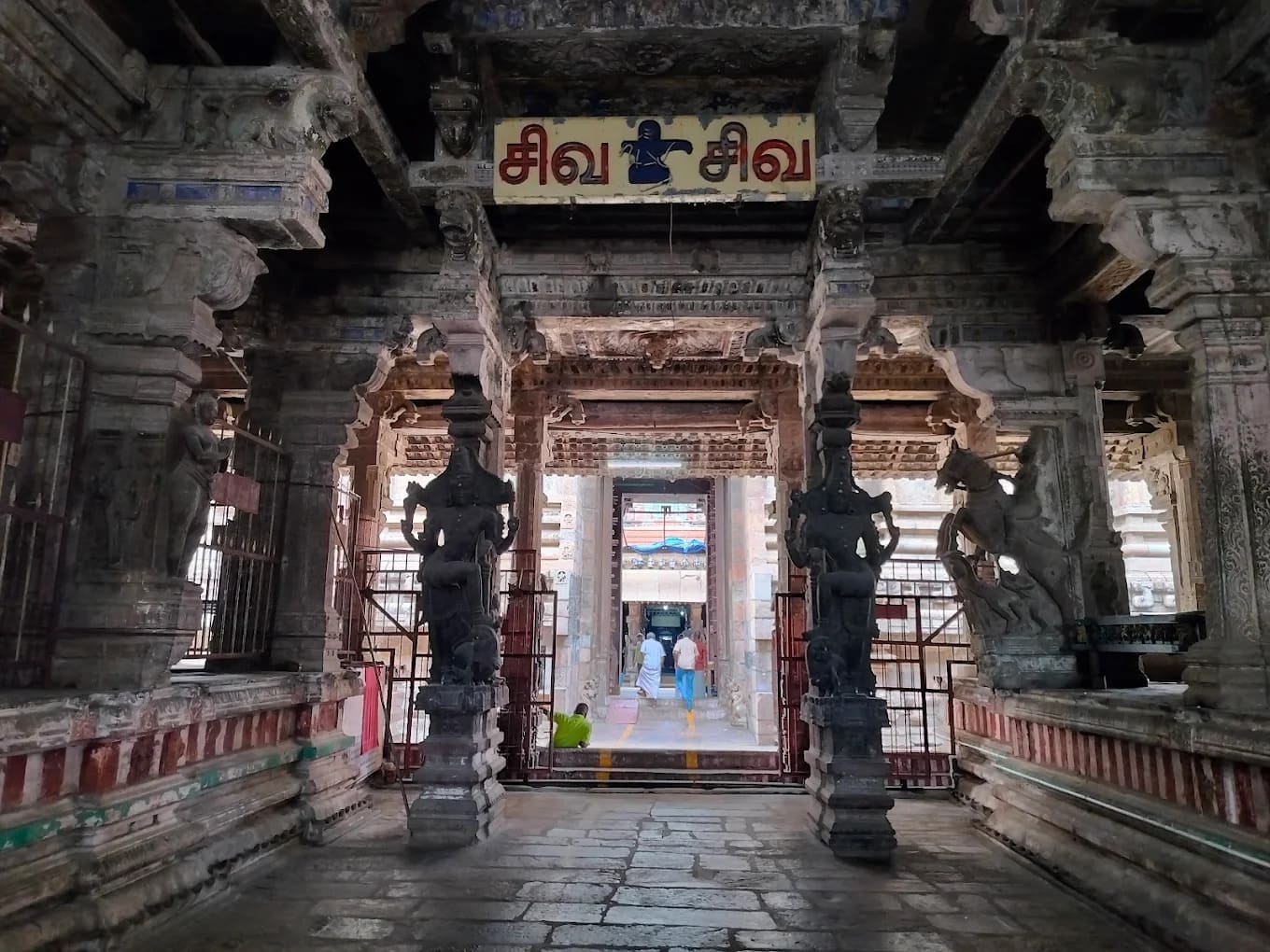
Nestled in the Pudukkottai district of Tamil Nadu, the Thiruperundurai Athmanathar Temple (popularly known as Avudaiyarkoil) stands as one of the most spiritually profound and architecturally extraordinary shrines in South India. Dedicated to Lord Shiva as Athmanathar (the Lord of the Soul), this ancient temple breaks away from traditional Dravidian temple customs by celebrating the formless nature of the Divine.
Unlike conventional Shiva temples, Thiruperundurai features no physical stone Lingam or idol in its sanctum sanctorum. Instead, devotees worship the Avudaiyar – the granite pedestal representing the infinite, formless Supreme Being. Renowned as the sacred soil where the legendary 9th-century Saivite saint Manikkavasagar attained spiritual enlightenment, Avudaiyarkoil seamlessly blends deep philosophical tradition with mind-boggling stone craftsmanship, making it a must-visit destination for spiritual seekers, historians and architecture enthusiasts alike.
Legend & History
The history of Thiruperundurai is inextricably linked with Saint Manikkavasagar, one of the four great Saivite saints (Nalvar) of Tamil Nadu.
According to ancient scriptures:
The Royal Mission: Manikkavasagar (then known as Thiruvathavurar) served as the Prime Minister to the Pandyan King Arimardhana Pandian. The king dispatched him with a vast sum of gold from the royal treasury to the eastern coast to purchase high-grade Arabian warhorses for the kingdom’s army.
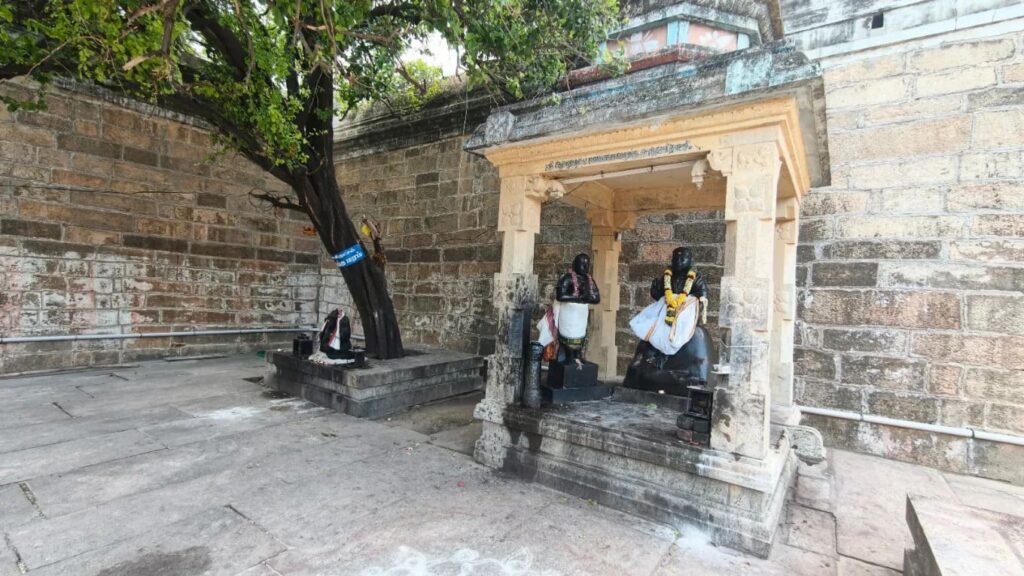
The Divine Encounter: En route, near Thiruperundurai, the minister heard high-pitched Vedic chants resonating under a lush Kurundai tree. Upon approaching, he beheld Lord Shiva Himself seated as a divine Guru surrounded by sages.
Spiritual Awakening: Touched by the Grace of the Guru, Thiruvathavurar surrendered completely, receiving spiritual initiation (Upadesam). Transformed by divine bliss, he spent the entire royal treasury construct the magnificent Thiruperundurai temple instead of buying horses.
The Miracle of the Jackals: When the furious Pandyan king demanded accountability, Lord Shiva transformed a pack of wild jackals into majestic warhorses and delivered them to the king’s stables. However, at midnight, the horses reverted into jackals, howling aloud before escaping back into the forests. After temporarily imprisoning Manikkavasagar, the king realized the divine play (Thiruvilaiyadal) at hand, begged for forgiveness and liberated the saint.
It was during his time at Thiruperundurai that Saint Manikkavasagar poured his heart into composing the Thiruvasagam, a collection of sacred hymns that remains a cornerstone of Tamil Saivite literature.
Architecture
The architectural grandeur of Avudaiyarkoil represents a peak in Tamil stone carving, featuring innovations that continue to baffle modern structural engineers.
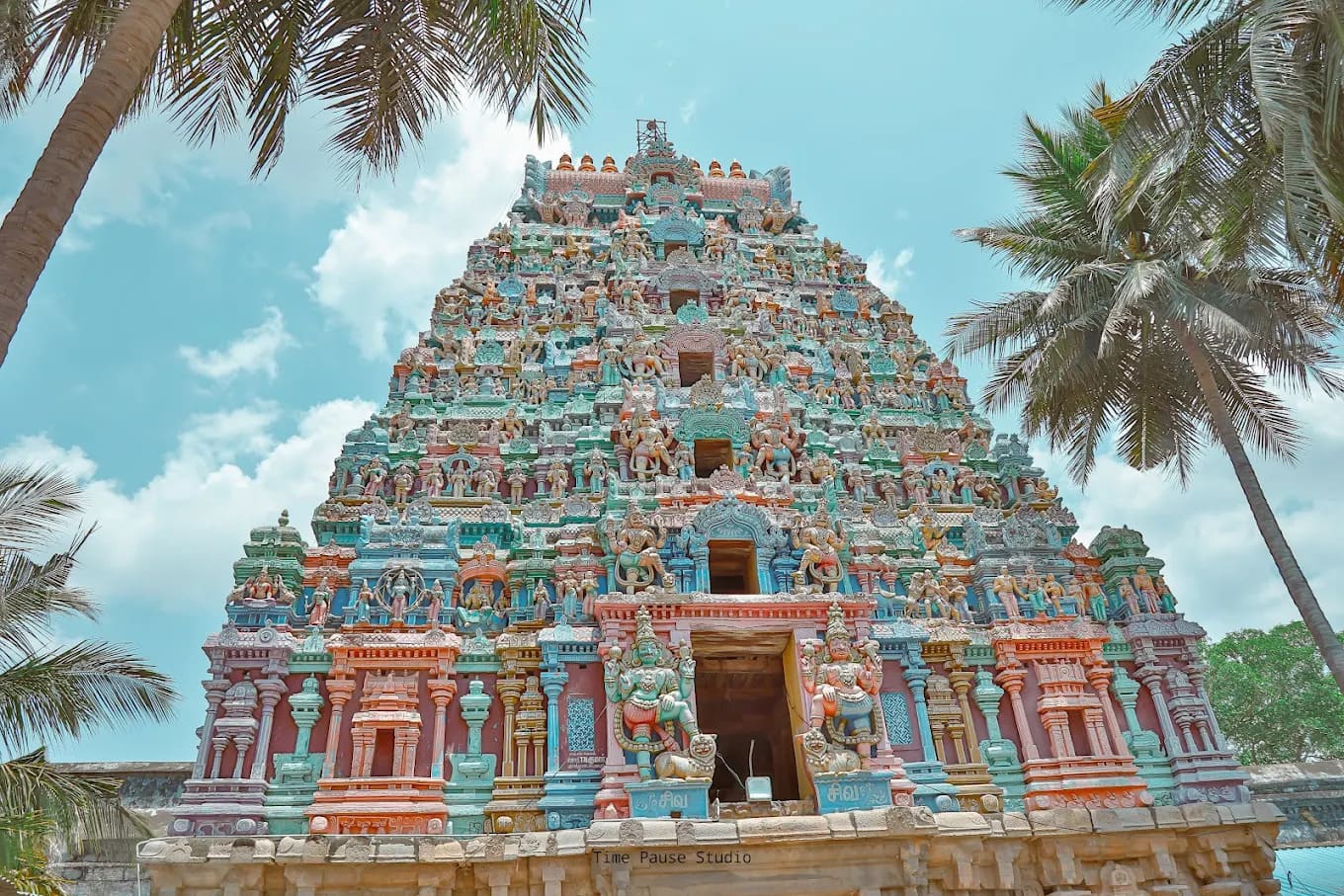
The architecture of Thiruperundurai (Avudaiyarkoil) is widely considered one of the finest peaks of granite stone carving in South India. What sets it apart is a combination of radical structural omissions and mind-boggling, fine-detail stone craft.
Radical Structural Omissions
Unlike traditional Dravidian Shiva temples, Avudaiyarkoil intentionally leaves out three core structural features to emphasize the concept of a formless god (Arupa):
- No Nandi Statue: There is no sacred bull facing the sanctum.
- No Kodimaram: The permanent flagstaff found at temple entrances is absent.
- No Chandikeswarar Shrine: The standard guardian shrine in Shiva temples is omitted.
Formless Sanctums
Main Sanctum (Athmanathar): Instead of a carved idol or stone Lingam, worship is offered to the Avudaiyar – a bare, polished granite pedestal representing the formless, infinite soul.
Goddess Shrine (Sivayogambal): The goddess shrine contains no statue; only her sacred footprints (Padam) are carved into the sanctum floor.
Engineering & Craftsmanship Marvels
- Single-Block Stone Chains – Hollow, fully functional granite chains suspended from ceilings, carved out of a single stone block with no joints
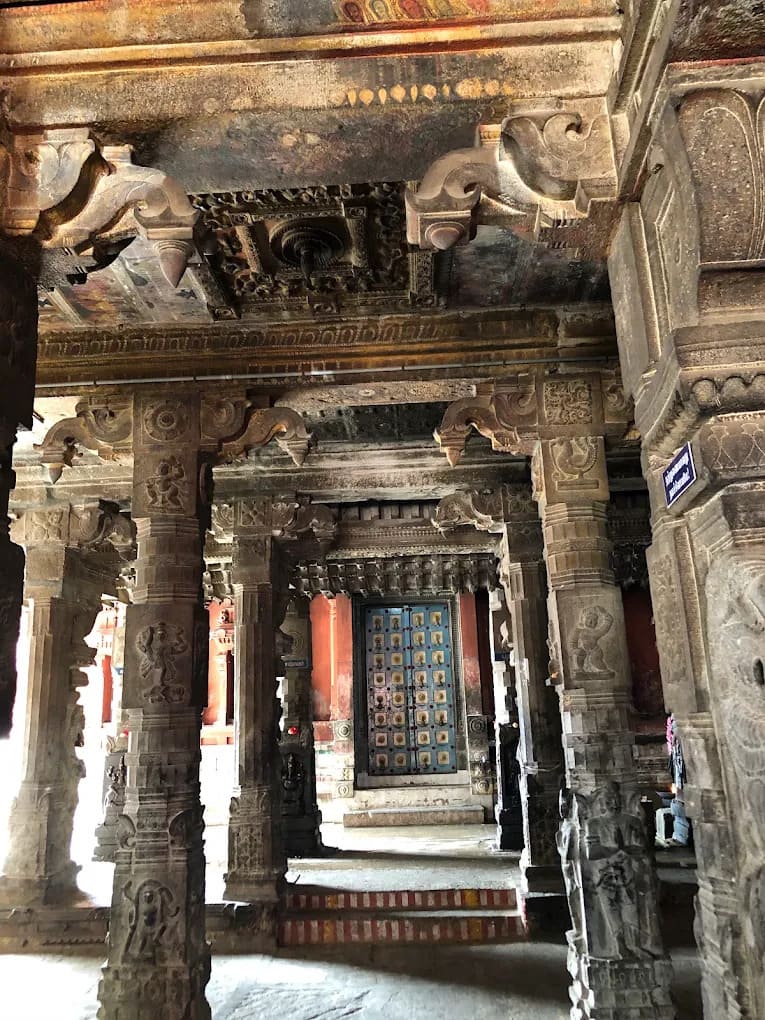
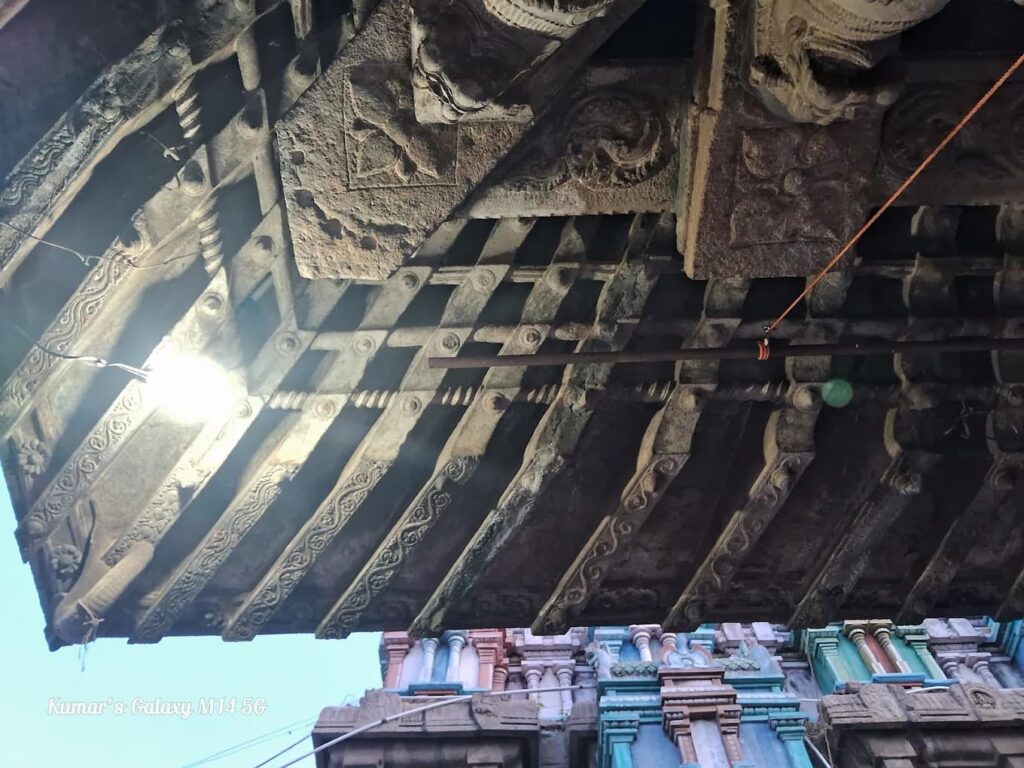
- Simulated Wooden Ceilings – Massive granite roof slabs carved to mimic wooden rafters, bamboo frames and thatched roofs down to fiber-level details
- Granite Latticework (Jali) – Delicate stone screens perforated so thinly that sunlight and air pass through freely
- Musical Pillars – Solid granite columns that produce distinct musical notes (Swaras) when tapped
Formless Sanctums: In the main shrine, the worship is directed at the bare pedestal (Avudaiyar). Similarly, in the shrine of Goddess Sivayogambal (Parvati), there is no statue – only her sacred footprints (Padam) are revered.
Notable Mandapams (Halls):
Kanaka Sabha (Golden Hall): Features a ceiling made of copper plates and intricate stone reliefs illustrating scenes from Saint Manikkavasagar’s life.
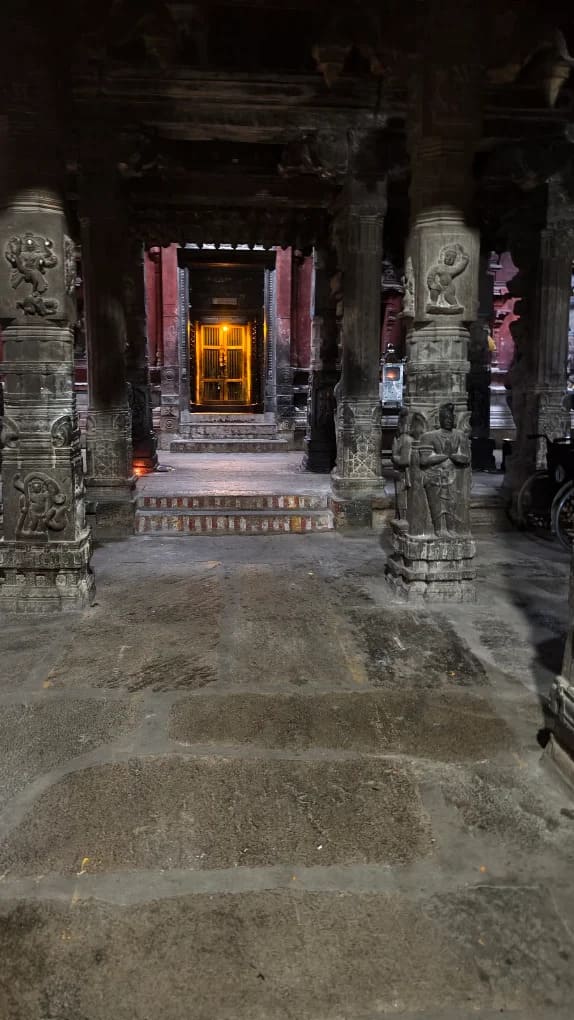
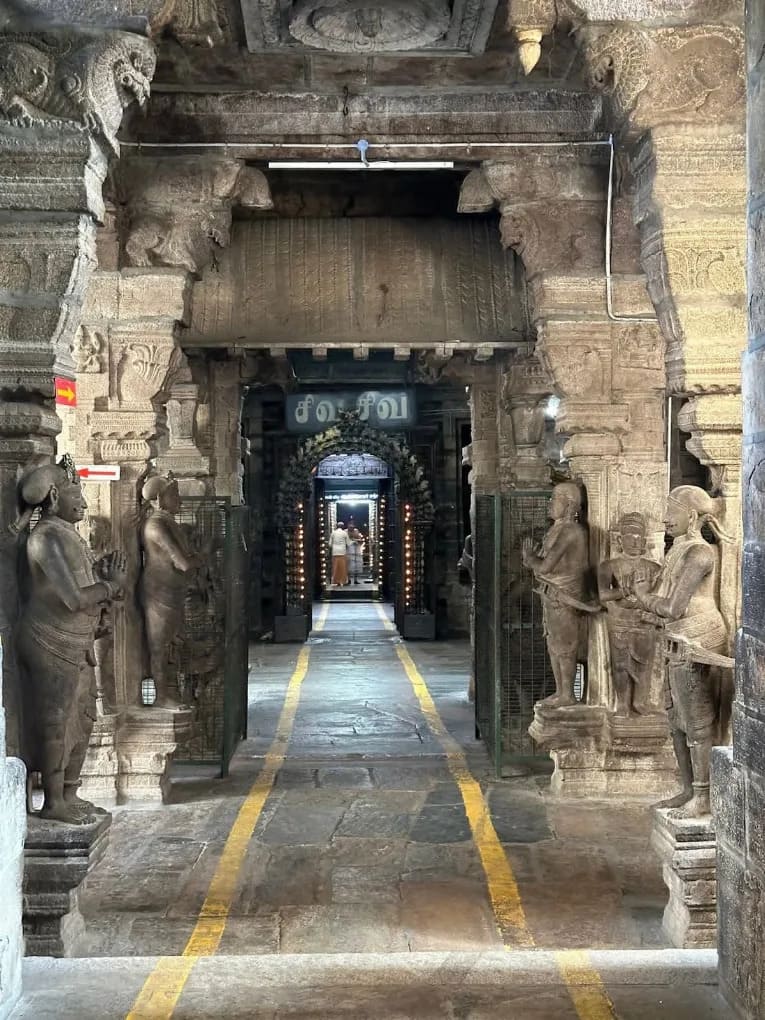
Thiruvasaga Mandapam: Built to honor the 51 sacred hymns composed here by Manikkavasagar, filled with life-sized stone sculptures of deities and saints with detailed facial expressions and jewelry.
The Sacred Kurundai Tree: The original Kurundai tree under which Shiva initiated Manikkavasagar is preserved within the temple complex, serving as a living historical monument.
Religious Importance & Festivals
Thiruperundurai represents the Jnana Marga (Path of Knowledge) in Saivism. It exemplifies the concept of Arupa (formlessness) leading to Atma-Darshan (self-realization).
A unique daily ritual involves the divine food offering (Naivedyam). Steaming hot cooked rice is placed directly on a smooth granite surface inside the sanctum. The steam rising from the rice is symbolically offered as the primary offering to the formless deity, after which the sanctum doors are closed briefly.
Key Festivals Celebrated:
- Aani Thirumanjanam (June – July): A major 10-day festival commemorating the spiritual divine manifestation of Shiva as a Guru to Manikkavasagar.
- Arudra Darisanam / Margazhi Thiruvathirai (December – January): Celebrated with solemn devotion, highlighting special recitations of the Thiruvasagam and Thiruvempavai.
- Manikkavasagar Vizha: Annual celebrations dedicated to honoring the life, poetry and devotion of Saint Manikkavasagar.
- Pournami/Amavasya Special Pujas: Monthly full moon and new moon days draw thousands of devotees seeking peace, clarity and spiritual enlightenment.
Parking Facilities
Convenient parking facilities are available for visitors traveling to the Thiruperundurai Athmanathar Temple in Avudaiyarkoil, with dedicated open-air parking zones for two-wheelers and private cars situated just a short walk from the main entrance along the approach roads. While small vehicles can easily navigate the surrounding bazaar area, tourist buses and heavy passenger vans are recommended to drop off devotees near the outer temple street before parking in the designated bus bays along State Highway 26 to avoid narrow town traffic. During major peak festivals like Aani Thirumanjanam and Arudra Darisanam, local police manage temporary barricaded parking lots at town entry points to ensure smooth vehicle flow and effortless access for all pilgrims.
Dress Code
Visitors must wear traditional attire, such as dhotis or trousers with shirts for men, and sarees or salwar kameez with a dupatta for women. Modern casuals like shorts, skirts and sleeveless tops are strictly prohibited, and footwear must be deposited at the entrance before entering.
Transport Facilities
The temple is easily accessible by road, located 13 km from Aranthangi and 49 km from Pudukkottai, with frequent local buses and daily direct sleeper buses from Chennai. The nearest railway station is Aranthangi (13 km), while Tiruchirappalli International Airport (85 km) serves as the closest air hub with taxi and bus connections directly to the temple.
Nearby Attractions
- Aranthangi Fort – 13 km
- Chettinad Palace (Kanadukathan) – 35 km
- Thirumayam Fort & Rock-Cut Temples – 38 km
- Government Museum, Pudukkottai – 49 km
- Rock-Cut Cave Temple & Frescoes, Sittanavasal – 60 km
- Arulmigu Kuduminathar Temple, Kudumiyanmalai – 65 km
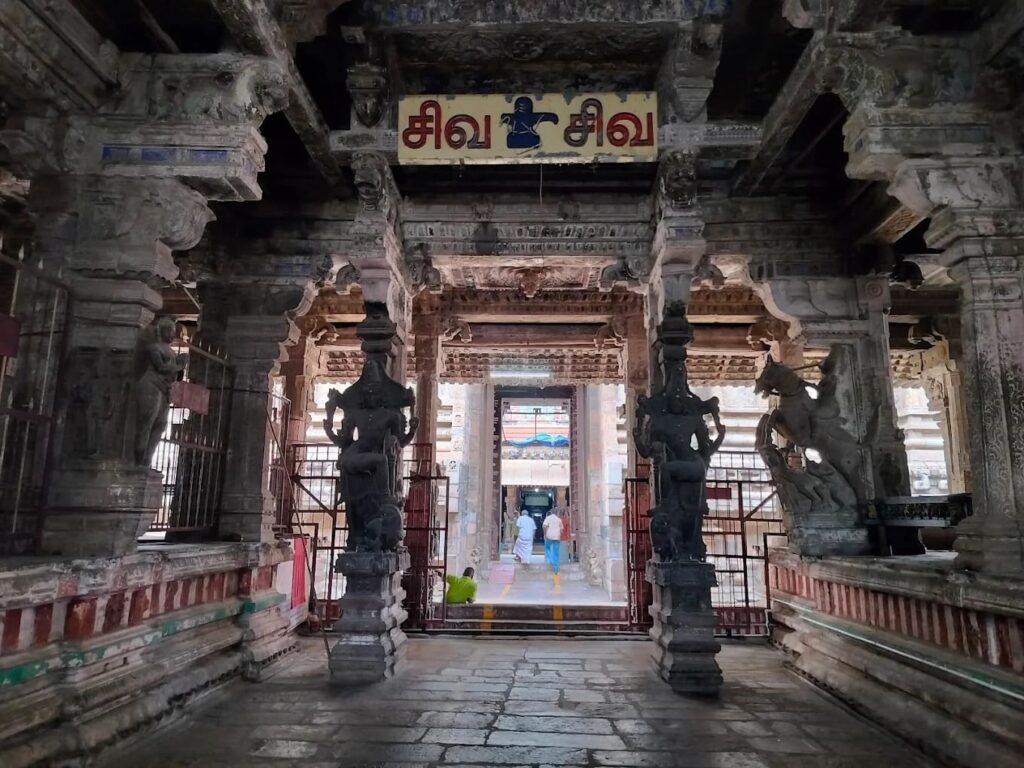
Gallery of Thiruperundurai Athmanathar Temple
Map
FAQs
Thiruperundurai Temple, officially known as Avudaiyarkoil, is located in the Pudukkottai district of Tamil Nadu, India. It lies approximately 14 km from Aranthangi and 50 km from Pudukkottai city center.
Unlike most Shiva temples, there is no physical Shiva Lingam or idol in the main sanctum of Thiruperundurai Temple. Shiva is worshipped here as Athmanathar in a formless state (Aruvam), represented only by a raised stone pedestal (Avudaiyar). Similarly, Goddess Parvati (Yogambal) is worshipped in formless grace, with only her divine feet visible.
Thiruperundurai is the sacred site where the 9th-century saint-poet Manikkavasagar met Lord Shiva, who appeared as a divine Guru beneath a Kurundai tree. Inspired by this spiritual initiation, Manikkavasagar spent royal funds meant for purchasing warhorses to build the temple, and went on to compose the famous Saiva Siddhanta text, Tiruvasakam, at this shrine.
Because the deity Athmanathar is worshipped as the formless, omnipresent divine soul, traditional physical attributes like the Nandi bull statue and the flagstaff (Kodimaram) facing the main shrine are omitted. Saint Manikkavasagar holds primary prominence in ritual processions.
The temple is celebrated for its incredible Dravidian granite masonry, including:
Stone Eaves (Kodungai): Ceiling cornices carved so thin from solid granite that light passes through them.
Musical Pillars: Granite pillars that emit distinct musical notes when tapped.
Ceiling Frescoes: 17th-century murals illustrating scenes from the Thiruvilaiyadal Puranam.
The temple is generally open for worship from 6:00 AM to 12:00 PM in the morning and 4:00 PM to 8:30 PM in the evening. The best time to visit is during the major annual festivals – Aani Tirumanjanam (June–July) and Margazhi Thiruvadhirai (December–January).