Suchindram Thanumalayan Temple is one of the important and unique temples in Tamil Nadu / Kanyakumari region. The temple is located in the town of Suchindram in Kanyakumari district, Tamil Nadu (about 7 km from Nagercoil and 11 km from Kanyakumari city). It is also simply referred to as “Thanumalayan Temple” — the term “Thanumalayan” referring to the combined representation of the Hindu trinity in the sanctum.
Religious / Mythological Significance & Legend
The name “Suchindram” is believed to come from Sanskrit “Suchi” (purify) + “Indram” (Indra, king of the gods). According to legend, Indra was relieved of a curse and purified after worship at this site – hence the place of purification.
Another legend says that the divine trinity Brahma, Vishnu and Shiva tested the chastity of Anasuya (wife of sage Atri) – disguised as mendicants. Impressed by her devotion, they manifested themselves here – leading to the formation of the “three-in-one” Linga that is worshipped in the temple.
Thus the presiding deity is not a single god, but the “Trimurti” — three gods in one: Shiva (top), Vishnu (middle) and Brahma (base). This makes the temple quite unique in India.
History & Timeline
There are inscriptions and records indicating that the temple (or an early shrine at the site) goes back to at least the 9th century A.D. – during the rule of early medieval dynasties (possibly Pandya / early Chola / regional rulers).
The present major structure, including the towering gopuram (gateway tower) and many of the sculptural elements – dates largely from the 17th century onward, thanks to the patronage and renovations by the rulers of Travancore (and earlier the Nayak kings, etc).
Architecture & Special Features
Here are some of the distinctive architectural / structural / artistic characteristics that make Suchindram Temple remarkable:
Feature Description / Significance
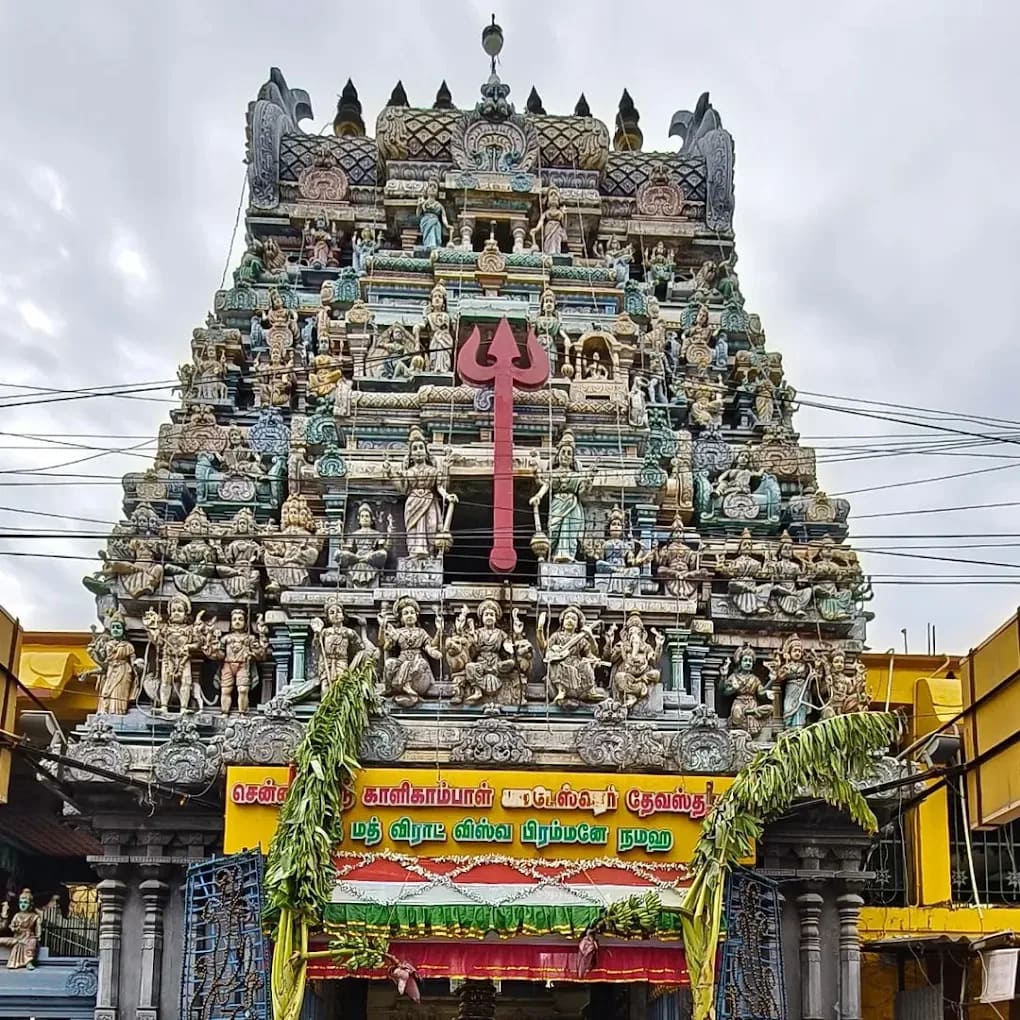
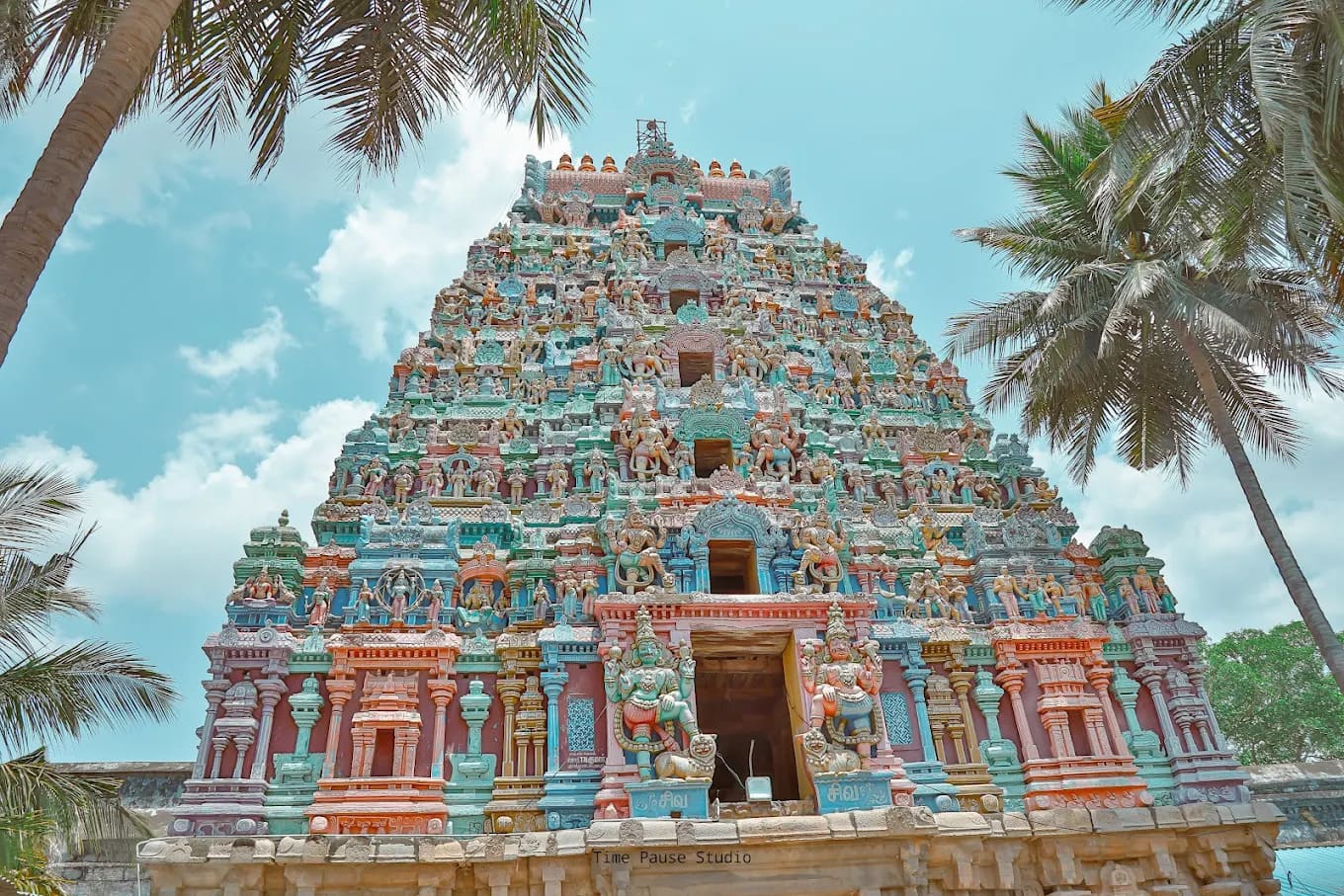
Gopuram (main tower / gateway) A majestic seven-storeyed white gopuram rising to about 134 ft, richly covered with sculptures of deities and mythological figures.
Main Sanctum & Deity
A single “Trimurti Linga” – representing Shiva (top / “Sthanu”), Vishnu (middle / “Maal”) and Brahma (base / “Ayan”) – making it one of the rare temples worshipping all three principal deities together.
Multiple Shrines
Besides the main Trimurti, there are around 30+ shrines inside the complex – for various deities, including forms of Vishnu, Shiva, local deities and etc. – showing syncretic worship (Shaivite, Vaishnavite and local Tamil deities).
Musical Stone Pillars
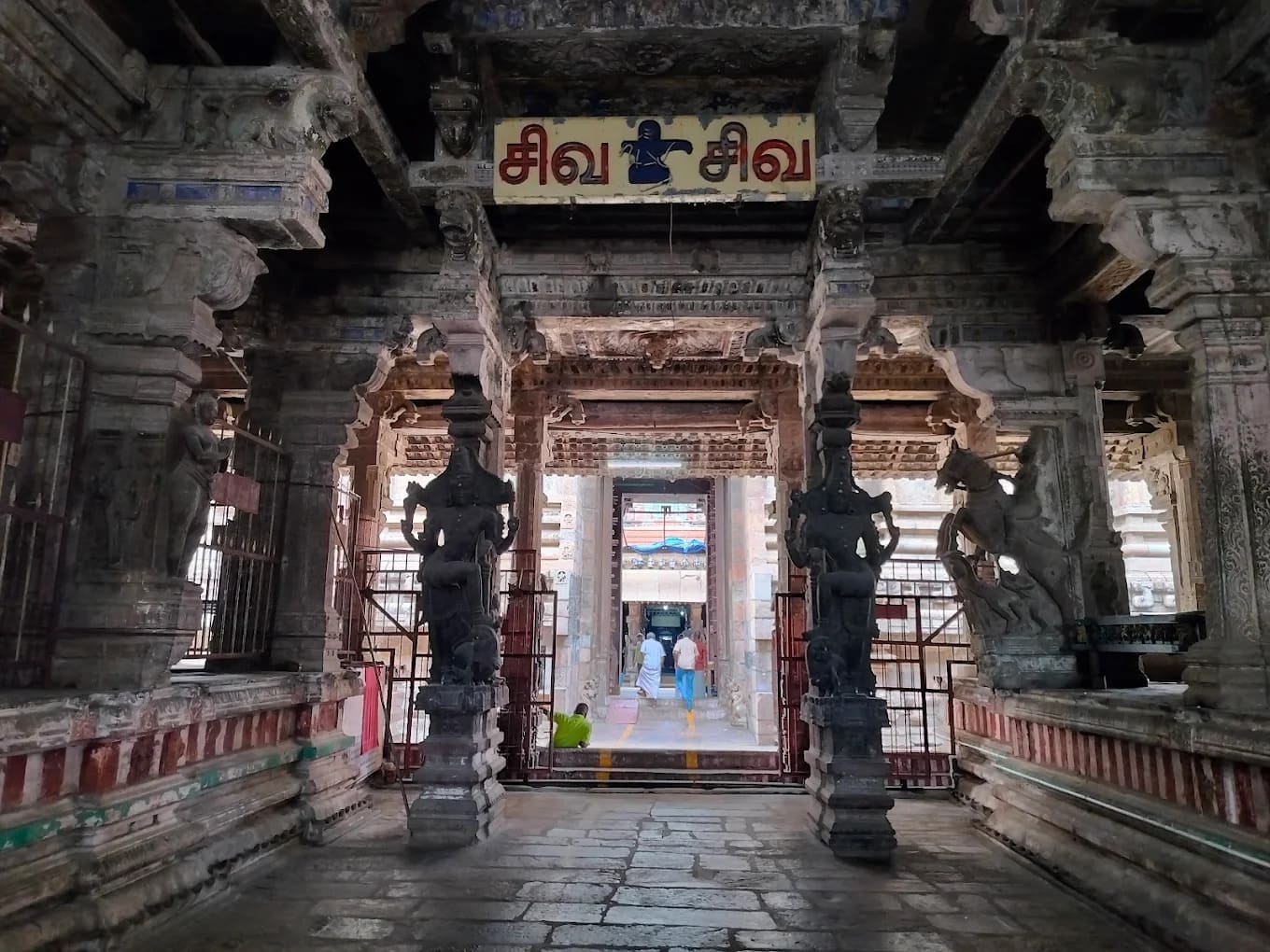
In the “Alankara Mandapam” (decoration / hall), there are 4 large pillars carved from single stones; each composed of multiple smaller carved pillars. When tapped, these produce different musical notes — a rare and celebrated feature.
Large Nandi Statue
A huge statue of Nandi (the bull, vehicle of Shiva) – about 13 ft high, 21 ft long, 10 ft wide, made of lime and mortar – said to be among the largest Nandi statues in India.
Rich Sculptural & Carving Work
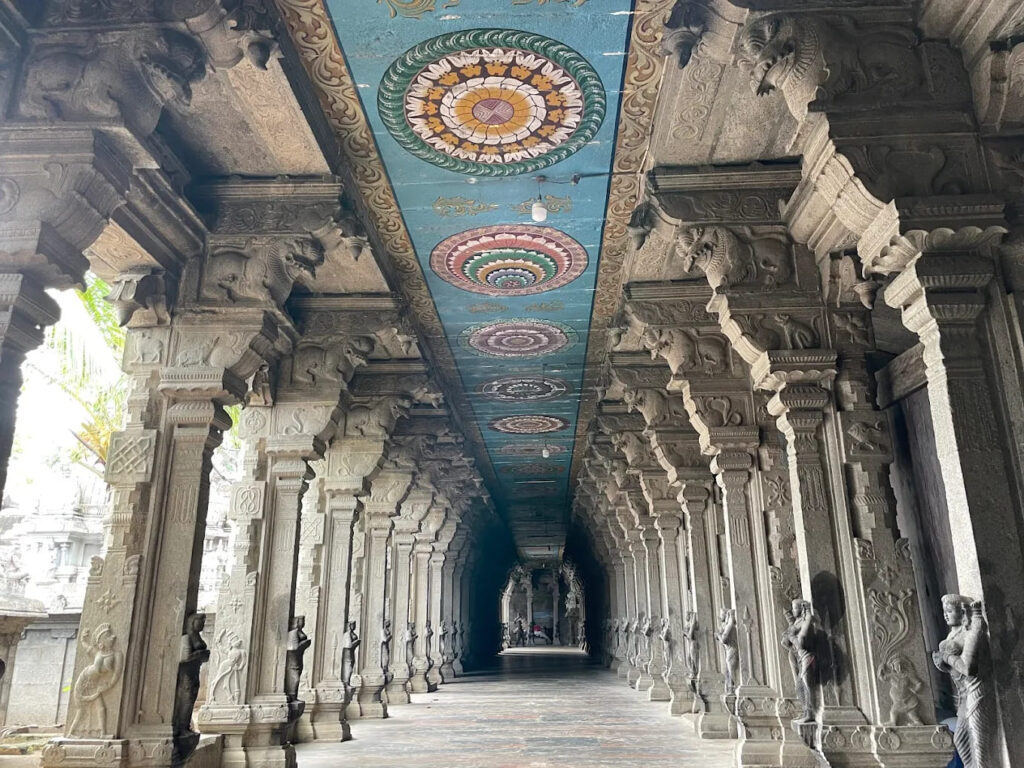
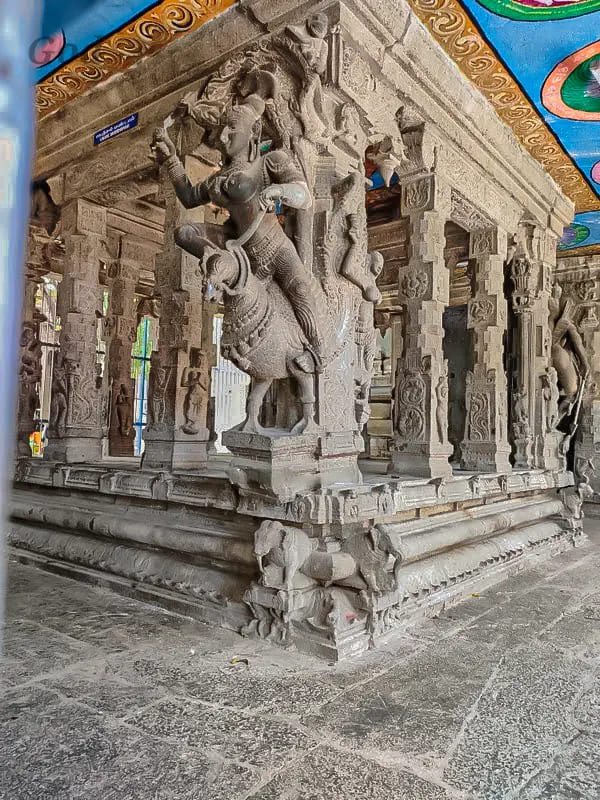
Many pillars, walls and halls have intricate carvings — scenes from epics like Ramayana and Mahabharata, depictions of divine and mythical beings, sacred narratives, and more.
Large Complex Layout
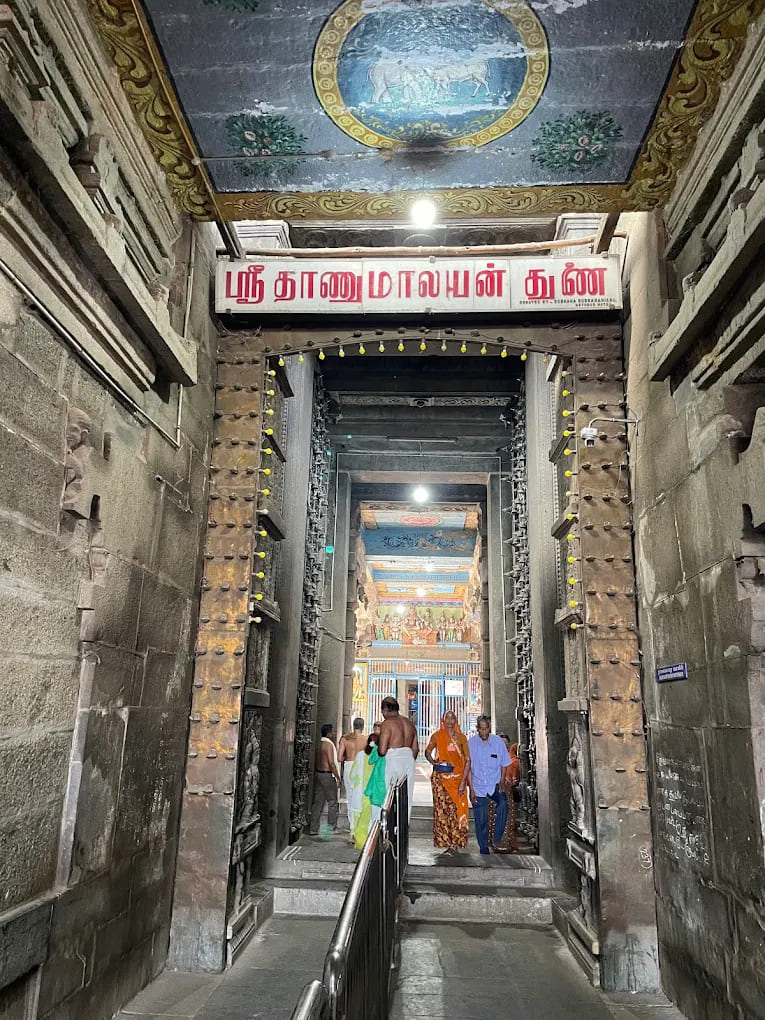
The temple complex spans several acres. There are long corridors (prakaram) allowing circumambulation (parikrama), multiple mandapams (halls), shrines and facilities within the compound.
Because of these features, the temple is often described as a masterpiece of Dravidian/Travancore-era architecture, combining grandeur, devotion, mythological importance and artistry.
Festivals & Worship — Cultural Importance
The temple celebrates major festivals especially in Markazhi (December–January) and Chithirai (April–May). On the 9th day of the Markazhi festival, the deities are taken out in procession on three temple cars (rathas) along the streets of Suchindram – a major event drawing devotees.
The temple attracts both Shaivites and Vaishnavites – because it worships the Trimurti and also devotees of local Tamil deities, making it a place of syncretic worship and regional cultural importance. Representing the three major deities (Brahma, Vishnu, Shiva) in one single Linga — this kind of Trimurti-linga worship is extremely rare.
Architectural blend: While rooted in Dravidian temple architecture, the temple’s expansions over centuries under different rulers — including those from the former Travancore kingdom — have added unique elements, making it a confluence of styles.
Musical pillars and skillful stone-carving across pillars, halls, corridors: shows high craftsmanship, acoustic understanding, and artistic sensibility.
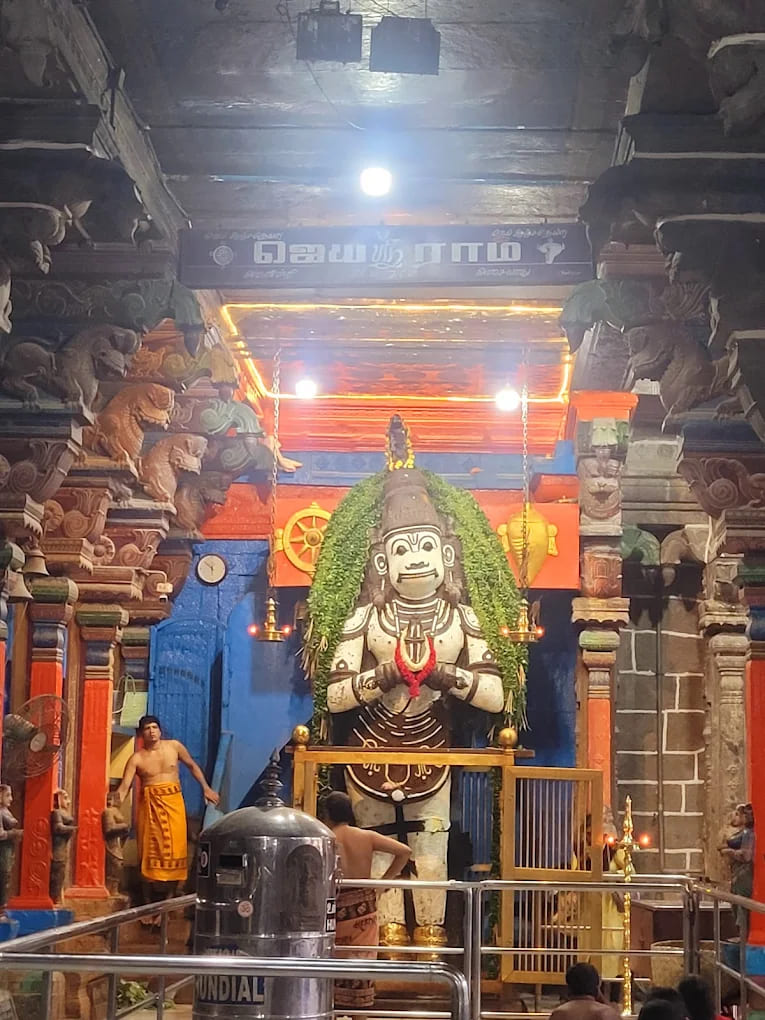
Monumental statues (like the 22-ft Hanuman, large Nandi) and numerous shrines — the scale and detail make it more than just a local temple; it’s a heritage monument.
The temple enjoyed patronage from various dynasties and rulers over centuries — Pandyas, Cholas, Nayak kings, Travancore Maharajas — showing its long-standing religious and cultural importance.
The fact that it draws both Vaishnavite and Shaivite worshippers — and includes many local deities/shrines — makes it a symbol of sect-harmonious worship, which is relatively uncommon.
Gallery of Suchindram Temple

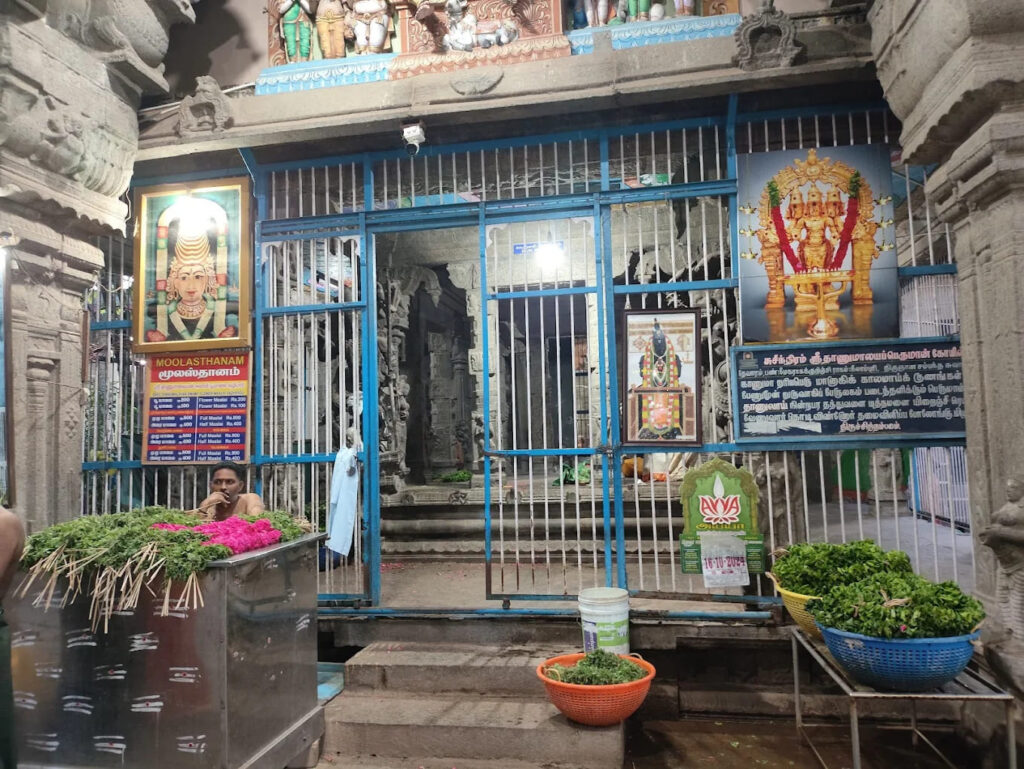
Transport Facilities
The Temple has good local bus facilities, making it easy to reach by public transport. Frequent TNSTC and private buses run between Nagercoil and Kanyakumari, and most of them stop at Suchindram bus stop, which is located about 300 meters from the temple, just a short walk away. From Nagercoil (around 7 km) and Kanyakumari, buses are available throughout the day, so visitors can comfortably travel to the temple without difficulty; autos and taxis are also easily available from nearby bus stands if needed.
Dress Code
The Temple follows a traditional dress code for devotees. Men are expected to wear veshti/dhoti or pants with a shirt (shirts may need to be removed inside the inner sanctum), and women should wear saree, half-saree, or salwar kameez with dupatta; shorts, sleeveless tops, mini skirts, and tight or transparent clothing are not allowed. Devotees are advised to dress modestly and decently, keeping shoulders and knees covered, as the temple strictly maintains its customs and may deny entry for improper attire.
Parking Facilities
Visitors to Suchindram Temple can use the limited parking facilities available near the temple, but these areas often become crowded during peak hours, weekends, and festival days, so arriving early is advisable. Parking for cars and two-wheelers is usually provided in nearby designated or informal spaces, sometimes with a small local parking fee, and if these fill up, visitors may need to park a little farther away and walk to the temple. It is important to follow traffic signs and instructions from local authorities and avoid no-parking zones to ensure a smooth and hassle-free visit.
Temple Timings
Suchindram Shree Thanumalayan Swamy Temple is generally open daily from around 4:30 AM to 12:30 PM in the morning and from about 4:00 PM to 8:30 PM in the evening. Timings may slightly vary on festival days, special poojas, or auspicious occasions, so devotees are advised to arrive early or confirm locally for darshan schedules.
Nearby Attractions
- Kanyakumari Beach and Sunrise Point
- Vivekananda Rock Memorial
- Thiruvalluvar Statue
- Vattakottai Fort
- Suchindram-Theroor Bird Sanctuary
- Mathoor Aqueduct
- Thirparappu Waterfalls